

The International Plant Treaty, which established a global system to make available genetic materials for main agricultural crops for farmers, plant breeders and scientists, and in exchange provide a system of benefit sharing, has been struggling to find ways to be financially sustainable for some time. This year, the treaty will work on ways to do that, including in devising a subscription system that would reach a twin goal: avoiding non-payment of voluntary contributions, and ensuring a sustainable and predictable income stream.
In addition, a global consultation on farmers’ rights is planned, and work should be ongoing on a global information system allowing more visibility for plant genetic material for food and agriculture.
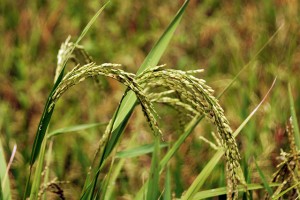
©Center For International Forestry Research/Yayan Indriatmoko
The Rome-based International Treaty on Plant Genetic Resources for Food and Agriculture (ITPGRFA) dates back to 2001.
According to ITPGRFA Secretary Shakeel Bhatti, a working group focused on enhancing the functioning of the multilateral system of access and benefit-sharing, which is an overarching principle of the treaty, is expected to meet twice this year. The first of those meetings is likely to be in June or July, and the other one probably in November.
The working group has been tasked with elaborating a draft revised standard material transfer agreement (SMTA), and proposing a subscription system.
During the sixth session (5-9 October 2015) of the ITPGRFA, a number of countries said the revision “as far as possible, should avoid the need for the development of a new international legal instrument,” he told Intellectual Property Watch.
Some of the questions to be addressed refer to how much money is needed in the Benefit-sharing Fund, which invests into projects supporting farmers in developing countries to conserve crop diversity in their fields, and assists farmers and breeders globally to adapt crops to changing needs; how much money can be expected from the users of the multilateral system while making the system more attractive; and can contracting parties be expected to contribute to the Benefit-sharing Fund.
There is also a question on how to extend the coverage of the system to all genetic resources for food and agriculture.
The treaty currently covers 64 crops and forages (such as plant material for grazing animals). The funding of the system has been provided by countries’ contributions.
Since the multilateral system started operation, more than 1.7 million accessions to genetic materials have been documented (the addition of genetic materials to the treaty resulting from parties joining the treaty), Bhatti said.
On farmers’ rights, which are included in the treaty, the secretariat is planning a Global Consultation on Farmers’ Rights, hosted by Indonesia with the support of Norway.
The secretariat is also collaborating with the UN Food and Agriculture Organization (FAO) Committee on Food Security and the Commission on Genetic Resources for Food and Agriculture, as well as with the Convention on Biological Diversity, the International Union for the Protection of New Varieties of Plants (UPOV), and the World Intellectual Property Organization.
Civil society has been concerned with the interrelations between the ITPGRFA, UPOV and WIPO, in particular on the implementation of farmers’ rights, which they say are undermined by the last version of the UPOV Convention (1991) (IPW, WIPO, 2 April 2015).
The ITPGRFA is also working on a Global Information System (GLIS). According to the secretariat, “The vision of the Global Information System is to integrate and augment existing systems to create the global entry point to information and knowledge with the aim to strengthening capacity for PGRFA [plant genetic resources for food and agriculture] conservation, management and utilization.”
The treaty is consulting with Germany to get funding for the system, Bhatti said.
“The challenge is huge with more than 1,750 plant gene banks worldwide and with more than 7.4 million accessions documented out there,” he said. The meeting for the discussion on the Global Information System is tentatively scheduled for the autumn.
“The 2016 work plan includes the development of a pilot platform to make PGRFA material more visible for users, but also to offer, for the first time and for free, a PGRFA identification services for material in gene banks and in breeding programmes,” he said.
Image Credits: Flickr – The Center for International Forestry Research