Category WHO

Amid Global Push For Tobacco Plain Packaging, IP And Health Rights Bog Down Africa

CAPE TOWN, South Africa — Plain packaging is considered unattractive among marketers, loss-making for industries, and a healthy life promoter for governments and the public. The potent mix to balance profits, safeguard jobs and cut illnesses has made it a controversial solution to curb smoking. As it grows in popularity around the world, how is plain packaging faring in Africa?

Innovation And Access: Fission Or Fusion? Interview with David Taylor, Professor of Pharmaceutical and Public Health Policy, University College London, UK

In the light of the UN High-Level Panel on Access to Medicines, this series of sponsored articles challenges experts to give their views on the policies that best support the development of solutions to societies’ greatest challenges and how enabling policy environments, including IP systems, influence the development and flow of new technologies and services in different sectors, fields of technology, and jurisdictions. The views expressed in the articles are those of the authors. Below is an interview with David Taylor, Professor of Pharmaceutical and Public Health Policy, University College London, UK.

Biggest World Health Assembly Ever Kicks Off Next Week With A Loaded Agenda

Next week the annual assembly of World Health Organization member states will take place with a heavy agenda and its largest attendance ever. The lack of new antibiotics to address bacterial resistance, global shortages of vaccines and medicines, the fight against substandard drugs, and a framework to guard against undue influence of outside actors on the work of the WHO are part of a picture where there is an increasing blur between developed and developing countries in terms of access to medicines. And then there is the matter of electing a new WHO director general.

Public Health Advocates Urge WHO Action On Alternative R&D Financing

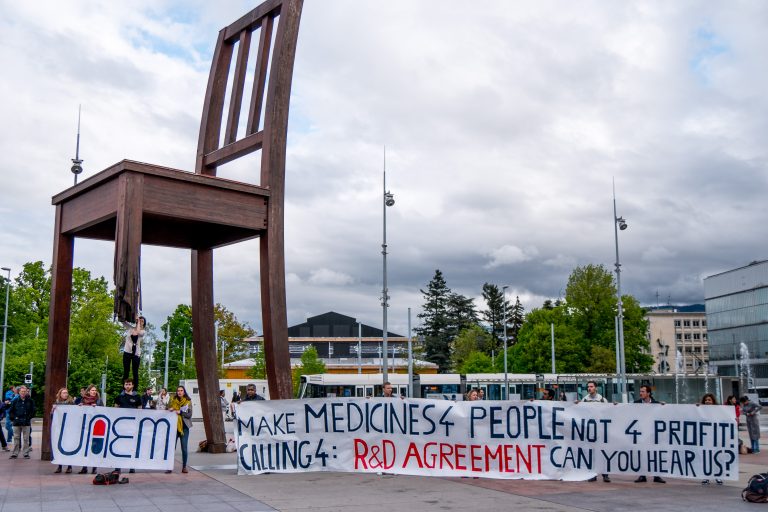
Public health advocates last week told World Health Organization delegates they must act quickly to save the lives of poor populations suffering from less common diseases for which there is no research and development funding. Nongovernmental organisations showed up to a WHO meeting on the issue to urge on delegates, even holding a public demonstration in front of the UN, but there was concern afterward at the little progress made.

As Patients Wait, WHO Members Chip Away At Decision On Medical R&D Funding

A number of World Health Organization member states attended a meeting last week aimed finding ways to sustainably finance research and development for medical products, especially those for poor populations lacking means to pay high prices. According to the outcome document and a WHO official, they heard many viewpoints from experts and made progress but much was left for the World Health Assembly later this month.

MSF Issues In-Depth Report On R&D And Drug Prices

Médecins Sans Frontières (MSF, Doctor Without Borders) today announced a report detailing what it calls failings in the current system for developing new drugs in ways that all patients can afford and access, and providing proposed policy options for addressing the problems.

Discussions Continue On How To Govern WHO Interactions With Outside Actors

The World Health Organization interacts with a large number of actors aside from governments, such as industry, philanthropic organisations, academia, and civil society. With an eye to preventing undue influence on the work of the organisation, member states have been trying to finalise a draft framework on WHO interaction with those actors. This week, what was seen as a last effort at reaching a consensual text did not quite meet the goal and some additional informal discussions are expected to take place before the annual World Health Assembly in late May.

Surprise! Much Work Being Done On Transparency Of Patents On Medicines

James Love writes: In a recent paper by Reed F. Beall and Amir Attaran [KEI's April 12, 2016 comment here: http://www.keionline.org/node/2467], and in the WIPO seminar discussions about the paper, the authors have held themselves out as more or less lonely voices calling for transparency of patent landscapes on essential medicines. This surprised and offended the many people who have not only been concerned about the lack of transparency on patent landscapes, but have been doing most of the work in digging out the facts, and/or proposing remedies.

WHO Debates Changes To Safeguards Against Undue Influence By Outside Actors

This week a group of delegates at the UN World Health Organization is seeking to finalise agreement on a draft framework defining the organisation’s relationships with external actors, such as philanthropy, the private sector, academia, and civil society. Today, Norway put forward a potential compromise. Meanwhile, dozens of civil society organisations called on member states to stand up to pressure to compromise the intergovernmental body’s independence from private sector influence.