Category Regional Policy

At re:publica 2017, Strategy Of ‘The Facebook Empire’ Revealed By Patents

In a talk at the re:publica 2017 in Berlin this week, academics from the Share Lab Project presented how they relied on an unusual resource to get a measure of the algorithms of Facebook. By reading through a part of the 8000 patents registered by the company, the researchers were able to shed some light into the process of how the "Empire" turns the raw data they treat their users as into those valuable big data golden profiles that then can be marketed.

The True Believer: An Interview With New IFPMA Director General Thomas Cueni

The International Federation of Pharmaceutical Manufacturers and Associations (IFPMA) has long been at the centre of global public health policy in Geneva, representing industry from around the world. Now at a critical moment of change in the policymaking machinery, a new leader, Thomas Cueni of Switzerland, has taken over. Intellectual Property Watch recently sat down with him to discuss his views and vision going forward, and discovered his intellectual pragmatism and diverse experience which promise to open an ambitious new era for the association and global health policy.

Interplay Between Inter Partes Reviews (IPRs) And ITC Section 337 Proceedings

Since the passage of the America Invents Act (“AIA”) in 2011, Inter Partes Reviews (“IPRs”) before the Patent Trial and Appeal Board (“PTAB”) have assumed growing importance in patent litigation in federal district courts. Until recently, IPRs have not played a significant role in International Trade Commission (“ITC”) Section 337 investigations. While the ITC is unlikely to stay a Section 337 investigation, pending IPRs will likely have an increasing impact at the ITC, especially when an IPR proceeding reaches an advanced stage before or during the pendency of a Section 337 investigation. This article examines the limited interplay to date between IPRs and Section 337 proceedings and discusses potential implications for future investigations.

Enlisting Government Help To Protect Your Trade Secrets

“I’m from the government and I’m here to help.” Yeah, right.

Most businesses think protecting their intellectual property is their own responsibility, and it is. But what about when your intellectual property rights are violated by an evildoer? Who are you going to call?

Real IP Issues Surface In A Virtual World

As virtual reality (VR) and augmented reality (AR) technologies emerge, so do legal questions arising from their use. While the issues are still mostly hypothetical, they implicate, among other areas, intellectual property rights, lawyers say.

The Global Debate On IP, Trade And Development: Past, Present and Future

Register Now for The Global Debate on Intellectual Property, Trade and Development: Past, Present and Future - A Conference in Honour of Pedro Roffe, taking place on 15 June at the University of Geneva, Uni-Bastions, Geneva, Switzerland. Registration is open and free, see details.

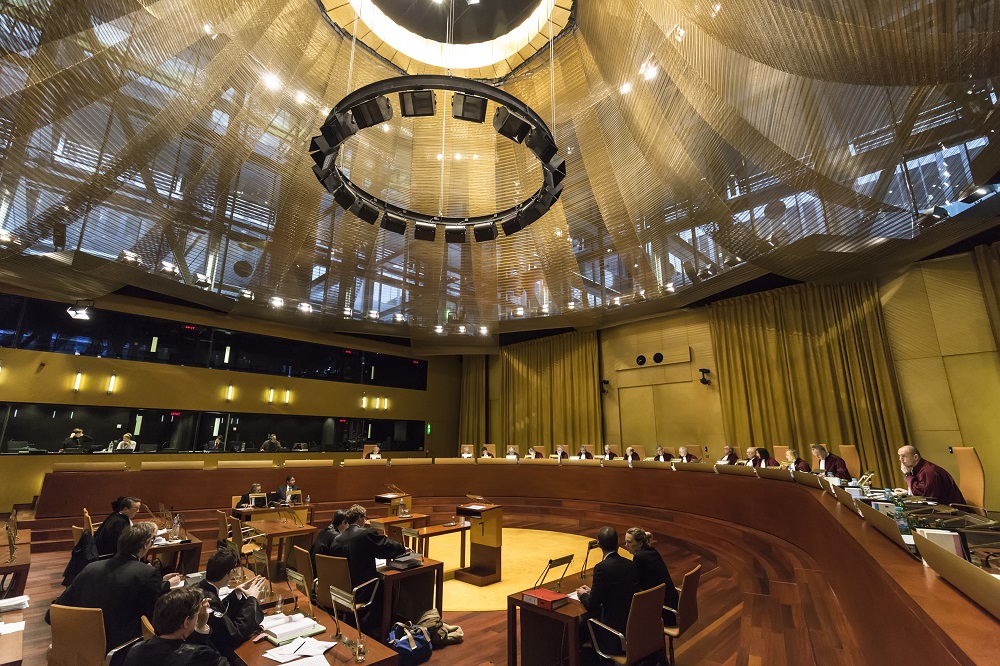
European Court Of Justice Tightens Screws On “Streaming”

In a judgment this week, the European Court of Justice ruled that "the sale of a multimedia player which enables films that are available illegally on the internet to be viewed easily and for free on a television screen could constitute an infringement of copyright“ (C:2017:300).

New Open Source Licence For Seeds

The Germany-based OpenSourceSeeds initiative this month started to offer open source-licensed seeds in an effort to strengthen a form of “copyleft” for new plant varieties. The goal, according to the organisation established by academics, activists and breeders and establish a non-private seed sector as a second pillar alongside private plant breeding.

Polish Government Drafts New Authors’ Rights Collective Management Law

WARSAW – Poland’s Ministry of Culture and National Heritage is drafting a new law on collective rights management which is to implement the relevant European Union legislation into Polish law. However, a think tank with close ties to the government has released a report that points to the relatively high operational costs of the authors’ and creators’ organisations, and could pave the way for further modifications to the system.

US Government Intends To Grant Exclusive Licence On Zika Patent Over Objection Of Civil Society

The United States Department of Defense has announced that it intends to grant Sanofi Pasteur, a French pharmaceutical corporation, exclusive rights to develop a vaccine for the Zika virus. The decision follows outcry from the public and civil society groups over concerns of affordability and accessibility in taking such a step.