Category Regional Policy

US Challenges For Biotech In 2015 – An Interview With BIO’s Hans Sauer

The biotechnology industry is closely watching developments in the United States that could impact the industry in 2015. These include the regulatory framework for biosimilars, possible patent legislation, post-grant review procedure, and the consequences of the recent Supreme Court ruling banning the patenting of human genes. Hans Sauer, Deputy General Counsel for Intellectual Property at the Biotechnology Industry Organization (BIO), recently spoke with Intellectual Property Watch’s Catherine Saez. Sauer was asked to lay out the main developments to watch in the coming year.

South Africa Supreme Court Of Appeal Losing Its Shape

South Africa's Supreme Court of Appeal has been blessed for the past few decades by having in its ranks judges who have experience and expertise in the field of Intellectual Property Law, writes law professor Owen Dean. With the recent retirement of Louis Harms, the bench at the Supreme Court of Appeal has been denuded of judges who can be regarded as IP experts. The paucity of IP experience on the bench is regrettably beginning to show.

In recent times the Supreme Court of Appeal has given three IP judgments in trade mark cases which, it is respectfully submitted, have been wrongly decided and are not in harmony with the principles of trade mark law and practice, Dean argues.

Questions About Funding, Text Of Tufts Study On Drug Costs

The Union for Affordable Cancer Treatment has sent a letter to the author of a much-noted Tufts University (US) study that found high development costs for medicines, with copies to the university administration. The letter requests transparency on the funding of the study and the press conference announcing the results, as well as copies of the study itself, which the group says was not made public, along with details to justify the result.

Circuit Courts Open As Satellites Of China’s Supreme People’s Court

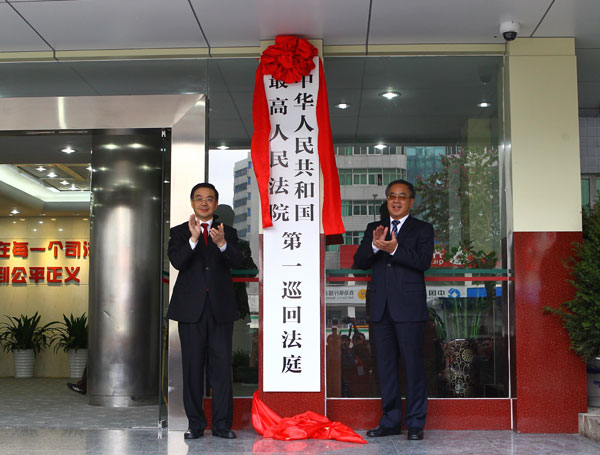
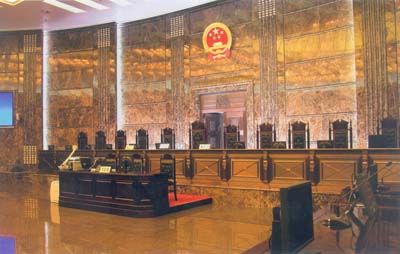
After long preparations, the Second Circuit Court of China’s Supreme People’s Court was officially instituted in Shenyang city, Liaoning province in northeast China on 31 January. Qiang Zhou, president and chief judge of China’s Supreme People’s Court, attended and addressed the nameplate unveiling ceremony of the Second Circuit Court.

Special Report: Will India Bend To US Pressure On IP Rights?

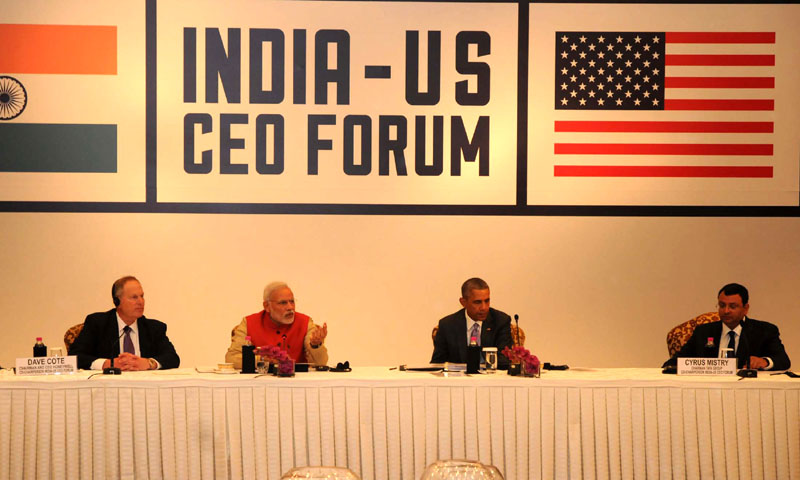
It is no secret that the United States has been scaling up pressure on India to adopt intellectual property measures similar to those common in the United States and the European Union. But to what extent does India’s new government led by the business-friendly Narendra Modi see eye to eye with US official position? Can India, the “pharmacy of the world”, resolve the friction between pharmaceutical patents and access to affordable medicines without putting off foreign investors? The vitriolic and polarising debate surrounding these questions has got a fresh lease of life following US President Barack Obama’s landmark three-day visit to India this week.

While Indian and American business moguls are bullish about the future, Indian generic drug-makers as well as health activists within and outside India are deeply anxious about the shape of things to come

Technical Investigators Have Rules To Follow In China’s Intellectual Property Courts

BEIJING - With the Beijing, Shanghai and Guangzhou Intellectual Property Courts being put into operation late last year, the rules for technical investigators had been missing until 21 January, when the Supreme People’s Court released the Provisional Regulations of the Supreme People’s Court on Several Issues concerning the Participation of Technical Investigators in Intellectual Property Court Proceedings. This is China’s first of its kind making rules for technical investigators.

Looking Behind The Different Invalidation Rates Of Oppositions And IPRs

Opposition proceedings in Europe have long served as a powerful tool for third parties to challenge the validity of a patent before the European Patent Office (EPO). Now, under the America Invents Act (effective September 2012), the United States (US) has two new procedures for challenging the validity of a patent before the US Patent and Trademark Office (USPTO): inter partes review (IPR) and post-grant review. Current statistics indicate a higher invalidation rate for IPRs as compared to EPO oppositions.

The Challenge Of Complying (Or Not) With Communication Laws Online

Is it possible to fully comply with all the laws surrounding online communication? Michel Jaccard, founder of id est avocats says, “The answer is, ‘no.’” Speaking last week at the Club Suisse de la Presse, Jaccard made the case that when it comes to the online world, we should look beyond legal compliance and start thinking more strategically.