
‘Google’ Not A Generic Term Yet, US Court Says
Googling may be a ubiquitous fact of life, but the company behind the term still has trademark rights, a US court has found.

Original news and analysis on international IP policy
Googling may be a ubiquitous fact of life, but the company behind the term still has trademark rights, a US court has found.
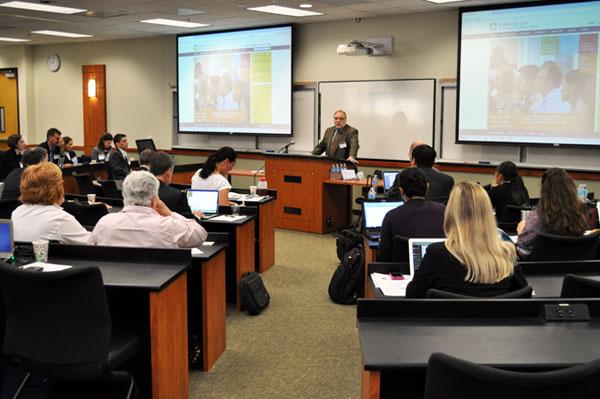
IRVINE, CALIFORNIA – Experts gathered here last week addressed the question of – one year later - what does the United States Supreme Court’s decision on human gene patents mean for scientific research and patent policy?

Leading US trade associations representing the high-technology industry yesterday issued a joint letter urging the Senate to pass reforms to US surveillance programmes. The effort comes after revelations about the US surveillance have harmed overseas markets for US technologies, they said.
By William Rava and Jason Howell, Perkins Coie Product packaging is an increasingly important marketing opportunity. Well-executed product packaging can support and strengthen your brand identity, differentiate your product on the shelf, and convey important, and often required, information to…
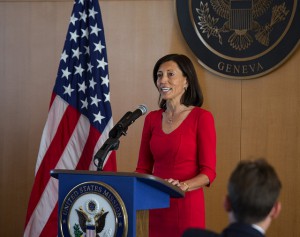
Newly arrived United States Ambassador to the UN in Geneva Pamela Hamamoto last week met with journalists for the first time by highlighting internet governance and Ebola, with a mention of intellectual property rights, among other issues.

Will India’s new government bring in radical changes in the country’s intellectual property rights regime? That question has generated enormous buzz but no definitive answer ever since the Bharatiya Janata Party (BJP) swept to power with a decisive mandate in May this year.
[Update: the Indian government has announced that it has begun a process for a comprehensive IPR policy over the next six months, including a government think tank. See report here. The government website is here.]
The US IP industry is applauding the nomination of trademark attorney Daniel Marti to be the next US Intellectual Property Enforcement Coordinator.
The Washington Post story, How patent reform’s fraught politics have left USPTO still without a boss (July 30), is a vivid account of how patent reform has divided the US economy, preempting a possible replacement for David Kappos who stepped down 18 months ago. The division is even bigger than portrayed. Universities have lined up en masse to oppose reform, while main street businesses that merely use technology argue for reform. Reminiscent of the partisan divide that has paralyzed US politics, this struggle crosses party lines and extends well beyond the usual inter-industry debates. Framed in terms of combating patent trolls through technical legal fixes, there lurks a broader economic concern – to what extent ordinary retailers, bank, restaurants, local banks, motels, realtors, and travel agents should bear the burden of defending against patents as a cost of doing business, writes Brian Kahin.
The recent case of a monkey selfie that went viral on the web raised thorny issues of ownership between a (human) photographer and Wikimedia. Two attorneys from Morrison & Foerster sort out the relevant copyright law.
Compulsory licences should be issued to roll out generic versions of innovative HCV drugs. Only generic competition can push down the extortionate prices of these lifesaving medicines, while placing equitable access and public interest before monopolistic pharma companies’ business strategies, Daniele Dionisio argues.
The Takedown Project is a recent initiative bringing the research community together to explore how the notice-and-takedown procedure in cases of alleged online copyright infringement are handled by internet service providers around the world. The project aims to create greater transparency in order to improve the quality of this global regulatory system.
An Indian pharmaceutical industry group has challenged the United States Trade Representative’s assessment of India’s intellectual property protection regime and suggested that India received more severe treatment than other countries solely on the basis of treatment of patented pharmaceuticals that it says is allowed under international rules.