Category North America

Statement: Blumenthal Offers Amendment On Trade Transparency

Senators Blumenthal, Brown, Baldwin, and Udall introduced today a trade negotiation transparency bill that would require that all formal U.S. proposals for trade agreement restrictions on domestic regulations be posted on a website. This is a common sense policy that should be broadly supported. The bill would require policies similar to the transparency policies currently followed by the European Union and by intergovernmental organizations that set similar minimum regulatory standards. But it would be a major change in the current process for trade negotiations followed by the U.S. Trade Representative, which are infamously secretive, write Sean Flynn and David Levine.

US Ponders New Trademark Rights For Racial Slurs

Some words are too offensive to be registered trademarks. Racial slurs, derogatory names for ethnic groups, and other terms that disparage people can be denied registration, according to the vast majority of countries. The US, however, might soon back away from this anti-bigotry stance. The nation’s courts may be on the verge of ruling that the registration of derogatory terms is protected by the Constitution’s guarantee of free speech.

Q&A With US On Concerns About Lisbon GI Treaty Negotiation

Next week, the 28 members of the Lisbon Agreement for the Protection of Appellations of Origin and their International Registration administered by the World Intellectual Property Organization are expected to conduct a high-level negotiating meeting to agree on a new Act of the agreement. Major changes expected are the inclusion of geographical indications in the agreement, and the possibility for intergovernmental organisations such as the European Union to become members of the revised agreement.

The United States has been among the leading countries concerned about the negotiation. In a Q&A, the US in written answers explained the concerns. The questions were sent by Intellectual Property Watch’s Catherine Saez.

United States Hopeful Lisbon Members Will Open Diplomatic Conference To All

During a press briefing today the United States said they still have hope that the 28 members of a World Intellectual Property Organization-administered treaty will let the whole WIPO membership participate in next week's negotiations to amend that treaty. It said that the potential new treaty protecting appellations of origins and set to include geographical indications can impact the economies of many non-member countries.

Philanthropies And Expression: An Interview With Ford Foundation President Darren Walker

Darren Walker is president of the Ford Foundation, one of the largest and historically most influential private philanthropies in the United States, dedicated to human welfare worldwide. Among its areas of focus are programs on freedom of expression and internet rights, extremely timely given current national and global events. Ford, along with four other leading foundations, and leaders from government, business and the technology community recently announced NetGain, a partnership to “spark the next generation of innovation for social change and progress.” Intellectual Property Watch’s William New recently interviewed Darren Walker on his vision for the foundation, internet governance, and the world at large.

Divide And Conquer: The New US Strategy To Disentangle The TPP Negotiations

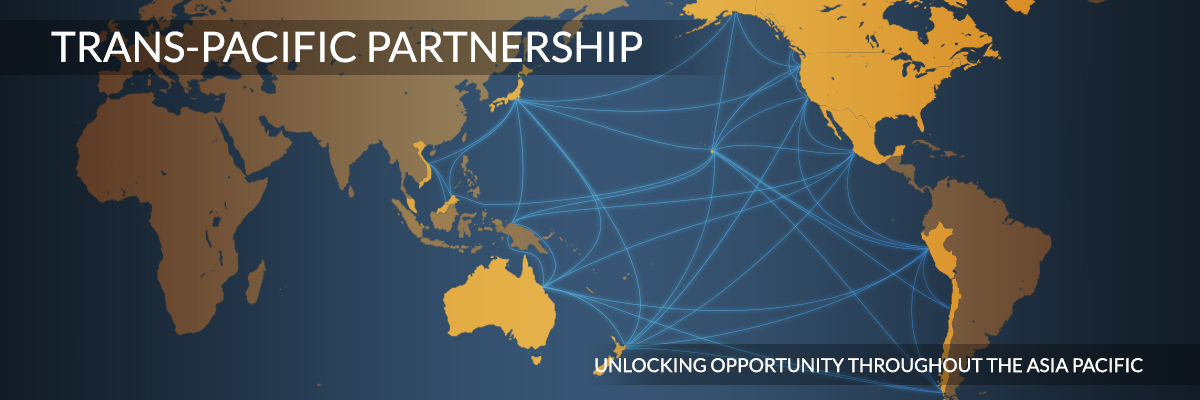
Burcu Kilic & Pablo Viollier write: Political leaders in Washington and other Trans-Pacific Partnership (TPP) negotiating countries have set the end of May as the latest deadline for completion of the talks. The negotiations have already missed several such deadlines, so who really knows? No one. But there is something we all know: TPP raises significant concerns because negotiations are being held behind closed doors with details kept secret even from the legislatures in TPP countries.

Industries Duelling For Attention Over GIs In Trade Deals

The trade promotion authority (TPA), or fast-track, legislation proposed by three senators last week in the US Congress contains provisions that would reinforce the US position on limiting geographical indications in trade deals. At the same time, European-led industry groups held an event in Washington to highlight the advantages of GIs in trade deals.

Update On Yale/IP-Watch Effort To Open TPP Texts

Intellectual Property Watch has been working for several years to obtain more details about the intellectual property aspects of the Trans-Pacific Partnership (TPP) agreement negotiations through a Freedom of Information Act (FOIA) request, and a subsequent lawsuit to enforce that request, which is being led by a team at the Media Freedom and Information Access Clinic at Yale Law School (MFIA). Today MFIA, a program of Yale's Information Society Project and Abrams Institute, released an update on the case.