Category North America

IP World Enters New Year With Major Shift Of People In Pharma, Copyright

As a new year dawns, a lot of movement has been observed in the pharmaceutical industry with new key players taking the lead. Meanwhile, new delegates are covering IP issues in Geneva, and coordination of regional groups at the World Intellectual Property Organization makes its usual yearly shift for 2017. The copyright industry also saw major changes, and law offices have been busy hiring new partners.

2016 USTR List Of ‘Notorious’ Markets: Stream Ripping, Taobao And Switzerland

The United States Trade Representative’s office today released its annual “notorious markets” for intellectual property-infringing goods, with a list of 21 online and 12 physical markets worldwide. Many of the online sites are based across Europe, including several in Switzerland, but also in Russia and China as in the past. A big feature is China's Taobao, and new methods like stream ripping.

US Supreme Court Eyes Patent-Enforced Post-Sale Restrictions

Few were surprised when, earlier this month, the US Supreme Court agreed to hear the appeal in Impression Products, Inc. v. Lexmark International. The case presents two important patent law issues, and the lower court’s ruling on these issues conflicts with Supreme Court precedents, according to many experts.

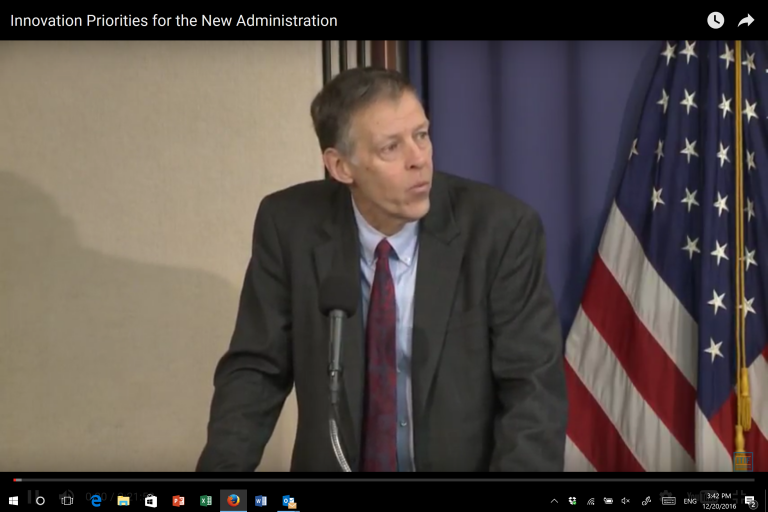
Podcast: ITIF’s Atkinson On Trade, Innovation, China In Trump’s Washington

A major shift is underway in Washington that is expected to have ramifications for global trade, innovation, and intellectual property enforcement, as Donald Trump steps into the United States presidency. IP-Watch caught up with Rob Atkinson, president of the Information Technology & Innovation Foundation to get his view on what's to come. Among the predictions: the Washington Consensus on trade gets turned on its head, enforcement will rise including at multilateral level, the US will have many new ideas but iPhones will not be made in the US, and a much-needed "reset" of the US policy on China will bring greater mutual respect - if done right.

Idea Of A Multilateral Investment Court Makes Headway, Proponents Say

The European Union and Canada held an informal meeting in Geneva this week to present a project for a multilateral investment court to handle global investor-state disputes, hoping to draw interest and questions by other country delegates, according to sources. Time will be needed to gain acceptance of the idea, they said, and the next opportunity will be at the January World Economic Forum in Davos.

USPTO Director Lee Discusses Importance Of Patent Quality

Opening a conference on patent quality today, United States Patent and Trademark Office Director Michele Lee highlighted efforts of the administration in improving the quality of patents and addressing backlog of patent applications. Patent backlog is down by one-third since the start of the Obama administration, she said.

EU, Canada Meet To Discuss A New Model For Investor-State Trade Disputes

The European Commission and the Canadian government today and tomorrow are hosting a first meeting for talks on a new multilateral investment court. Such a court could, the European Commission explained in an announcement, become the follow-up mechanism for the existing investor-state dispute settlement (ISDS) provisions that are part of 3,200 bilateral and multilateral free trade agreements around the world.

UAEM Targets Accessible Medicines, R&D Financing, Publicly Funded Research

From extracurricular creativity to global campaigns, Universities Allied for Essential Medicines (UAEM) continues in its activities to raise awareness and explore how universities can best direct their research and innovations towards promoting global access to medicines. In the next year, UAEM will extend its national and international campaigns to address the high prices of medicines, continue to gather support for a global agreement on research and development and build on the mapping alternative R&D initiatives.

Open Source Software A Core Competency For Effective Tech M&A

Imagine your company just acquired its competitor for $100 million. Now imagine the company’s most important asset – its proprietary software – is subject to third-party license conditions that require the proprietary software to be distributed free of charge or in source code form. Or, imagine these license conditions are discovered late in the diligence process, and the cost to replace the offending third-party software will costs tens of thousands of dollars and take months to remediate. Both scenarios exemplify the acute, distinct and often overlooked risks inherent to the commercial use of open source software. An effective tech M&A attorney must appreciate these risks and be prepared to take the steps necessary to mitigate or eliminate them.