Category Venues

Health R&D Still Underfunded – WHO Members Concerned, NGOs Call For More Ambition

Hopes of stimulating research and development for diseases affecting primarily poor countries and vulnerable populations, through a strategic work plan at the World Health Organization, are dimmed by the lack of funding. An R&D project on a single-dose malaria cure had to be cut short, while a global observatory for health research and development, recently launched, might be hampered in its progress, according to officials.
Global Health R&D: Evidence, Priorities, Coordination

World Health Assembly Agenda Item 13.5 is descriptively-yet-uninformatively labelled “Follow-up of the report of the Consultative Expert Working Group on Research and Development: Financing and Coordination (CEWG).” But that anodyne title actually masks an important milestone in the World Health Organization’s long-running efforts to increase R&D around neglected diseases and diseases of poverty.

Unlikely Alliance Of India, US Could Keep Medicines Access On WHO Agenda

It is not often that on the matter of access to medicines, India and the United States agree at the World Health Organization. But the issue of access to medicines is rising on the international agenda and developed countries are feeling the bite of prices of new medicines. Core beneficiaries of the patent system held steady this week, but among their defenders, the issue is blurring as some countries, such as the Netherlands, Greece and Portugal, are not putting up with industry prices and are saying it.

Review Of WHO Public Health And IP Strategy: Help Needed On TRIPS Flexibilities

International organisations, in particular the World Health Organization, should help poor countries implement the flexibilities enshrined in international trade rules, a number of developing countries said at the World Health Assembly on 26 May. WHO members in committee hailed and noted a report on the organisation's strategy on public health, innovation and intellectual property, the first part of an overall review. Civil society had another take on the report, and deplored slow progress on access to medicines.

A Price Too Good To Be True

Steven Tepp writes: Virtually every consumer in every country wants products and services as inexpensively as possible. Nowhere is that demand more acute than in health care, where quality of life, and life itself, is at stake. In Europe, most national governments use the monopsony power of a single-payer national health care system to negotiate (or dictate) what prices they will pay, an activity that has been considered “anti-competitive” in EU private markets. And some governments simply issue price controls.

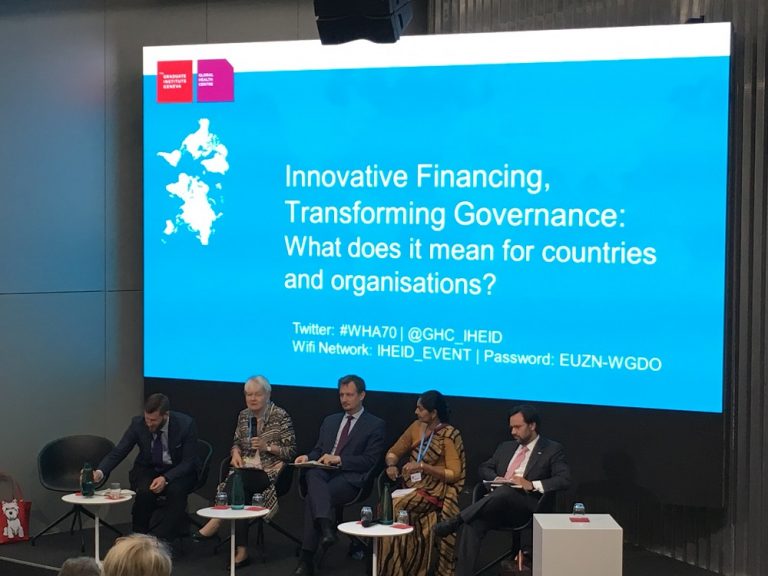
Will The Money Keep Rolling?: Innovative Global Health Financing And Governance

We are in a liminal moment for global health financing. The “golden age” of increasing donor funding is clearly over, arrested by the 2008 financial crisis. But while donor contributions are no longer climbing, they have not been falling, either. And it is possible this status quo will hold… But it’s equally possible that this is just the pause before the roller-coaster drops. Considering that Gavi, the Global Fund, and the World Bank will all be launching another replenishment round in 2019—and given the uncertainty surrounding US foreign aid commitments and post-polio financing—that drop may prove very steep indeed.

Head Of WHO Health Systems Lays Out IP Issues At WHA

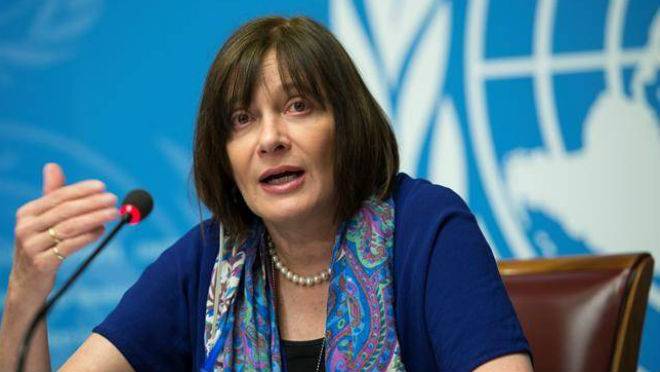
The annual World Health Assembly will address several issues related to intellectual property and innovation, Marie-Paule Kieny, assistant director-general for health systems and innovation at the World Health Organization, said in an interview this week. But a new initiative at WHO on fair pricing of medical products may not be among them in a significant way. [Update: the latest on the state of play on the UN High-Level Panel on Access to Medicines is being provided in real time below.]

Decision On Pandemic Flu Framework At WHA: Look Closer At Changes

A committee at the World Health Assembly yesterday decided to seek a closer look at consequences of potential changes to the WHO framework on pandemic influenza. The decision, still to be confirmed by the World Health Assembly, requires in-depth analysis of how to handle pandemic flu viruses under the framework, whether the framework should cover seasonal influenza, and whether the framework should become a specialised international instrument on access and benefit-sharing.