Category Venues

Polypills: Are Miracle Treatments Being Overlooked?

Cardiovascular diseases (CVD), a group of conditions that can result in heart attacks and strokes, is the world’s number one killer, accounting for one-third of deaths throughout the world, according to research released recently (17 May) by the Institute for Health Metrics and Evaluation (IHME) at the University of Washington.

World Health Assembly Adopts Resolution Supporting Tax On Tobacco, Alcohol, Sugar

Cancer, diabetes, heart disease and chronic respiratory diseases are killing millions of people each year, making noncommunicable diseases the leading global cause of human deaths, many of them premature. This week, the World Health Assembly endorsed an updated set of policy options for countries to help them with the prevention and control of those diseases. On the list is a suggestion for tax increases on tobacco products and alcoholic beverages, and the reduction of salt intake. Supported by many countries, it was resisted by the United States and Italy.

Top 5 IP Offices Advance Patent Harmonisation

Celebrating their tenth anniversary of working together, the intellectual property offices of Europe, Japan, Korea, China and the United States today concluded a meeting of the so-called IP5 by announcing efforts to further harmonise their patent practices. This includes measures affecting global instruments like the Patent Cooperation Treaty.

EU Trade Politicians Consider Picking Up Pieces Of Trade Negotiations

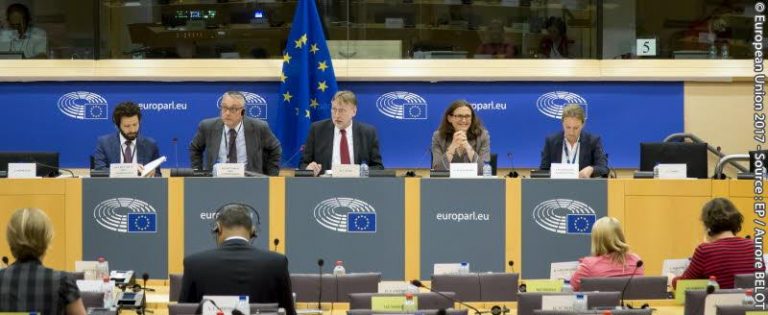
European Union trade politicians and their counterparts from the United States need more time to consider next steps in their trade relations, EU trade Commissioner Cecilia Malmstroem said during a session with the trade committee of the European Parliament this week. At the same time, she reported that Trans-Pacific Partnership (TPP) and Trade in Services Agreement (TISA) negotiating partners have been turning to Europe to make headway. Meanwhile, former EU Justice Commissioner and member of the European Parliament, Viviane Reding, called for a counter-offensive to rising protectionism.

WTO Annual Report Highlights TRIPS Amendment

“A moment of real historic significance for the World Trade Organization” was the entry into force of the Trade Facilitation Agreement (TFA) together with the amendment to Agreement on Trade-Related Aspects of Intellectual Property Rights (TRIPS), WTO Director-General Roberto Azevêdo said this week.

A Summary Of Key IP-Related Actions Taken By The 70th World Health Assembly

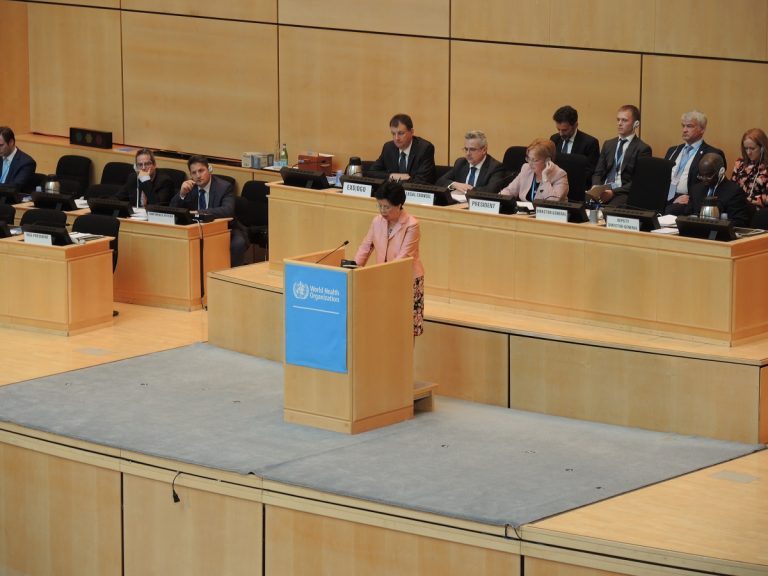
After what was described as the biggest World Health Assembly ever, with the highest number of agenda items and the highest attendance, it seemed that all’s well that ends well at the closing ceremony earlier today. A notable fact during this assembly has been the rising volume of voices from developing countries, joined by developed countries on issues related to access to affordable, safe, and efficacious medicines. Resolutions and decisions were adopted, many with hopes of better addressing challenges such as antimicrobial resistance, cancer, substandard and falsified medical products, medicines access and shortages and more.

WHO Asked To Square Its Position On Herbicide; EU Evaluation Seen As Flawed

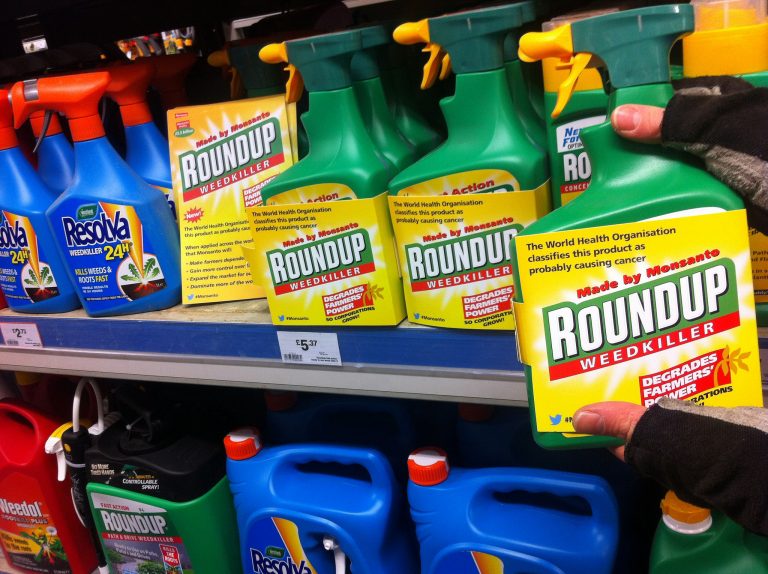
Does glyphosate, better known under its brand name RoundUp, increase the risk of cancer in humans, or not? Yesterday, some World Health Organization members, while hailing a draft resolution on cancer later adopted, underlined a lack of coordination on glysophate between the WHO and its agency for cancer research. Separately, a renowned scientist sent a letter to European Commission President, Jean-Claude Juncker, saying the evaluations on the herbicide are flawed, and should be done again to safeguard public health.

Resolution On Cancer Hailed By WHO Members, Easily Adopted In Committee

It is not a mystery, cancer has been spreading for decades, in particular in low and-middle income countries, and is not stopping its course in the foreseeable future. Members of the World Health Organization in committee yesterday adopted a resolution to improve prevention, diagnostics, treatment, and palliative care for cancer, in statements stripped of controversy.

US Supreme Court Adopts International Exhaustion For Patents: Paving the way for parallel imports to exert downward pressure on domestic pharmaceutical (and other) prices

Frederick M. Abbott writes: The Supreme Court of the United States on May 30, 2017 adopted a rule of international exhaustion of patent rights for the United States in Impression Products v. Lexmark International, No. 15-1189. The near-unanimous decision authored by Chief Justice Roberts is unambiguous and unequivocal.[1] The Court paid short shrift to contrary decisions of the Court of Appeals for the Federal Circuit in Jazz Photo Corp. v. International Trade Commission, 264 F. 3d 1094 (Fed. Cir. 2001) and in this case on certiorari, Lexmark International v. Impression Products, 816 F.3d 721 (Fed. Cir. 2016).

In addition to adopting international exhaustion, the Supreme Court ruled firmly against enforcement of post-sale restrictions through infringement actions based on patent. The Court allowed for enforcement under contract law of limitations that may be included in patent licenses.

WHA Committee Bans IP Reference In Substandard And Falsified Medicines

The “delicious acronym SSFFC” - as described by Marie-Paule Kieny, assistant director-general for Health Systems and Innovation at the World Health Organization - will no longer be used by WHO to describe substandard and fake medical products, when a committee's decision is adopted by the full World Health Assembly tomorrow. And key to this decision is that protection of intellectual property rights is not a competence of the UN health agency.

Cancer Drugs: Innovation ‘Blackmail’ Leads To Unaffordable Prices, Delinkage Needed, Speakers Say

What if you get an aggressive form of breast cancer, and the treatment exists but it is too expensive for you to get? You die. Tragic stories and the possibilities to avert them were centre stage at a panel last week on the margin of the ongoing World Health Assembly. Delinking the cost of research and development from the market prices of medicines was urged by speakers on the panel: representatives of cancer patients, civil society, and the Brazilian deputy ambassador.