Category Venues

Circuit Courts Open As Satellites Of China’s Supreme People’s Court

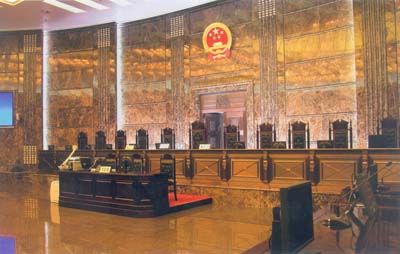
After long preparations, the Second Circuit Court of China’s Supreme People’s Court was officially instituted in Shenyang city, Liaoning province in northeast China on 31 January. Qiang Zhou, president and chief judge of China’s Supreme People’s Court, attended and addressed the nameplate unveiling ceremony of the Second Circuit Court.

Special Report: Will India Bend To US Pressure On IP Rights?

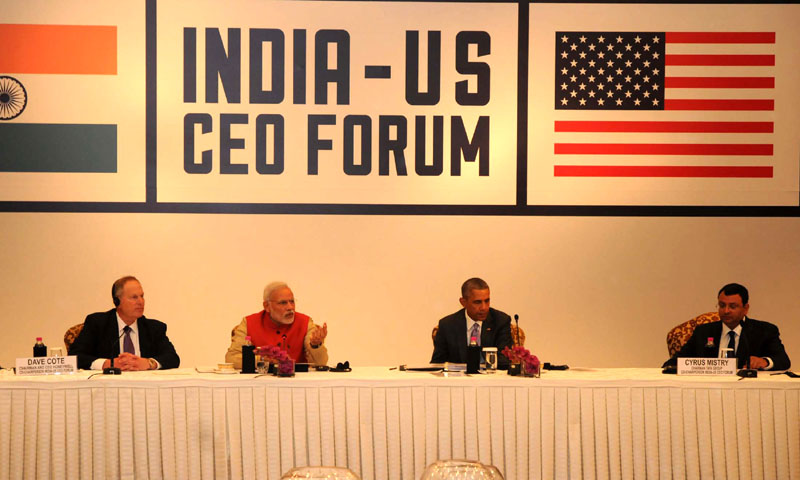
It is no secret that the United States has been scaling up pressure on India to adopt intellectual property measures similar to those common in the United States and the European Union. But to what extent does India’s new government led by the business-friendly Narendra Modi see eye to eye with US official position? Can India, the “pharmacy of the world”, resolve the friction between pharmaceutical patents and access to affordable medicines without putting off foreign investors? The vitriolic and polarising debate surrounding these questions has got a fresh lease of life following US President Barack Obama’s landmark three-day visit to India this week.

While Indian and American business moguls are bullish about the future, Indian generic drug-makers as well as health activists within and outside India are deeply anxious about the shape of things to come


Technical Investigators Have Rules To Follow In China’s Intellectual Property Courts

BEIJING - With the Beijing, Shanghai and Guangzhou Intellectual Property Courts being put into operation late last year, the rules for technical investigators had been missing until 21 January, when the Supreme People’s Court released the Provisional Regulations of the Supreme People’s Court on Several Issues concerning the Participation of Technical Investigators in Intellectual Property Court Proceedings. This is China’s first of its kind making rules for technical investigators.

Looking Behind The Different Invalidation Rates Of Oppositions And IPRs

Opposition proceedings in Europe have long served as a powerful tool for third parties to challenge the validity of a patent before the European Patent Office (EPO). Now, under the America Invents Act (effective September 2012), the United States (US) has two new procedures for challenging the validity of a patent before the US Patent and Trademark Office (USPTO): inter partes review (IPR) and post-grant review. Current statistics indicate a higher invalidation rate for IPRs as compared to EPO oppositions.

The Challenge Of Complying (Or Not) With Communication Laws Online

Is it possible to fully comply with all the laws surrounding online communication? Michel Jaccard, founder of id est avocats says, “The answer is, ‘no.’” Speaking last week at the Club Suisse de la Presse, Jaccard made the case that when it comes to the online world, we should look beyond legal compliance and start thinking more strategically.

New Proposal To Extend WHO Action Plan On Innovation, IP Rights

At the World Health Organization Executive Board today, a group of countries tabled a proposal to extend the WHO plan of action on public health, innovation and intellectual property until 2022. Yesterday, the Executive Board took note of the Global Vaccine Action Plan while some countries remarked on issues of affordability and accessibility. And today, one of the key discussions of the week - on the engagement of WHO with lobbyists, donors, and other interested non-governmental parties - has begun.

Ebola, Reform High On WHO Executive Board Agenda This Week

The World Health Organization Executive Board yesterday adopted a resolution on Ebola, on the eve of today’s opening of its 10-day meeting addressing a broad range of health issues, including several of relevance to the intellectual property and innovation community. Today, Italy requested that member states be involved in the setting of WHO guidelines, raising governance issues, while WHO Director General Margaret Chan called for strong health systems and reform to the WHO structure, and asked for room to move on WHO relations with industry.

The Year Ahead In Internet Governance: Of Competing Institutions, IANA Transition, And A New Crypto War

For many years Electronic Frontier Foundation Policy Analyst Jeremy Malcolm has been predicting the next year would be the pivotal year for the UN-led Internet Governance Forum (IGF). With the NetMundial Initiative being constructed these coming months and governments having not yet agreed to prolong the IGF mandate, the decade-old forum might be challenged to either move or become just one of many internet governance conference venues. And while some hope the future oversight over the internet’s underlying IANA function could become an experiment in shared global governance, others point out that more and more of the interesting questions of internet politics are decided elsewhere: national governments, trade negotiators, big data giants and cyberdominance strategists.