Category Venues

WHO Reforms Health Emergency Response But Who Will Pay The Bill?

Two years after Ebola, the World Health Organization continues to push forward with a thorough overhaul of how it responds to health emergencies. These include Public Health Emergencies of International Concern (PHEICs), such as the Ebola and Zika outbreaks, as well as natural diseases, conflicts, refugee crises, and the like.

EU Council Green-Lights Trade Secrets Directive

The European Union trade secrets directive passed its final hurdle on 27 May when EU governments backed compromise text approved by the European Parliament on 14 April. Once the law has been formally published, member states will have up to two years to incorporate its provisions into domestic law.

Against Microbial Resistance Peril, WHA Delegates Discuss Global Solutions, Approve Report

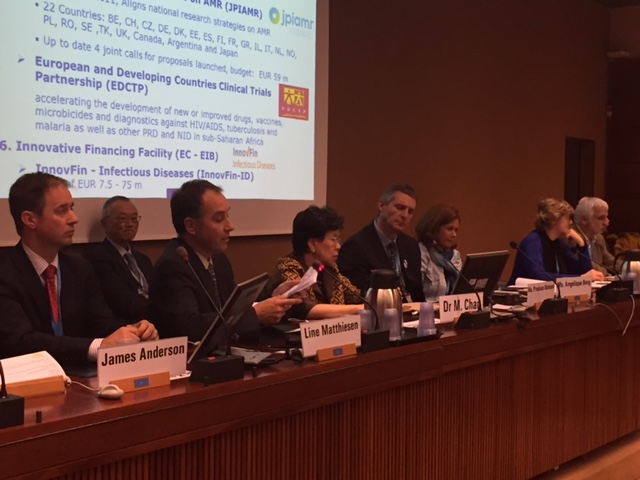
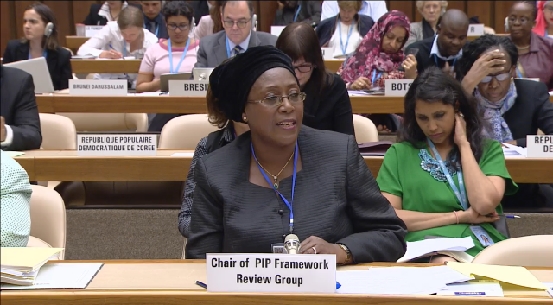
According to a new report, by 2050, some 10 million lives could be lost a year due to antimicrobial resistance. This is an issue which has been central to this year’s World Health Assembly, and is of global consequence. Delegates gathered for the occasion noted a report by the World Health Organization secretariat on the global action plan on antimicrobial resistance adopted last year and options to develop a global stewardship framework to try to limit the use of antibiotics and develop new ones.

Shift In Discussions About R&D At This Week’s World Health Assembly

Public health advocates - and many nations - had high hopes that this year's World Health Assembly could finally agree on some alternative ways to fund research and development that leads to affordable medical products by de-linking R&D costs from prices, through the long-awaited discussion of a landmark 2012 report of a WHO expert group on medical R&D. This week, that discussion has spread across the highest profile topics of the week such as antimicrobial resistance and emergencies, but some are concerned that the public health safeguards recommended by the expert group may be being left behind.

Amending Pharmaceutical Industry Practices Can Build Trust, Panellists Say

At a side event to this week's World Health Assembly, GlaxoSmithKline detailed measures taken by the company to dispel the perception of conflict of interest, and build trust, including amending the ways its sales forces operate, and no longer paying speakers at scientific congresses, and said it wants to provide leadership on the issue. Patients and physicians associations call for mainstreaming those practices.

G7, In Japan, Put Their Heads Together Over Crises

Eight ministerial meetings have prepared a fat stack of paper, the “sherpas” have nearly concluded their work, and civil society once more has passed its own resolution on how they propose to tackle the most daunting global problems. Now it's time for the G7 leaders' roundtables – and the photo ops in Ise-Shima, Japan. For two days, the heads of state of Canada, France, Germany, Italy, Japan, the United Kingdom and the United States will talk on trade, foreign policy, climate change and energy. And maybe some digital, R&D and intellectual property issues.

Leaked EU Document Lays Out Major Evaluation Of EU Drug Pricing

The 28 European Union member governments are preparing to request the European Commission to conduct an in-depth evaluation of the availability and affordability of EU medicinal products that could lead to changes in R&D and pricing models. An apparent first-of-its-kind, the assessment would look at market and data exclusivity, supplementary protection certificates, and intellectual property issues, according to an alleged copy of the draft Council conclusions obtained by Intellectual Property Watch.