Category Technical Cooperation/ Technology Transfer

Circuit Courts Open As Satellites Of China’s Supreme People’s Court

After long preparations, the Second Circuit Court of China’s Supreme People’s Court was officially instituted in Shenyang city, Liaoning province in northeast China on 31 January. Qiang Zhou, president and chief judge of China’s Supreme People’s Court, attended and addressed the nameplate unveiling ceremony of the Second Circuit Court.

Special Report: Will India Bend To US Pressure On IP Rights?

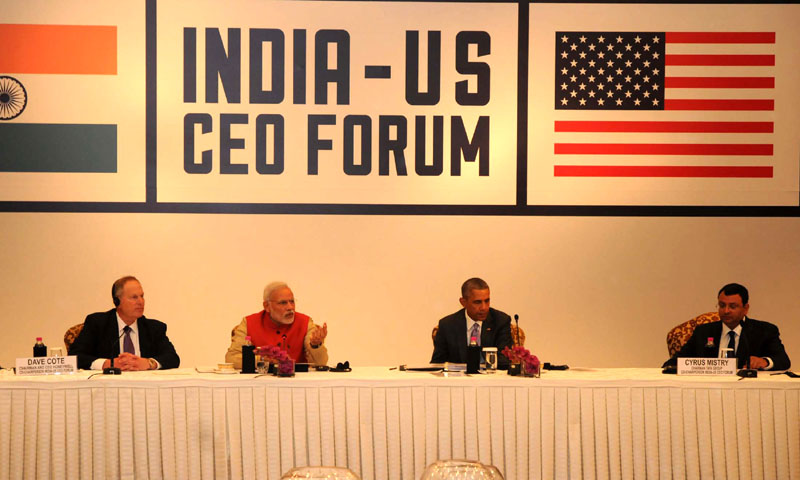
It is no secret that the United States has been scaling up pressure on India to adopt intellectual property measures similar to those common in the United States and the European Union. But to what extent does India’s new government led by the business-friendly Narendra Modi see eye to eye with US official position? Can India, the “pharmacy of the world”, resolve the friction between pharmaceutical patents and access to affordable medicines without putting off foreign investors? The vitriolic and polarising debate surrounding these questions has got a fresh lease of life following US President Barack Obama’s landmark three-day visit to India this week.

While Indian and American business moguls are bullish about the future, Indian generic drug-makers as well as health activists within and outside India are deeply anxious about the shape of things to come


New Proposal To Extend WHO Action Plan On Innovation, IP Rights

At the World Health Organization Executive Board today, a group of countries tabled a proposal to extend the WHO plan of action on public health, innovation and intellectual property until 2022. Yesterday, the Executive Board took note of the Global Vaccine Action Plan while some countries remarked on issues of affordability and accessibility. And today, one of the key discussions of the week - on the engagement of WHO with lobbyists, donors, and other interested non-governmental parties - has begun.

Ebola, Reform High On WHO Executive Board Agenda This Week

The World Health Organization Executive Board yesterday adopted a resolution on Ebola, on the eve of today’s opening of its 10-day meeting addressing a broad range of health issues, including several of relevance to the intellectual property and innovation community. Today, Italy requested that member states be involved in the setting of WHO guidelines, raising governance issues, while WHO Director General Margaret Chan called for strong health systems and reform to the WHO structure, and asked for room to move on WHO relations with industry.

WIPO Re:Search Celebrates 3 Years, Looks To The Future

Several years ago, the World Intellectual Property Organization set up a project aimed at helping bring together those with intellectual property rights and those with ideas for research to develop medical products for people in need. The project, WIPO Re:Search, has gathered numerous partners and is beginning to look ahead to its next phases, including the possible eventuality of drug development, according to the WIPO secretariat.

WHO Report: Access, Affordability Of Medicines Key To Reducing Non-Communicable Diseases

A new report from the World Health Organization examines the Global action plan for the prevention and control of noncommunicable diseases 2013-2020 (known as the Global NCD Action Plan) and provides some “lessons learnt from implementation.” The report calls for urgent action by governments to stop the “epidemic” of cancer and mostly preventable diseases from sources like tobacco use, salt intake, physical inactivity, and high blood pressure. This includes ensuring treatment is available and affordable, it says.

Key Hepatitis C Patent Rejected In India

Today's rejection by the Patent Office Controller of India of a patent application by Gilead company for a key drug against hepatitis C is being hailed by advocates as a path to dramatically lower costs of treatment for the disease. Hepatitis C has been noteworthy for exorbitantly priced medicines over the past year. A look at the decision shows that a provision in India's law continues to stop patent applications if they fail to show sufficient novelty and inventive step - and are subject to opposition.

CARICOM, Trans-Pacific Partnership, And IP Law & Policy: What Next?

The year 2015 has dawned as usual with the fanfare of greater things to come. Caribbean projects are in the pipeline, along with activities to enhance competitiveness and many gallant efforts by well- meaning non-governmental and International organizations. The research has shown, however, that without the impetus of effort that originates from amongst the local innovators, there is no real change and no great advancement.