Category Themes

US Copyright Royalty Board Boosts Songwriters’ Streaming Pay Nearly 50%

Variety reports: The [US] Copyright Royalty Board has ruled to increase songwriter rates for interactive streaming by nearly 50% over the next five years, in a ruling issued early Saturday. Equally important, the CRB simplified and strengthened the manner in which songwriters are paid mechanical royalties, modifying terms in a way that offers a foothold in the free-market.

WHO: Access To Hepatitis C Treatment Increasing, But Most Patients Undiagnosed

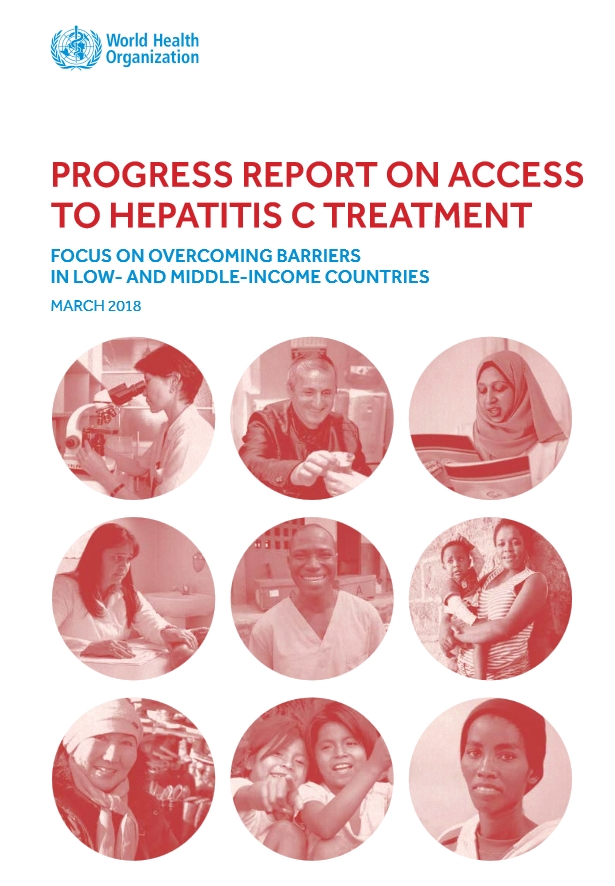
Access to hepatitis C treatments is increasing, so are therapeutic options, but most of those living with the disease are not diagnosed and thus remain untreated, the World Health Organization found in a new report. Upper-middle income and high-income countries continue to pay high prices, impeding equitable access, and those countries which have been most successful in increasing access have mobilised a strong government response, the report found.

Introduction Of A Grace Period In Europe

The protection of inventions is a cornerstone to encourage innovation as engine of economic growth. As one of the world‘s leading centres for innovation, the level of scientific and technological performance in Germany is very high, thanks to an excellent research landscape and a good technological and economic basis. But the global innovation competition is intensifying, and new competitors are seeking to enter international markets. However, Germany is falling short of its potential when it comes to leveraging technology to create new products, writes Michael Kahnert.

Zimbabwe Establishes An Intellectual Property Tribunal, As A Special Division Of High Court

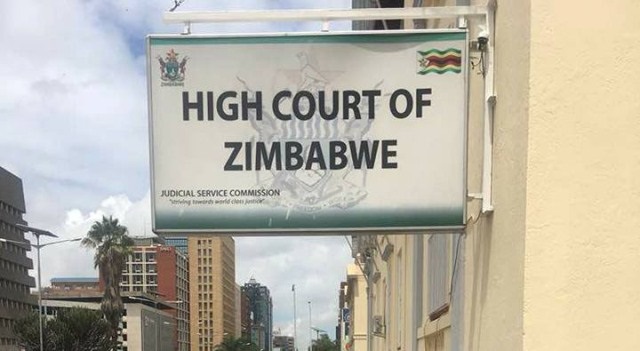
KAMPALA, Uganda -- In what is seen as a significant achievement in the making of history of intellectual property law, the Government of Zimbabwe has instituted and operationalised an Intellectual Property Tribunal, with the mandate to speedily preside over all IP matters, disputes, infringements, passing off and other related issues. The Tribunal recently heard its first case. [A reminder to readers: All IP-Watch stories are totally free for least-developed countries and almost all developing countries. Just sign up for a password under Subscribe.]

US NTIA Boss On Whois Debate: ‘Keep Data Open For IP Rightsholders, Others’

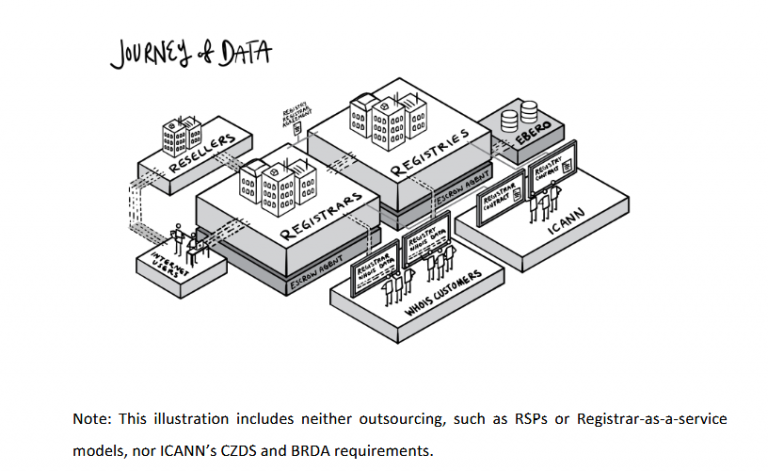
US Assistant Secretary of Commerce for Communications and Information David Redl today weighed in on the debate over changes to the storage and public display of personal information of domain name registrants at the meeting of the Internet Corporation for Assigned Names and Numbers (ICANN) in San Juan, Puerto Rico. Redl urged negotiators to keep the so-called Whois database, described by some as a public phone book for the owners of domain names, as open as possible while implementing the new General Data Protection Regulation (GDPR) of the European Union.

EU Council’s IP Enforcement Changes: Judicial Systems, Customs, Open Source, WIPO – And An IP Watchlist

The European Council of ministers today adopted a set of conclusions on the enforcement of intellectual property rights in the European Union, aimed at improving protection in the digital era and promoting innovation. This includes a list of suggested actions, including possible changes to national laws and judicial systems, bolstering customs, agreements with industry, encouraging open source, strong representation at the World Intellectual Property Organization, and possibly setting up an IP watch list reminiscent of the one in the United States.

New IP-Sharing Framework To Accelerate R&D

Pharmaceutical R&D constantly leads to the generation of new intellectual property (IP), from clinical trial data to libraries of promising compounds. Not all IP assets generated by a company are used in their future R&D. When this happens, companies can choose instead to share them with other third-party researchers, under licensing agreements. The Access to Medicine Foundation has worked with BIO Ventures for Global Health (BVGH) to develop a framework for identifying which IP assets are most difficult for companies to share, yet most likely to speed up R&D of the medicines and vaccines needed by people living in low- and middle-income countries (LMICs), write Clarke B. Cole and Katie Graef.

Fight Ahead Over Website Owner Data At ICANN Meeting This Week

Some of the data collection practices of the Internet Corporation for Assigned Names and Numbers (ICANN), private overseer over the domain name industry, “appear to be excessive, disproportionate, and obtained without the free consent of the individual,” the International Working Group on Data Protection in Telecommunications (IWGDPT) wrote in a paper published on the eve of the 61st ICANN meeting in San Juan, Puerto Rico (9-15 March). During the meeting, controversial discussions about ICANN's just-published interim model for compliance with the European Union General Data Protection Regulation (GDPR) can be expected after ICANN published a “cookbook” for GDPR compliance.

New TPP Still Most Advanced IP Trade Agreement Ever, Think Tank Says

The Comprehensive and Progressive Agreement for Trans-Pacific Partnership (CPTPP) is on track to offer "the most advanced and detailed standards on intellectual property in a trade agreement to date" despite revisions scaling back the IP chapter after the United States dropped out, says the Washington, DC-based Center for Strategic and International Studies (CSIS).

US Generic-Named Food Industries Cry For US Government Help Against ‘Relentlessly Aggressive’ EU

Something that was unimaginable just a few years ago: What if Americans could not buy ordinary bologna, feta or parmesan cheese? Or worse, make them and export them under those names? The industry group in the United States representing a range of products like those today called on the US government to help them defend their products and their jobs against what they called "purposeful," "relentless" and "aggressive" efforts by Europe to promote adoption of geographical indications (products named for places and with particular characteristics) to the detriment of the US common-named goods.

What We Know – And What We Don’t – About Counterfeit Goods And Small Parcels

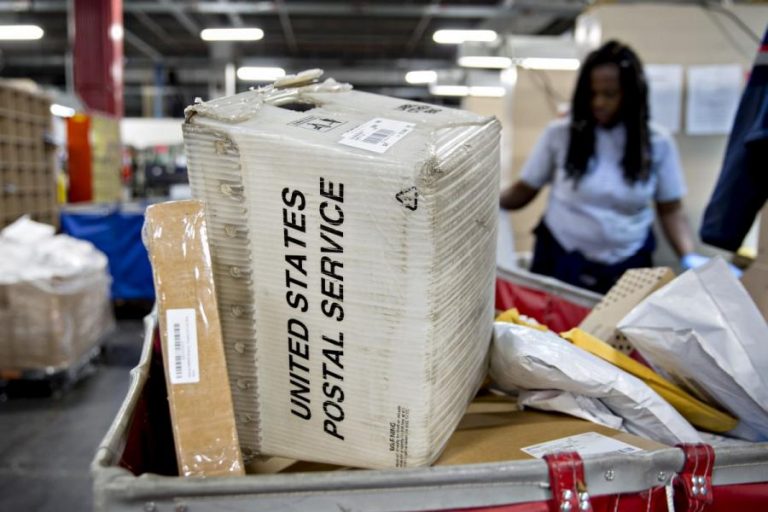
Kasie Brill writes: Cross-border e-commerce is growing exponentially. Consumers can purchase products from all over the world and have them delivered straight to their doors with just the click of a button. In fact, the U.S. Postal Service’s (USPS) international small parcel business increased 232% from 2013 to 2017, when it received nearly half a billion packages.

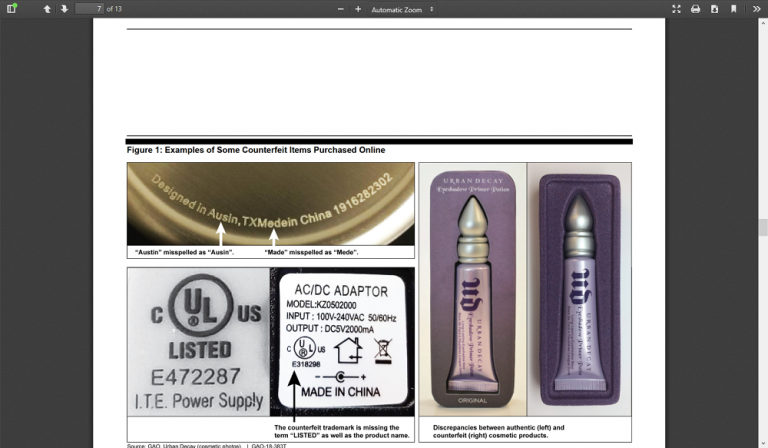
Out of those half a billion packages, USPS only had critical safety information on 36% of them. In other words, millions of packages reached American consumers with little or no security screening at all. Though most of these packages contained exactly what the customer ordered, counterfeiters have discovered that small parcels are an easy means to distribute fake and often dangerous goods.