Category Innovation/ R&D

The Consequences Of Killing USPTO Patent Reviews

Does the US Constitution prohibit the USPTO from striking down issued patents? That question will be decided by the US Supreme Court later this term. Should the Court rule against the USPTO, it would dramatically alter the US patent system in favor of patentees, give a big boost to patent trolls, and damage innovation in the US. The ruling also would make the US an outlier among major industrialized countries – turning it into the only such nation where patents could not be challenged in administrative proceedings.

How USPTO Patent Reviews Became Imperiled

Initially, the lawsuit was widely viewed as a waste of time. The suit asserted a strained legal argument that already had been rejected twice by federal appellate panels, in 1985 and 1992. Yet this lawsuit, Oil States Energy Services v. Greene’s Energy Group, has now reached the US Supreme Court. So later this term, the high court will decide whether the US Constitution prevents the US Patent and Trademark Office from ever striking down issued patents.

Disparity In Access To Medicines Spurs “Humanitarian” Patent Licensing

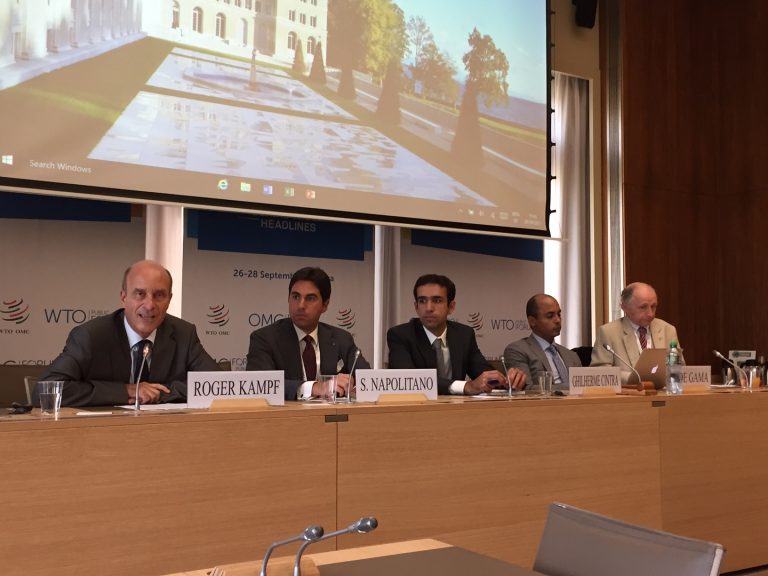
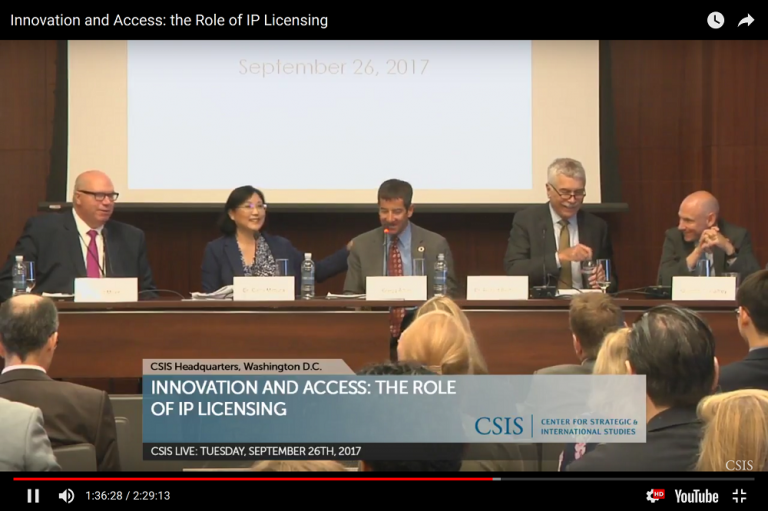
“There are shameful access disparities around the world” to life-saving medicines, Harvard University Global Access in Action project Co-Director Quentin Palfrey said at a 26 September Center for Strategic and International Studies event in Washington, DC. And while some of the challenges to fuller access involve pricing, getting medicines to poorer countries or populations means overcoming the obstacles of insufficient research and development (R&D) incentives, access barriers and polarised politics, he said.

Four Stages To Monetizing A Patent Portfolio

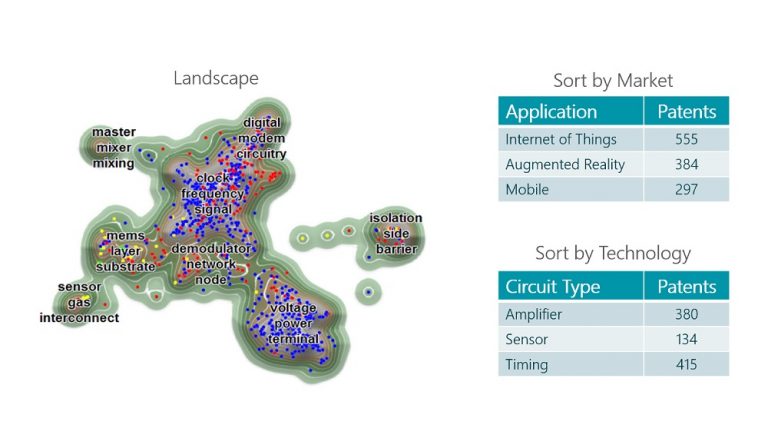
 By Martin Bijman, Director, Intellectual Property Products , TechInsights Successfully pursuing the monetization of IP assets requires an accurate assessment of their value and position within the marketplace. Essentially, monetizing a patent portfolio includes four key steps: Developing an accurate…

Use Competition Law For Wider Access To Cheap Medicines?

The topic of access to medicines has gained momentum in recent years as high prices of new medicines affect developing countries and developed countries. The role of competition legislation in preventing market abuses and monopoly situations has been pointed to as a possible lever to facilitate access to generic medicines and balance the potential negative effects of intellectual property protection.

US Firms Rush To File Patents Ahead Of Driverless Car Boom

The socioeconomic impact driverless cars are expected to have is often compared to that of the internet, or going further back in time, to the industrial revolution. As fleets of vehicles that pilot themselves approach commercial rollout thanks to developments in artificial intelligence (AI), machine learning, and other technologies; original equipment manufacturers are aggressively filing patents for their self-driving vehicle designs. These players include General Motors and its Cruise Automation subsidiary, German automotive supplier Bosch, Ford, which owns a stake in driverless car start-up Argo AI; and Google sister company Waymo.

Panel Debates Potential Impact Of Reversal Of US Administration Patent Review

The United States Supreme Court recently agreed to hear arguments in Oil States Energy Services v. Greene’s Energy Group, a case involving a patent on a device used for hydraulic fracturing (fracking). After the patent was granted, Greene’s petitioned for, and was granted, an “inter partes review (IPR)” by the US Patent and Trademark Office’s Patent Trial and Appeal Board (PTAB). After losing at the board, Oil States asked the high court to determine that IPR, which is used to analyse the validity of existing patents, is unconstitutional because it takes away private property rights by denying Art. III jury trials.

Panel Advances Key Public Interest Issues In Gene Editing Technology

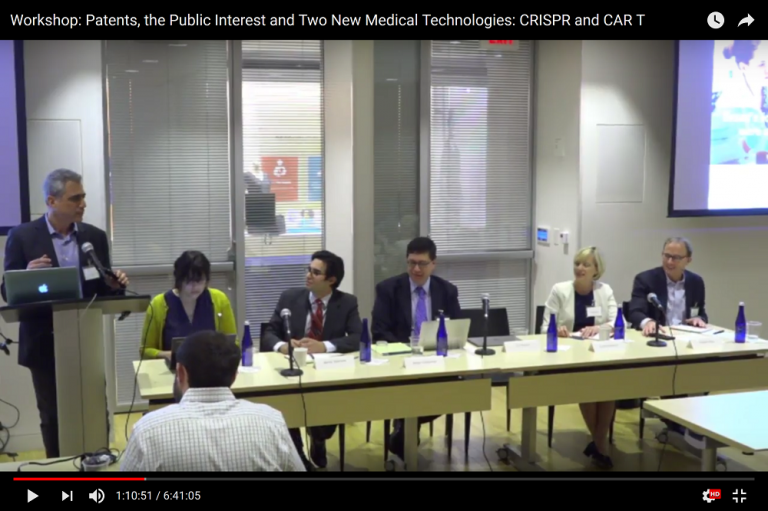
WASHINGTON, DC -- The still-emerging breakthrough CRISPR gene editing tool has the potential to transform the field and do enormous good for humankind. But let’s make sure we understand it better and ensure the public interest before launching into using it too widely. Meanwhile, companies and researchers are actively licensing the technology. That was a message of a set of panellists working close to CRISPR’s development, speaking at a recent event in Washington, DC.