Category Information and Communications Technology/ Broadcasting

Better Cyber Security Problematic, Says US Financial Industry: Power Struggle Over Encryption

A decision to keep third party listeners out of communications on the internet taken by the Internet Engineering Task Force (IETF) at their recent meeting in London elicited an alarmist message from the US financial industry. The premier internet standardisation body would provide “privacy for crooks,” and practically prohibit “bank security guards from patrolling and checking particular rooms” online, BITS, the technology division of the Financial Services Roundtable, argued in a press release last week. Has standardisation gone rogue?

ISPs In US Face New Copyright Challenge

Online firms don’t do enough to combat copyright infringement. That, at least, is what US copyright owners have been saying for years. They recently received some good news from the US Fourth Circuit Court of Appeals. The decision in BMG Rights Management v. Cox Communications puts new teeth in the legal requirements for internet service providers (ISPs) to act against infringing customers. The ruling, however, is worrying ISPs and many legal experts, because it empowers copyright trolls, increases costs for ISPs, and puts many of their customers in an untenable situation.

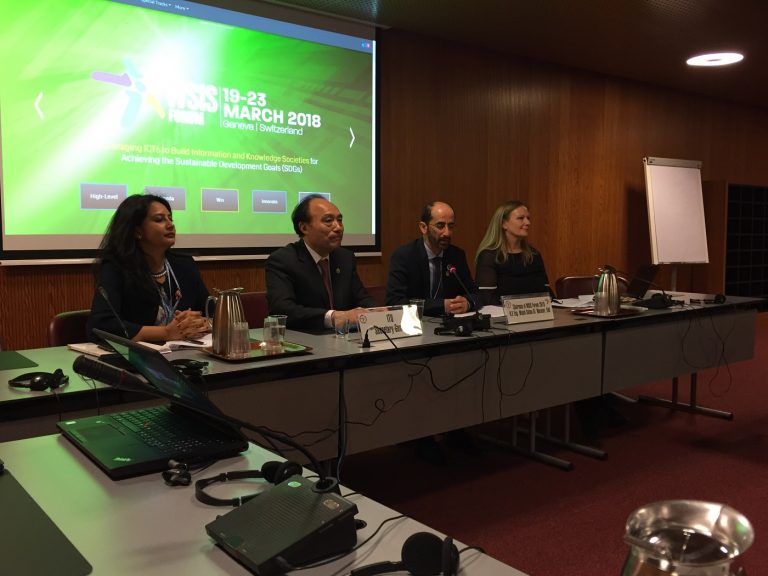
WSIS 2018 Focused On SDGs, Never-Ending Digital Divide, Role Of SMEs

The UN-led World Summit on the Information Society Forum (WSIS) 2018 opened its doors this week, with over 2,500 participants. This year, the focus is on sustainable development. International Telecommunication Union (ITU) Secretary General Houlin Zhao underlined the importance of reducing the digital divide in a press briefing this morning.

US Copyright Royalty Board Boosts Songwriters’ Streaming Pay Nearly 50%

Variety reports: The [US] Copyright Royalty Board has ruled to increase songwriter rates for interactive streaming by nearly 50% over the next five years, in a ruling issued early Saturday. Equally important, the CRB simplified and strengthened the manner in which songwriters are paid mechanical royalties, modifying terms in a way that offers a foothold in the free-market.

US NTIA Boss On Whois Debate: ‘Keep Data Open For IP Rightsholders, Others’

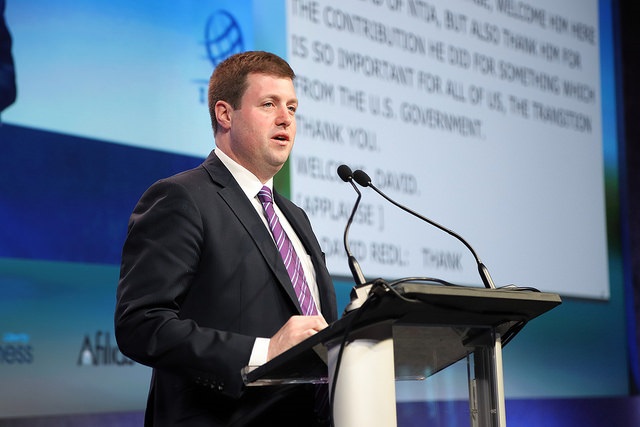
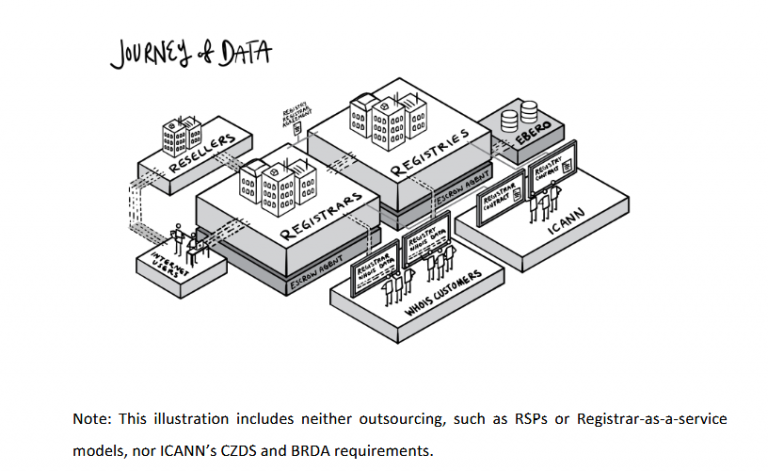
US Assistant Secretary of Commerce for Communications and Information David Redl today weighed in on the debate over changes to the storage and public display of personal information of domain name registrants at the meeting of the Internet Corporation for Assigned Names and Numbers (ICANN) in San Juan, Puerto Rico. Redl urged negotiators to keep the so-called Whois database, described by some as a public phone book for the owners of domain names, as open as possible while implementing the new General Data Protection Regulation (GDPR) of the European Union.

Fight Ahead Over Website Owner Data At ICANN Meeting This Week

Some of the data collection practices of the Internet Corporation for Assigned Names and Numbers (ICANN), private overseer over the domain name industry, “appear to be excessive, disproportionate, and obtained without the free consent of the individual,” the International Working Group on Data Protection in Telecommunications (IWGDPT) wrote in a paper published on the eve of the 61st ICANN meeting in San Juan, Puerto Rico (9-15 March). During the meeting, controversial discussions about ICANN's just-published interim model for compliance with the European Union General Data Protection Regulation (GDPR) can be expected after ICANN published a “cookbook” for GDPR compliance.

Fair Use/Fair Dealing Week 2018 Highlights Balance In The Copyright System

The fifth annual Fair Use/Fair Dealing Week took place February 26–March 2, 2018, growing to 153 participating organizations—as well as numerous individuals—celebrating the important and flexible doctrines of fair use and fair dealing worldwide. This year’s event was organized by the Association of Research Libraries (ARL) and participants included universities, libraries, library associations, and many other organizations, such as Authors Alliance, the Center for Democracy & Technology, the Electronic Frontier Foundation, the R Street Institute, and Re:Create. Sixty ARL member institutions contributed a wide range of resources this year. Fair Use/Fair Dealing Week was observed around the globe by participants in such countries as Australia, Canada, Colombia, Greece, and the United States.

UN Rapporteur For Privacy Rebuffed On Surveillance Oversight Negotiations

The United States, China and the European Union were unanimous yesterday in their rejection of international consultations for a possible legal instrument on government-led surveillance and privacy. During the 19th meeting of the 37th session of the UN Human Rights Council in Geneva, they called a possible legal instrument against uncontrolled cross-border surveillance proposed by the UN Special Rapporteur on Privacy, Joseph Cannataci, “unnecessary.” But Cannataci responded that the problems cannot be ignored.

Tough Talk On Transatlantic Privacy, Once Again

The EU Commissioner for Justice, Consumers and Gender Equality, Věra Jourová, ahead of her US visit announced “a tough tone” on remaining gaps in the implementation of the privacy shield, the arrangement that allows to transfers of data of EU citizens to the United States. Speaking before the EU Parliament's Committee on Civil Liberties (LIBE), Jourová said while she had heard the privacy shield was not a priority of the US administration, “it will be a priority, if we make clear that we will suspend the system if it doesn't work,” adding, “My patience is coming to an end.”

Protecting And Promoting Copyright Balance In NAFTA

The ongoing NAFTA renegotiation presents a prime opportunity to move the ball on protecting and promoting general public interest copyright exceptions. All three countries have such exceptions to varying degree. And all three are under threat from an agenda to cabin their use through international law. NAFTA negotiators can and should include the best models from prior international agreements that protect and promote the ability of countries to have general exceptions, writes Professor Sean Flynn.