Category Information and Communications Technology/ Broadcasting

Firm Performance In Countries With & Without Open Copyright Exceptions
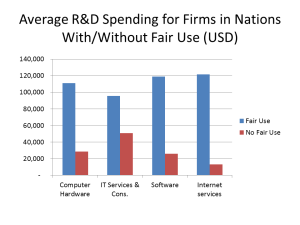
Mike Palmedo writes: This post presents preliminary data showing that firms in industries sensitive to copyright can succeed in countries other than the US when copyright limitations include fair use. It is an early product of an interdisciplinary project at American University, in which legal researchers are working with economics professor Walter Park to study how country’s copyright exceptions effect economic outcomes. The project has been undertaken as part of American University’s larger role coordinating the Global Network on Copyright User Rights. The research supports and expands on other recent research attempting to measure the value of fair use abroad.


Lack Of Locally Relevant Online Content Deters Mobile Users In Developing Countries, WSIS Panel Says

Although most people in the world live within reach of a mobile internet signal, a considerable amount of mobile users in developing countries are not using the opportunity to go online. One of the factors, according to a panel today, is the lack of locally relevant content.

EU Copyright Review Divisive; French MEP Says UN Expert Lacks Balance

The UN Special Rapporteur in the field of cultural rights, Farida Shaheed, yesterday gave a presentation to the Legal Committee of the European Parliament, which currently is reviewing the EU Copyright Directive.

European Commission Unveils Plans For Digital Single Market

Today, the European Commission released details about its plans to create a Digital Single Market, with a set of actions to be delivered by the end of next year. The plan includes a competition inquiry of the European e-commerce sector launched today, and a commitment to change the European copyright law starting this year.

Dissecting The “Internet Freedom” Agenda

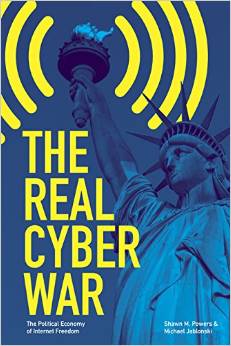
Both radical civil society organizations and mainstream defenders of the status quo agree that the free and open internet is threatened: see for example the Delhi Declaration, Bob Hinden’s 2014 Year End Thoughts, and Kathy Brown’s March 2015 statement at a UNESCO conference. The threats include government censorship and mass surveillance, but also the failure of governments to control rampant industry concentration and commercial exploitation of personal data, which increasingly takes the form of providing “free” services in exchange for personal information that is resold at a profit, or used to provide targeted advertising, also at a profit, Richard Hill writes in a review of the new book, The Real Cyber War: The Political Economy of Internet Freedom.

Philanthropies And Expression: An Interview With Ford Foundation President Darren Walker

Darren Walker is president of the Ford Foundation, one of the largest and historically most influential private philanthropies in the United States, dedicated to human welfare worldwide. Among its areas of focus are programs on freedom of expression and internet rights, extremely timely given current national and global events. Ford, along with four other leading foundations, and leaders from government, business and the technology community recently announced NetGain, a partnership to “spark the next generation of innovation for social change and progress.” Intellectual Property Watch’s William New recently interviewed Darren Walker on his vision for the foundation, internet governance, and the world at large.

Largest Internet Exchange Point Announces Complaint Against Snooping

MUNICH - It was a big day for counter-surveillance yesterday. Decix, the largest internet traffic exchange point (IXP) worldwide, announced it has had it with the snoops. Meanwhile, the Inquiry Committee came to the conclusion that the BND had withheld information from its oversight bodies on how broad the tapping really was. Separately, a two-part report presented to the LIBE Committee of the Parliament in Brussels focused on potential countermeasures to the "fact" of mass surveillance by intelligence agencies. And a resolution on mass surveillance was passed by the Parliamentary Assembly of the Council of Europe (CoE).

Canada’s Budget Extends Copyright For Sound Recordings From 50 To 70 Years

Canada’s federal government 2015 budget released yesterday contains several pro-intellectual property measures aimed at boosting the economy. The measures include greater protection of confidential client-advisor communications, and the extension of copyright terms for sound recordings and performances from 50 years…

WIPO: The Future Of Music In A Changing Environment

What lies ahead for music in the digital economy was the subject of a roundtable today at the World Intellectual Property Organization. Inaugurating a photo exhibition on the same theme, the United States ambassador stressed the importance of copyright. The roundtable took place on 21 April and was one of the events organised by WIPO celebrating the upcoming World IP Day on 26 April.

Update On Yale/IP-Watch Effort To Open TPP Texts

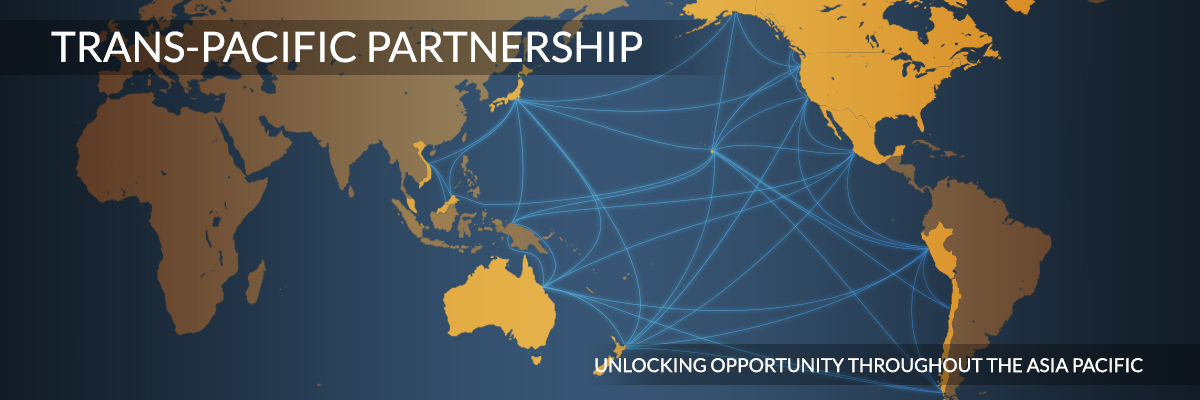
Intellectual Property Watch has been working for several years to obtain more details about the intellectual property aspects of the Trans-Pacific Partnership (TPP) agreement negotiations through a Freedom of Information Act (FOIA) request, and a subsequent lawsuit to enforce that request, which is being led by a team at the Media Freedom and Information Access Clinic at Yale Law School (MFIA). Today MFIA, a program of Yale's Information Society Project and Abrams Institute, released an update on the case.