Category Enforcement

US Complaints About Technology Transfer In China: Negotiating The Endgame

Dean Pinkert writes: The United States Trade Representative (USTR) has been open about its view of the difficulties faced by US companies who claim – generally anonymously – that they have been forced to transfer technology to Chinese entities: “The fact that China systematically implements its technology transfer regime in informal and indirect ways makes it ‘just as effective [as written requirements], but almost impossible to prosecute.’” As I explain in this article, I believe such informality is not merely a barrier to prosecutions; it also presents conceptual challenges for US trade negotiators as they attempt to craft effective means to address the concerns of US companies doing business in China.


What’s The Cost Of Allowing Patent Theft? Don’t Wait To Find Out

Russ Genet writes: Protecting patents can be expensive, especially for companies competing in a global arena where aggressive startups, cut-rate competitors and industrial giants are all vying for the next big innovation to snatch up or move to market. However, failing to protect patents can be equally expensive. It is estimated that patent theft costs the US economy billions each year. And for the corporate patent owner, failing to defend patent rights today can significantly limit their value in the future.

US IP Attachés: China’s IP Policy ‘Hijacked’ By Local Interests In 2018; Bad Faith Filings A ‘Cancer’

WASHINGTON, DC – Two out of three United States intellectual property attachés based in China last week had tough words for China’s manipulation of IP policy and law over the past year, suggesting they at times “hijack” the legal process in favour of local interests, and are in a mad rush to become the world’s top patent and trademark filers regardless of quality to the point that it has become a “cancer” on the IP registration system. A third US IP attaché, however, took a friendlier and more patient view of China’s actions, downplaying concerns and urging US companies to allow it to continue.

Stan Lee: Writer, Creator, And Marketer Of Intellectual Property

Dave Davis writes: As the many and well-deserved accolades for Stan Lee pour in on the occasion of his death after a career in content creation —mostly in writing— that spanned six decades, I thought now might be a suitable moment to add an additional perspective. I’m focusing on his success as someone who brought his creative expression to market, to the enjoyment of what eventually became an audience of millions. Stan Lee was many things, and among them, he was an outstandingly successful entrepreneur of intellectual property.

European Commission Introduces Its Inaugural IP “Watch List”

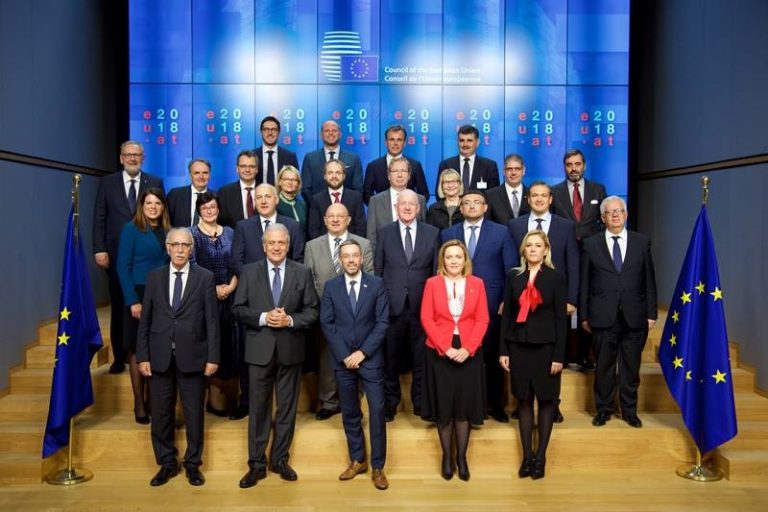
Echoing the United States' Special 301 Report on alleged inadequacy of trading partners’ protection of US intellectual property rights, the European Commission has released its first ever Counterfeit and Piracy Watch List, which exposes rogue cyberlockers, stream-ripping sites as well as peer-to-peer and BitTorrent indexing sites among the threats to the EU's legitimate intellectual property-driven businesses.

Report: Core Copyright Industries Add $1.3 Trillion To US Economy

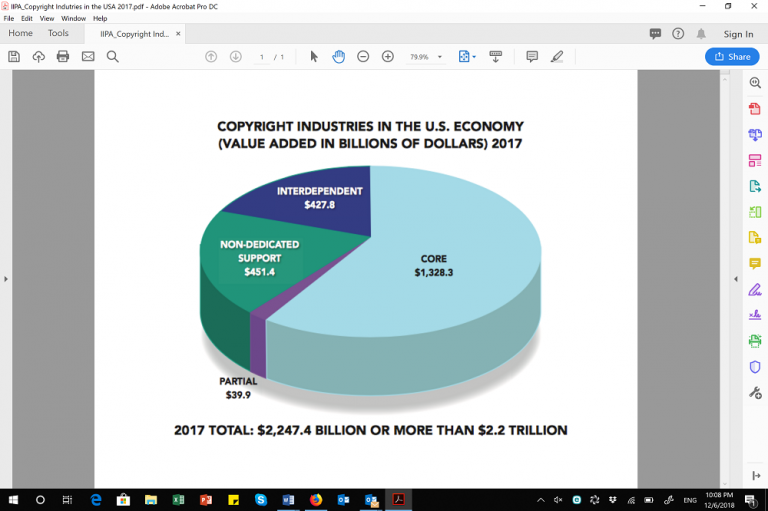
Core copyright industries have contributed more than $1.3 trillion to US gross domestic product (GDP) in 2017, and accounted for 6.85% of the US economy. They employed nearly 5.7 million workers in 2017, accounting for 3.85% of the entire US workforce, or 4.54% of total private employment in the United States, according to the International Intellectual Property Alliance (IIPA)'s “Copyright Industries in the U.S. Economy: The 2018 Report.”

Transparency Of Patent Status Key For Health Actors: Databases Presented At WIPO

Information on the status of patents can be key for medicines procurement agencies seeking to know if they can source cheaper generic products. Several databases providing free information on patent status were presented yesterday at the World Intellectual Property Organization. The World Health Organization, also invited, hailed the efforts, but warned against listing follow-on patents, which could confuse procurement professionals. And a prominent molecular biologist, chief executive of a patents-and-scholarly database, called for breaking silos to advance innovation.