Category Language

Gilead’s Use Of Patents For $10B Tax Dodge Could Ignite Move For Policy Change

Gilead is the US company whose use of patents to charge $1000 per pill for a hepatitis C medicine in the United States helped make high drug prices a developed country household issue and fodder for elected officials seeking change. Now the company has come under further fire after being found to have moved some US$10 billion overseas to avoid US taxes - even after having received US taxpayer support for its activities - which it orchestrated by moving its patent rights overseas. A new report detailing the company's tax dodge includes a proposal for a way to clamp down on this type of patent activity.

Opposition To Kenyan “Anti-Innovation” ICT Bill Grows

A bill introduced in Kenya’s parliament intended to streamline, govern and regulate the country’s information and communications technology (ICT) sector has been met with opposition from different quarters over fears that it could put ICT technicians out of practice and stifle the country’s innovation capacity if passed into law.

Post-Huawei v ZTE: Are FRAND Negotiations Finally More Balanced In Europe?

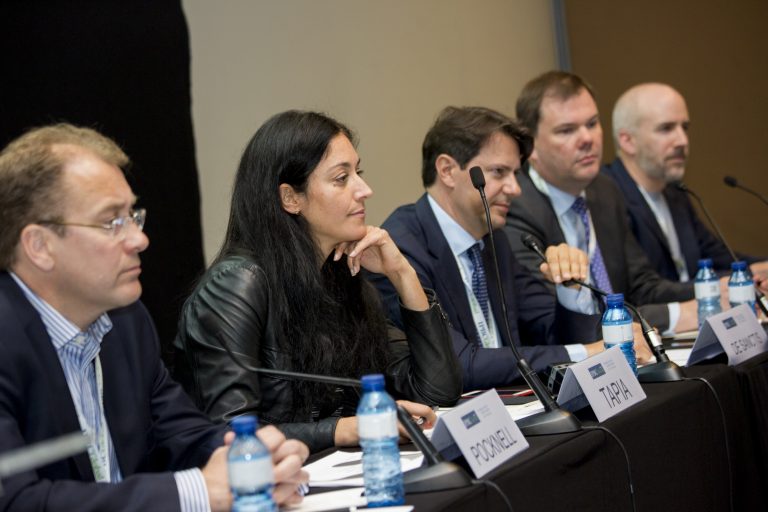
BARCELONA, Spain -- The Huawei v ZTE Case C - 170/13, 21 July 2015 prescribed some guidelines for fair, reasonable and non-discriminatory (FRAND) licensing negotiations, for both standard-essential patent holders and users. A recent private-sector panel addressed European FRAND case law and the latest information and communications technology industry policy opinions, in particular concerning royalty assessment rate (end-user or technology), royalty stacking, patent pool approach and injunctions.

Special Report: Union Lawsuit Claims EPO Has Prevented It From Functioning; Office Claims Immunity

Deteriorating relations between European Patent Office (EPO) management and staff union SUEPO have sparked another lawsuit in the district court in The Hague, Netherlands. The matter, which will be heard in a 15 July summary proceeding, alleges a pattern of threats, dismissals, suspensions from service and gagging of union members, said Prakken d'Oliveira attorney Liesbeth Zegveld, who represents SUEPO and its Dutch branch. Around one-third of union officials have been suspended, investigated or gagged, effectively preventing the union from functioning, she said in an interview.

The lawsuits are just part of the ongoing turmoil affecting the EPO. Reform of the Boards of Appeal (BoA) has also proved controversial, and there are concerns about the reluctance of the Administrative Council to get a grip on the staff-management battle.

The EPO said that, as an international organisation, it has immunity from such suits, as recently held by a German court. It defended its changes to the BoA, and announced an autumn conference for stakeholders to discuss an independent study on office social issues.


CETA: Ripe For Provisional Implementation In January 2018?

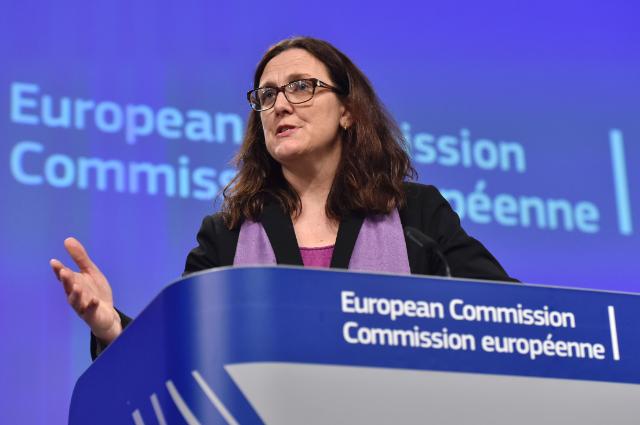
The European Commission on 8 July published the finalized Comprehensive Economic Canada-EU Trade Agreement (CETA) and formally proposed to Council to sign the agreement, pushing for provisional implementation amidst ongoing discussions over competency issues with EU member states. After finalising CETA in August 2014, the controversial investor-state dispute settlement (ISDS) system was renegotiated last year.

Brexit Threatens Legal Uncertainty, Higher Costs For Trademarks, Lawyers Say

Two weeks after the United Kingdom voted to leave the European Union, the potential impact of “Brexit” on patents and trademarks is becoming marginally clearer, intellectual property lawyers said in interviews and a 7 July webinar. Among other things, Brexit would delay the EU unitary patent and unified patent court (UPC) and result in great uncertainty –and higher costs -- for trademark owners, they said.