US Secrecy Prevails In German Constitutional Court
The German constitutional court has rebuffed a second complaint seeking to allow oversight bodies to see the US National Security Administration (NSA) selector list.

Original news and analysis on international IP policy
The German constitutional court has rebuffed a second complaint seeking to allow oversight bodies to see the US National Security Administration (NSA) selector list.
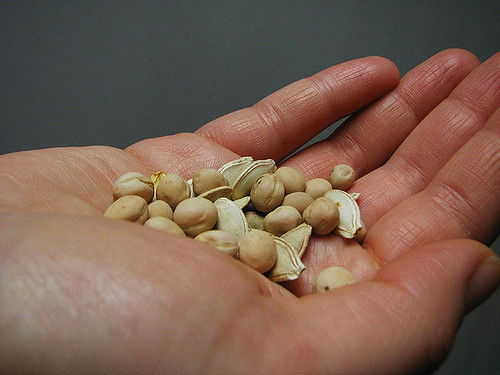
The intergovernmental South Centre and the United Nations Food and Agriculture Organisation have signed a five-year agreement to help the global south fight malnutrition, reduce poverty, and address climate change consequences. The memorandum of understanding was signed on the margins of the recent climate change discussion held in Marrakesh.
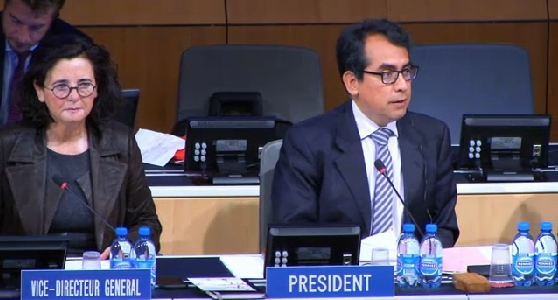
World Intellectual Property Organization members this week are expected to move toward common ground on a treaty protecting broadcasters against piracy. Some members are showing signs of impatience and are pushing for a swift resolution of issues to convene a high-level negotiating meeting in 2018. The WIPO copyright committee will also continue discussing exceptions to copyrights for archives, libraries, and research institutions. New WIPO Deputy Director General for copyright Sylvie Forbin opened the meeting today.
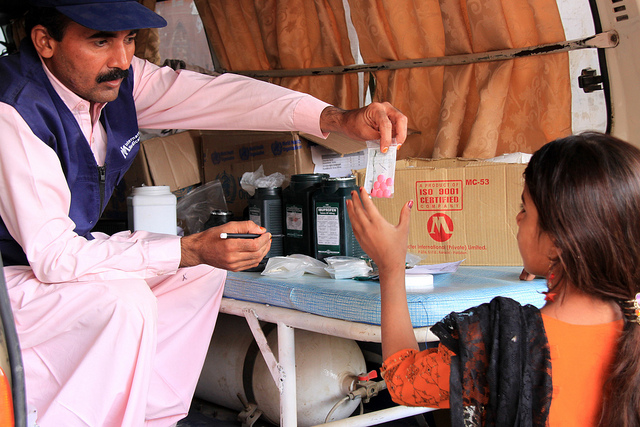
The Access to Medicine Index 2016 was published today, analysing the top 20 research-based pharmaceutical companies. The index looks at how those companies make medicines, vaccines and diagnostics more accessible in low- and middle-income countries. The index found progress in companies' efforts to improve access but little support for flexibilities enshrined in international trade rules.
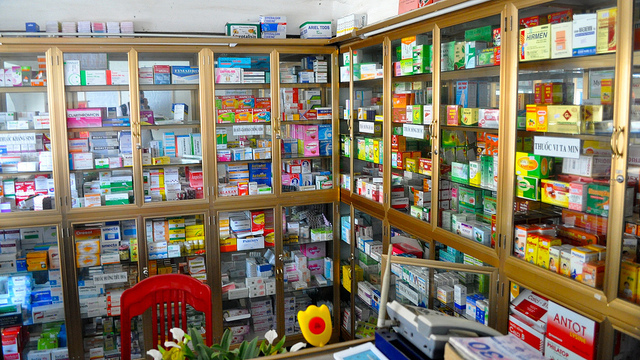
A range of practitioners and representatives in the manufacture of medicines, intergovernmental officials, academics and civil society representatives last week gave diverse views on the effectiveness of a waiver to international trade rules intended to ease shipments of affordable medicines to low-income countries.
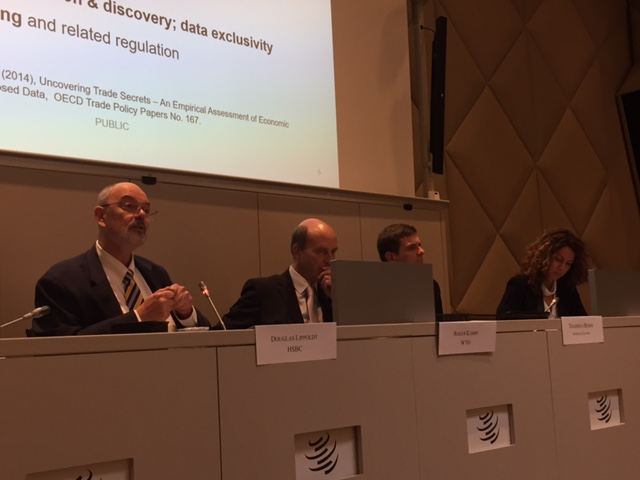
Trade secrets have gained the favour of a growing number of companies, according to speakers at a side event held in the margins of last week’s World Trade Organization intellectual property committee meeting. Organised by the European Union, Japan, and the United States, the side event explored the reasons why companies choose to protect their innovations through trade secrets.

European Union trade politicians in several meetings this week in Brussels reflected on the future of trade policy, also impacted by the US elections. “It is a changed world, period,” Iuliu Winkler, vice-chair of the parliamentary International Trade (INTA) Committee (European People's Party) said at the opening of the EU Trade Policy Day, expressing the general sentiment. While many members of INTA committee underlined the need of Europe to press ahead with their trade negotiations internationally, those critical of an aggressive trade agenda were eager to have their arguments not to be mixed with what was criticised as populist fear-mongering against globalisation.
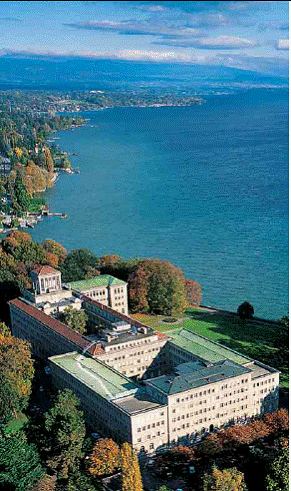
The World Trade Organization intellectual property committee this week discussed the report of United Nations Secretary General’s High-Level Panel on access to medicines which offered recommendations regarding the use of intellectual property in international trade. Developing countries taking the floor accentuated the use of flexibilities under trade rules, and the World Health Organization gave an overview of how its activities follow the panel's recommendations, and its future projects. Civil society meanwhile criticised the WHO’s decision to dismiss a request by some developing countries to include discussions on the UN report at the next Executive Board Meeting.
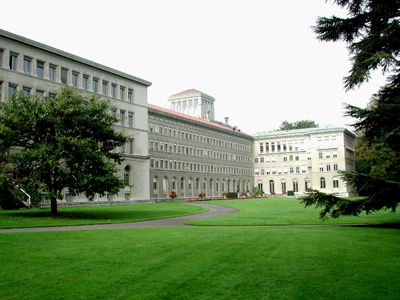
This week at the World Trade Organization intellectual property committee a range of mostly developed countries requested to discuss regional innovation models, and countries presented examples of such models. The committee also addressed the issue of “non-violation” complaints and issues of biodiversity and trade, observers, and e-commerce.
Today, the Medicines Patent Pool announced that two generic drug companies applied for the World Health Organization prequalification of an innovative antiretroviral.
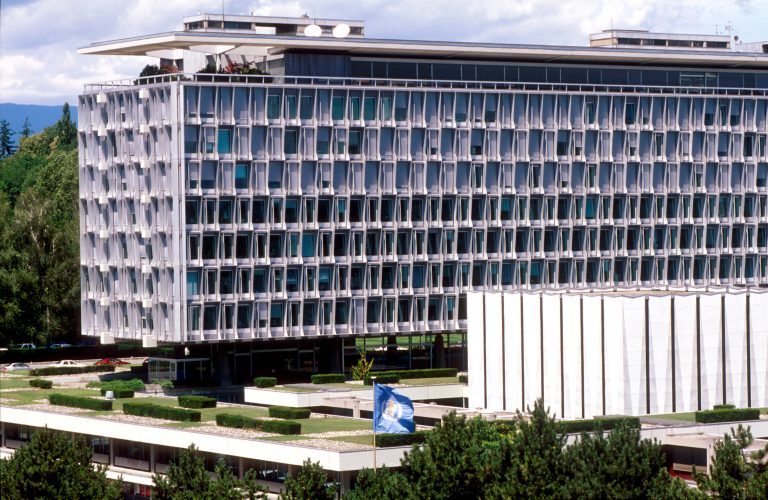
Funding, universal health, multisectoral work and access to medicines were among the issues addressed at the recent candidates' forum of the World Health Organization in Geneva as part of the process to choose the next director general of the UN health agency. Candidates spoke on how to fund the organisation in its quest for universal health care and response to emergencies.

A much-anticipated report on progress in global access to essential medicines released today has found that change is needed to the system of paying for research and development, including moving beyond sole reliance on patents to cover R&D costs. It calls for a global R&D policy framework, a possible patent pool for essential medicines, addresses financing issues, and claims to have developed a new cost model. Meanwhile, comments ranged from two ministers from the Netherlands said the system is broken while a leading industry executive criticised it for questioning the patent system.