
Australia’s Indigenous Culture Event at WIPO Showcases Human Rights Candidacy
The creativity-oriented UN World Intellectual Property Organization is often at its best when displaying the colorfully multicultural nature of its membership.

Original news and analysis on international IP policy
The creativity-oriented UN World Intellectual Property Organization is often at its best when displaying the colorfully multicultural nature of its membership.
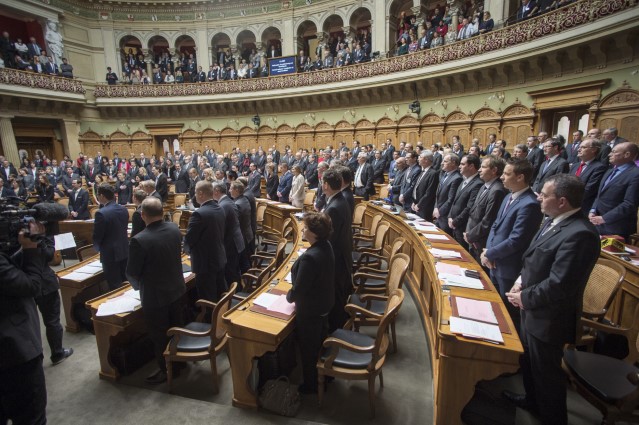
The Swiss Parliament this week adopted new legislation to regulate offline and online gambling by limiting it to a fixed number of Swiss-based operators only. While heavily criticised by opponents inside and outside the Parliament in Bern, the main goal was to harvest revenue streams for the general public and enforce a number of obligation. A number of opponents in the Parliament sided with activists in their call for caution against the ‘slippery slope’ of net filtering. A look at other countries illustrates that filtering on an IP or domain name basis is on the rise.
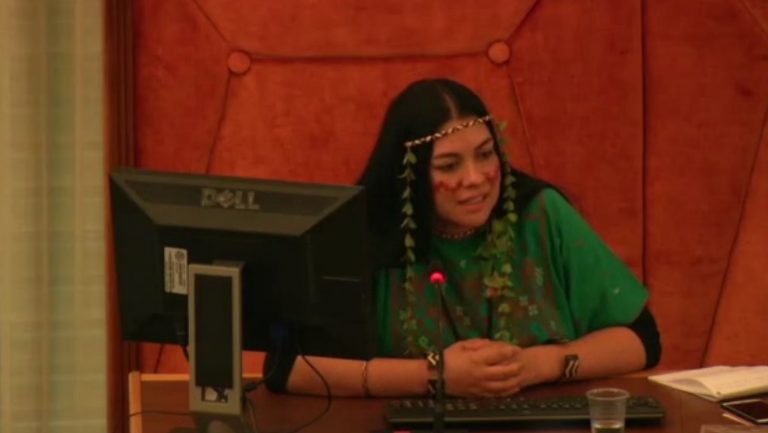
Renewed discussions on the protection of traditional cultural expressions at the World Intellectual Property Organization have produced a new draft text that provides a clearer view of the different ways in which countries see a that treaty could help against misappropriation of indigenous cultural heritage. Divergences remain on core questions such as what and who should benefit from the protection of an international treaty, in which terms, and to what extent.
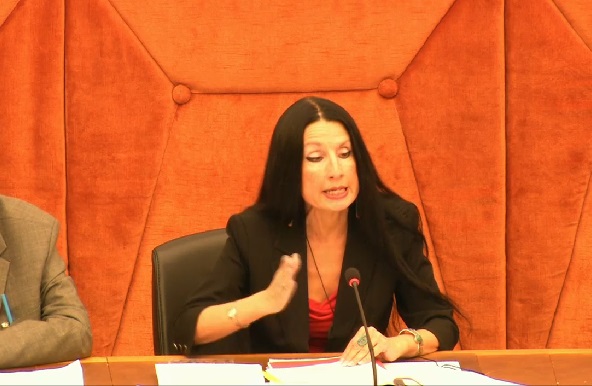
A panel of indigenous peoples speaking at the United Nations World Intellectual Property Organization on a potential treaty protecting their folklore from misappropriation asked that indigenous culture be recognised as unique, and not unduly considered as belonging to the whole of mankind. The keynote speaker chastised the United States position in the committee, criticised a US recent document equating the cultural significance of Santa Claus, pizza and sand paintings, and called for the respect of indigenous peoples' sovereign rights over their cultural expressions.
Internet television broadcasting service TVCatchup (TVC) may not offer live streams of free-to-air TV broadcasts without permission, the European Court of Justice (ECJ) said in a 1 March judgment.
The Office of the United States Trade Representative today released its 2017 trade policy agenda. The report includes numerous references to intellectual property rights, mainly focused on enforcement, plans for multilateral discussions on IPR and trade, and promises of an aggressive stance on geographical indications. But overall it is short on overall details about what's to come with the new administration.

Public health stakeholders – and just about everyone else – may take notice of a meeting planned for May in the Netherlands, as it could offer the beginning of a new approach to pharmaceutical costs. High drug prices have become a ‘kitchen table’ issue in countries of all economic sizes recently, and the World Health Organization is teaming up with the Dutch government to address it in a new and practical way.

Financing for research and development into so-called neglected diseases – those predominantly affecting lower-income populations – rose recently mainly due to the Ebola outbreak, and private sector contributions represent a bigger share, according to the latest available data from a Gates Foundation-supported database.
Big Pharma wants to develop treatments for rare diseases, with government support. The International Federation of Pharmaceutical Manufacturers & Associations (IFPMA) this week launched a new report describing policy priorities to increase research and development into rare diseases.

The Global Fund to Fight AIDS, Tuberculosis and Malaria is deliberating on how to start over on its search for a new executive director after questions arose near the end of the process.

The German Federal Intelligence Agency (Bundesnachrichtendienst, BND) spied on foreign journalists, according to a report of German magazine “Der Spiegel”. A document obtained by the magazine showed that the BND had taps on at least 50 phone numbers, fax numbers and email addresses of journalists from the BBC, Reuters and the New York Times.

The Internet Corporation for Assigned Names and Numbers (ICANN) is on an “ambivalent drift” into online content regulation through its contractual facilitation of a “trusted notifier” copyright enforcement program between the Motion Picture Association of America (MPAA) and the registry operators for two new generic top-level domains, University of Idaho College of Law Professor Annemarie Bridy says in a draft article for the Washington & Lee Law Review.