Category English

G20 IT Ministers Want Access For All, Commit To Conflicting Objectives

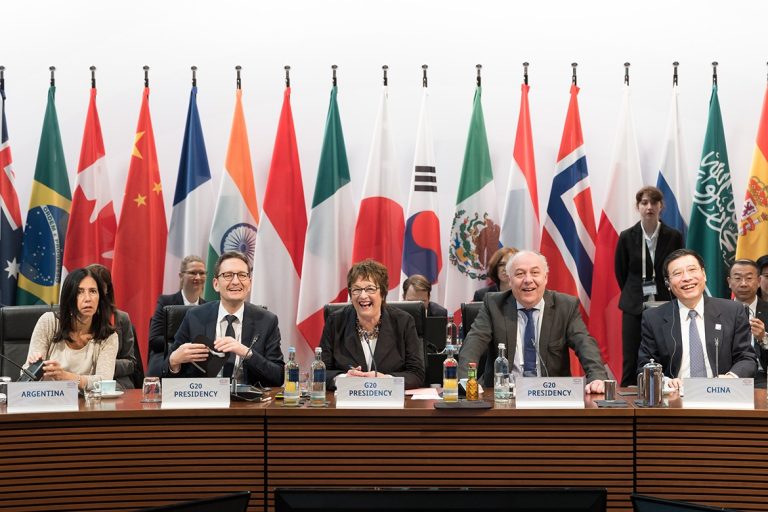
The Group of 20 (G20) ministers responsible for the digital economy today called for further efforts to advance access to the internet for everyone and close the digital gaps that still exist. Gathered in Dusseldorf, Germany, for the two-day IT related preparatory conference for the G20 Summit in Hamburg in July, the ministers signed a declaration on “Shaping the Digitalisation for an Interconnected World.” It was the first time that ministers for digital economy met in the G20 format.

UPOV This Week Focused On International Cooperation System; Benin Curiously Ratifies Twice

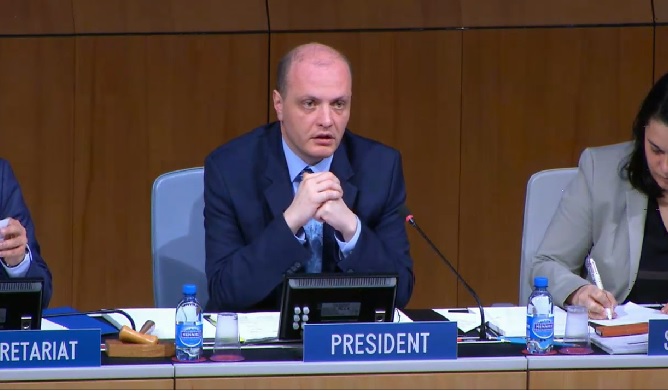
The International Union for the Protection of New Varieties of Plants (UPOV) governing body is meeting this week, along with its technical, and consultative committees. On the agenda is a potential international system of cooperation, disputed by civil society. Separately, Benin, a least-developed country, appears to be in the process of ratifying the UPOV convention, raising questions since a regional organisation of which Benin is part already joined UPOV in 2014.

Revocation Of Broadband Rules Ossifying Poor Privacy Practices, Experts Say

CHICAGO, Illinois - US President Trump Monday signed the repeal of the Federal Communications Commission (FCC) broadband privacy rules passed by both houses of Congress in March. The decision by Congress and the new administration to smash the FCC broadband privacy rules, data security and security breach notification obligations do not bode well for internet users who want to have a say with regard to their confidentiality, according to a range of tech experts.

Public-Private Coalition’s High-Profile Delinkage Policy For Emerging Vaccines

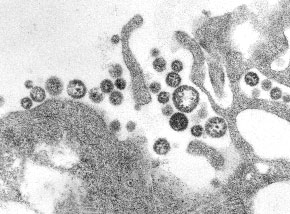
It’s early February in Tchaourou district, Borgou in Benin, and a pregnant woman is admitted to hospital. Her premature baby is born by caesarean section but she dies a day later on February 12th. It turns out she had Lassa fever, a deadly viral haemorrhagic disease. But that’s only discovered after the baby is discharged from hospital and taken to northern Togo. The newborn also becomes ill and is taken to hospital for treatment.

The Current And Future Scope Of IPR Estoppel

David I. Berl and Christopher A. Suarez write: The estoppel provision of the America Invents Act, 35 U.S.C. 315(e), was touted originally as a check against patent challengers using inter partes review (“IPR”) proceedings to attack patents serially on the same or similar grounds. That provision precludes an IPR petitioner, or the real party in interest or privy of the petitioner, from asserting invalidity challenges in subsequent IPR, district court, or International Trade Commission (“ITC”) proceedings “on any ground that the petitioner raised or reasonably could have raised during” an IPR that resulted “in a final written decision.” Given the frequency of IPR and associated district court challenges, the scope of the AIA’s estoppel provision, with respect to the parties and arguments it estops, has become and will continue to be a critical and frequently contested issue for litigants.