Category English

New Agenda Adopted For WIPO Committee On Patent Law

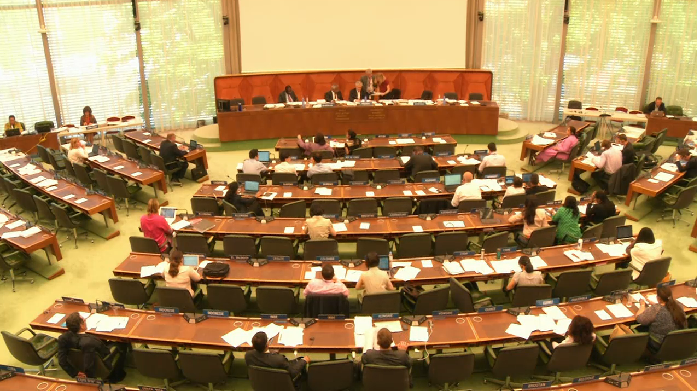
The World Intellectual Property Organization committee on the law of patents got a slow start this morning as delegates did not agree on the draft agenda submitted by the secretariat for this session. After informal consultations during the morning, WIPO members accepted a draft revised agenda proposed by the committee chair.

Decision Time On Biologics Exclusivity: Eight Years Is No Compromise

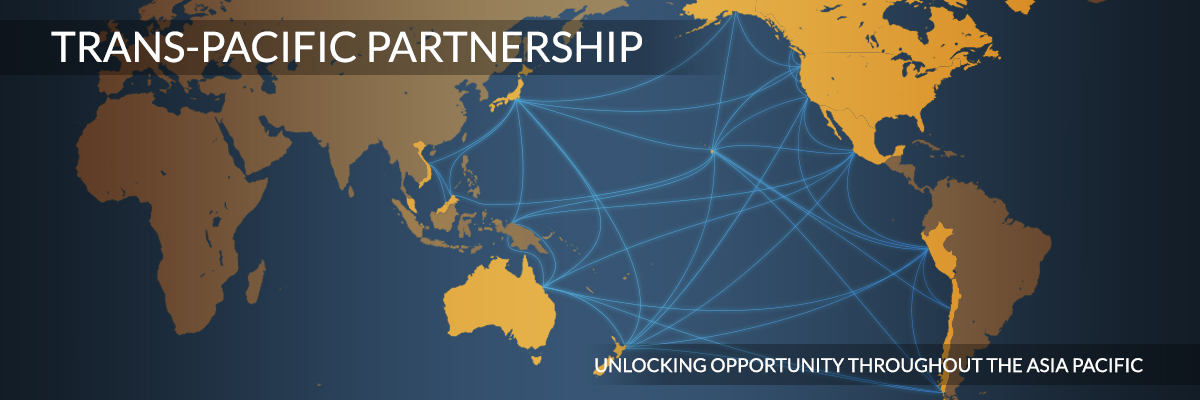
Burcu Kilic and Courtney Pine write: As the Trans-Pacific Partnership (TPP) negotiations approach their endgame, biologics exclusivity is still considered “one of the most difficult outstanding issues in the negotiation.”[2] Pharmaceutical companies seek longer data and marketing exclusivities to further delay market entry of cost-saving biosimilar drugs. Data exclusivity prevents follow-on pharmaceutical developers from relying on originators’ test data submitted for marketing approval while seeking such approval for its own product. The World Trade Organization’s (WTO) Agreement on Trade-Related Aspects of Intellectual Property Rights (TRIPS) requires some protection against unfair competition for this sort of data, but it does not require countries to adopt rules conveying exclusive rights over it in the same way as it does regarding patents.[3] Currently, the US provides 12 years of exclusivity for new biological products under the Biologics Price Competition and Innovation Act (BPCIA).[4] The provision providing 12 years exclusivity was buried inside the 20,000-page healthcare law, The Patient Protection and Affordable Care Act. A robust debate over what would be an appropriate exclusivity period, if any, was overshadowed by other controversial aspects of the bill commonly referred to as Obamacare.

WIPO Patent Law Committee Seeks To Overcome North-South Divide On Priorities

The World Intellectual Property Organization patent law committee meets this week with a work programme reflecting strong interests that are not equally shared by member states. Developed countries in the past have focused on ways to share work between patent offices, while developing countries would favour more time being spent on limitations and exceptions to patent rights, in particular in the area of health.

India IPR Policy Update: Final Draft Circulated

The final draft of India’s national intellectual property policy has been circulated for inter-ministerial consultation and will be sent to the Cabinet for approval after receiving comments, the Ministry of Commerce and Industry said this week. Meanwhile, today public health groups in India announced that revocation of a Roche pharmaceutical patent has been upheld under Indian law.

WIPO Program And Budget Committee Works Through Issues

The World Intellectual Property Organization Program and Budget Committee (PBC) last week took note of WIPO’s mostly positive 2014 progress report, walked through its proposed program and budget for 2016-2017, and addressed issues of investment, governance, new external offices, and development. Many issues will be carried forward to the next PBC meeting in mid-September, just prior to the annual WIPO General Assembly.

Treaty On ‘Medicines Crime’ Not Best Response To Counterfeit/Substandard Medicines, Paper Says

A recent paper by public health experts argues that a treaty on ‘medicines crime’ to combat counterfeit and substandard medicines may not be the best step forward. Rather, it proposes to form an international agreement to “ensure that all proven effective and necessary medicines are affordable, available, and of assured quality,” if the goal is to protect the interests of people and public health.