Category Patents/Designs/Trade Secrets

Virus Sharing Key Against Next Flu Pandemic: Global Database Hosts Genetic Data Of Flu Viruses

When a deadly influenza virus appears and threatens to become a pandemic, time is of the essence. The 1918 flu epidemic infected a large portion of the global population and killed millions of people. The next pandemic is inevitable, and surveillance of flu viruses is essential through the timely sharing of flu virus genetic data with the scientific and research communities. A collaborative database has become prominent in recent years.


WIPO External Offices In High Demand As 18 Countries Offer Hosting

Hosting a regional or national office of the UN World Intellectual Property Organization seems to be a high prize for WIPO members, 18 of which have submitted hosting proposals to be considered at the WIPO Program and Budget Committee next week. Most of those 18 countries are developing nations and all sought to demonstrate their commitment to intellectual property rights and IPR protection, with some underlining the importance of considering level of development. According to regional press reports, Algeria and Nigeria have been selected by the African region to host the two African external offices.

WHO Pandemic Flu Review Group Meets Next Week

The review of a World Health Organization mechanism for sharing pandemic influenza viruses while ensuring access to vaccines for developing countries is nearing conclusion. Next week, the reviewers will hold their last meeting, including an open session for governments and stakeholders to share views. The review is addressing issues such as the mechanism’s relationship with other international rules, and how to handle the rising use of genetic data instead of biological samples.

WTO, WHO, WIPO Host Discussions On Antimicrobial Resistance In October

Antimicrobial resistance has been described as a major threat to public health, as infections, even minor, might become killers again, if no new antibiotics are discovered. In October, the World Health Organization, World Intellectual Property Organization and World Trade Organization will join forces for a symposium organised to discuss how to foster innovation, and access.

Review Of WIPO Development Agenda Implementation: Good Progress But Expectations Unfulfilled

A group of independent reviewers has found definite progress on implementing the landmark 2007 Development Agenda Recommendations at the World Intellectual Property Organization. But the UN agency needs to elevate the debate, tie in with UN development agencies, create reporting mechanisms, make projects more compatible with local development levels, and detail use of financial and human resources, the reviewers found.

WHO Africa Region Addresses Strategies On Counterfeits, Malaria, Hepatitis

The 47 members of the World Health Organization African region this week adopted or considered a series of measures aimed at fighting substandard and counterfeit medical products, eliminating malaria and viral hepatitis, and setting a global strategy and plan of action on ageing and health that includes a focus on non-communicable diseases. They also adopted a plan for disease outbreaks and health emergencies.

The Expert On IP For Internet Protocol: Interview With Scott Bradner

Fluent in both types of IP: Scott Bradner has been an architect of intellectual property (IP) policy for internet protocol (IP) standards. He played a core role in the development of internet protocol, leading to the very digital revolution we know today, as well as the next generation IPv6, all the while designing intellectual property policy to go along with it. Here is an interview with Bradner.

The Downfall Of Invention: A Broken Patent System

The cost of dozens of brand-name drugs have nearly doubled in just the past five years. Public outrage over drug prices extends from Capitol Hill to the presidential candidates to patients. In response, pharmaceutical executives are spending more on lobbying and marketing. Yet for all this attention, most of the proposed solutions for reducing prescription drug costs—tougher negotiations, appeals for transparent R&D costs or investigations into insurers—miss one of the primary sources of the problem: the way we award patents, writes Tahir Amin.

Number Of Unique Patent Assertions Declined Over Years, Patexia Finds

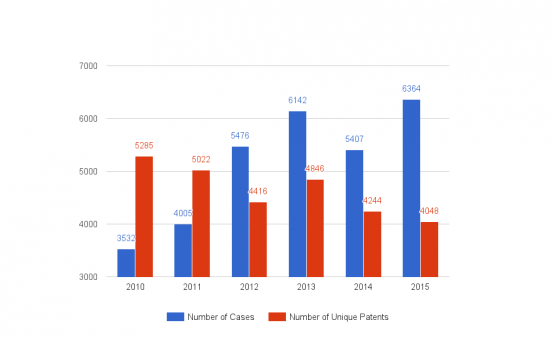
Pedram Sameni of Patexia writes: We recently studied the PTAB data and suggested that although the rise and fall in litigation indirectly affected the rise and fall in IPR challenges, the true driver of IPR challenges is the number of unique patents asserted each year. To learn more, we decided to look at the number of unique patents asserted against different defendants since 2010. We made several interesting discoveries, including the surprising fact that even though the number of cases has been rising, the number of unique patents asserted each year has been declining.