
Slifer Named USPTO Deputy Director
A veteran technology industry and innovation patent attorney has been named the new deputy director has been named at the United States Patent and Trademark Office (USPTO).

Original news and analysis on international IP policy
A veteran technology industry and innovation patent attorney has been named the new deputy director has been named at the United States Patent and Trademark Office (USPTO).

The District Court of The Hague (Netherlands) ruled last week that a patent for red radish plants is invalid in the Netherlands for lack of novelty but did not rule on the fact that the particular plant was bred using essential biological processes. The case, between two Dutch companies, related to red radish sprouts on which one company held a patent.

Genomic data should be made publicly available for the promotion of science as a global public good, a new paper argues. Two researchers suggest that a model inspired by the open-source computer software movement should be developed for plant breeding, animal breeding, and biomedicine.

Hopes to gain ground in discussions toward a procedural treaty on industrial design applications were not met this week at the World Intellectual Property Organization. Meanwhile, proposals on the protection of geographical indications on the internet and on a potential international GI filing system were put on hold until the next session of the committee.
Today, the World Intellectual Property Organization released the 2014 numbers of filings for its systems for patents, trademarks, and industrial designs, which form the basis of the revenue of the UN organisation. Filings under the three systems grew in 2014, with a notable presence of telecom companies in patent filing activity. Except for China, top filers in the three systems are developed countries. Also noted was that so far, the significant increase in internet domain names has only led to a slight rise in new domain dispute cases.

The new book, “The ACTA and the Plurilateral Enforcement Agenda,” offers an insightful read on the highly debated Anti-Counterfeiting Trade Agreement (ACTA), an effort to raise intellectual property protection that was met with opposition by many countries and was subject to intense scrutiny from non-state actors, including industry, civil society and academics.

European Union Trade Commissioner Cecilia Malmstroem today defended the inclusion of investor-state dispute settlement panels in the Transatlantic Trade and Investment Partnership (TTIP), but offered several amendments for consideration.
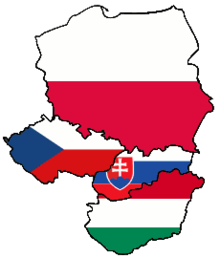
WARSAW - In a move towards increased regional cooperation in the field of intellectual property, Poland, Hungary, Slovakia and the Czech Republic have signed an agreement to set up the Visegrad Patent Institute (VPI). And representatives of the parties to the agreement say that their ambitions reach further, towards ensuring the recently-established body becomes a regional hub for patent cooperation in Central-Eastern Europe.

World Intellectual Property Organization member governments are meeting this week to try to advance a proposal to convene a high-level negotiation for a procedural treaty on industrial designs. They also are discussing how geographical indications should be addressed in the committee on trademarks, industrial designs and geographical indications.

Intellectual Property Watch offers a partial list of the government delegates in Geneva with responsibility for intellectual property issues at the United Nations and World Trade Organization. The newly updated list is now available, exclusively for subscribers. [Note: IP-Watch content is free to most developing countries, just register online here]

On 5 March, the International Centre for Trade and Sustainable Development (ICTSD) in collaboration with Oxford University’s Global Economic Governance Programme (GEG) hosted an event in Geneva to discuss challenges and issues in intellectual property governance.
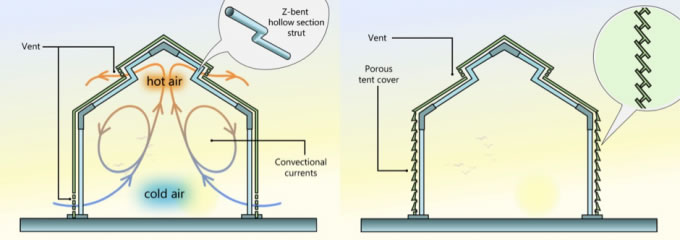
KAMPALA, UGANDA - In light of the persistence of the Ebola outbreak and the demands it has placed on global infection containment resources and processes, the United States government disaster response community recognised an opportunity to use open innovation to make significant strides in advancing the ability to combat Ebola. The results include a local success story.