Category IP Policies

WHO Executive Board Adopts Draft Resolution On TB, Stresses Importance Of Resistant TB In Overall Fight Against AMR

Mirza Alas of the intergovernmental South Centre has published an analysis of the World Health Organization Executive Board approval of a draft resolution on actions toward ending tuberculosis and how it relates to antimicrobial resistance (AMR). The opening paragraphs and a link to the original are provided below.

Analysis Of The Working Group On Enhanced Cooperation On Public Policy Issues Pertaining To The Internet

Richard Hill writes: The Tunis Agenda calls for enhanced cooperation to address issues related to the Internet and its governance. However, there was no clear agreement on how to implement enhanced cooperation, so a Working Group on Enhanced Cooperation (WGEC) was convened to discuss that matter and to prepare recommendations. A first WGEC group failed to find agreement, so a second group was formed. In 2018, fifteen years later, the digital divide is worse, spam is worse, and security and privacy have become key issues; the fact that ICANN operates under the jurisdiction of the USA is also at times raised. Some are of the view that the evidence shows that current mechanisms are not working.


Biosimilar Industry Launches Information Campaign For Better Acceptance

The International Generic and Biosimilar medicines Association has launched an information campaign on biosimilar medicines in order to raise worldwide understanding and acceptance of biosimilar medicines.

WIPO Traditional Knowledge Division Provides Capacity Building, Publications

The protection of genetic resources and traditional knowledge through the intellectual property system has been discussed for many years at the World Intellectual Property Organization. While delegates are working on potential international instruments to provide such protection, the WIPO Traditional Knowledge Division is involved in technical assistance and capacity building, providing information and issuing publications.

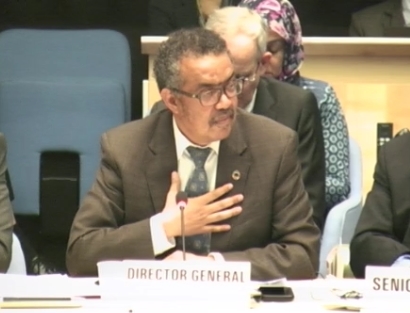
“We Must Engage With Industry” – WHO Director Explains Limits On Lobbyists

The engagement of actors such as industry, civil society, philanthropy and academia with the World Health Organization has been a subject of controversy, with some of those actors being potentially able to influence the work of the organisation. A framework for engagement with those stakeholders was agreed two years ago. At last week's Executive Board meeting, the new WHO director general explained that engagement with those actors, and notably industry, is worth the risk, which he said can be managed.

Republic Day Of India Celebration In Geneva: Sounds, Sights, Tastes – And History

Friends and followers of the nation and culture of India gathered in Geneva this week to celebrate India's Republic Day, with a ceremony and feast held in the halls of the UN World Intellectual Property Organization. Among the many achievements and areas of growth mentioned of the rising economy was its prowess in generic medicines production.

Copyright And Artificial Intelligence

Ed Klaris writes: Recently, a photographer whose camera was used by a monkey to take a selfie settled a two-year legal battle against an animal rights group about copyright over the image. The lower court had denied the monkey a copyright, but the photographer did not want to face the appeals court. Whether monkeys can create copyrighted works is not exactly a pressing question for our time. But the important issues raised by this case and others about who owns creative work in an increasingly automated world are crucial to the future of copyright. With the advent of AI software, computers -- not monkeys -- will potentially create millions of original works that may then be protected by copyright, under current law, for more than 100 years.

Snakebite Gets Attention Of WHO Executive Board, Draft Resolution Approved

A resolution to address the issue of snakebites, mainly in developing countries, was met with undisputed approval last week at the World Health Organization Executive Board. Some countries suggested that scorpion bites be mentioned in the resolution, which was deemed premature.