
WIPO Committee Tackles Program, Budget Issues
The World Intellectual Property Organization Program and Budget Committee (PBC) is meeting this week with a full agenda of issues relating to planning for the next biennium as well as management matters.

Original news and analysis on international IP policy
The World Intellectual Property Organization Program and Budget Committee (PBC) is meeting this week with a full agenda of issues relating to planning for the next biennium as well as management matters.

The Russian government is crafting a new strategy in the field of intellectual property, which should strengthen the protection of IP rights in Russia and create conditions for the acceleration of the domestic research activities in the country, according to Dmitry Livanov of Russia’s Ministry of Science and Education.

An academic research project on the value of the public domain has documented its importance to innovation and creativity. In one empirical study in the project, it was shown that use of the public domain boosts crowd-funding efforts by innovators. The study was discussed recently at the World Intellectual Property Organization.

The European Parliament during its last plenary meeting before the summer break today adopted a non-legislative report on copyright reform prepared by Pirate Party Member Julia Reda. The report calls for an adaptation of the EU 2001 Copyright Directive to the digital market.

John Hornick writes: Although legal principles apply to 3D printing the same as they apply to any other technology, 3D printing has the unique potential to upset the legal status quo. It is the potential scale of 3D printing that may have profound effects on the law. 3D printing cuts across many areas of law, most types of technology, and almost all types of products. Eventually, anyone may be able to make almost anything. No one else will know they made it or be able to control it, which I call 3D printing away from control.

A new paper released earlier this month finds that the commons perspective, which embraces knowledge as a shared resource and its management a joint responsibility, could contribute to EU policy discussions and yield better policy outcomes in areas such as health, environment, science and culture, and the internet.
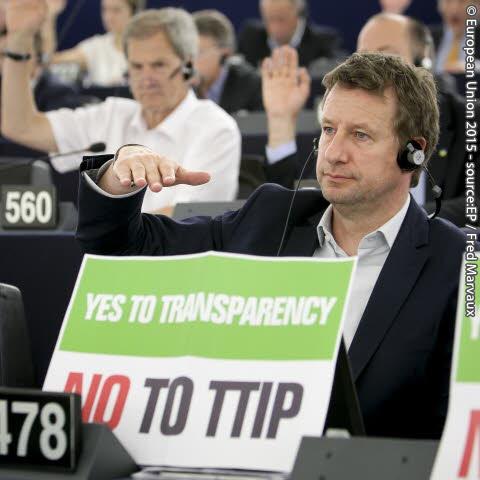
The European Parliament today voted in favour of its own mandate for the negotiations of the Transatlantic Trade and Investment Partnership, a broad free trade agreement between its 28 member states and the United States. With 436 yes versus 241 no votes (32 abstentions), the Parliament adopted a resolution that also gives green light to the hotly debated investor-state dispute settlement (ISDS), albeit a new version of it.
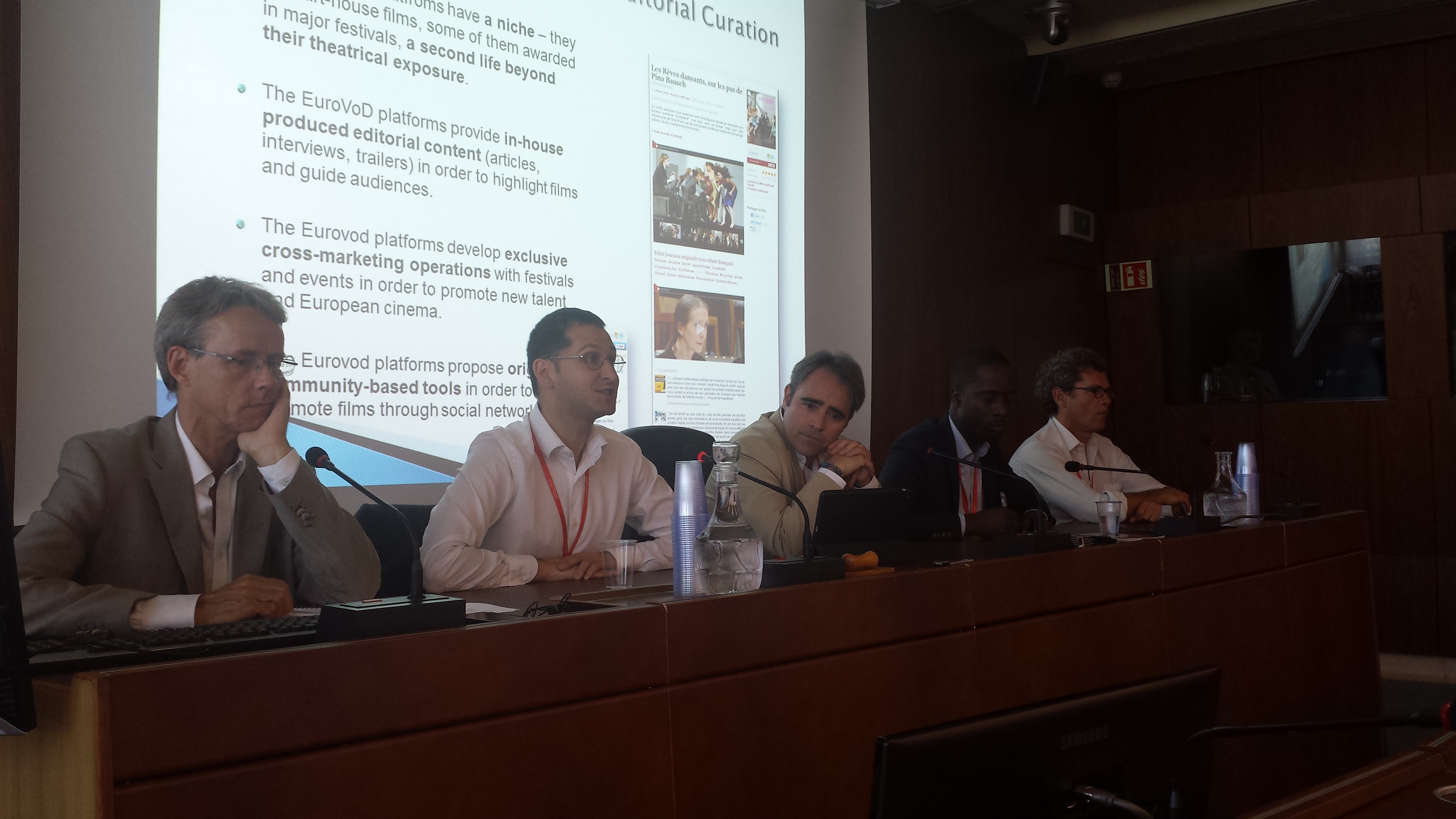
People are becoming increasingly mobile. With that, there are new expectations and needs. Video-on-demand industry experts told a recent event at the World Intellectual Property Organization that this represents a “change of paradigm,” requiring new models for financing and distributing films.
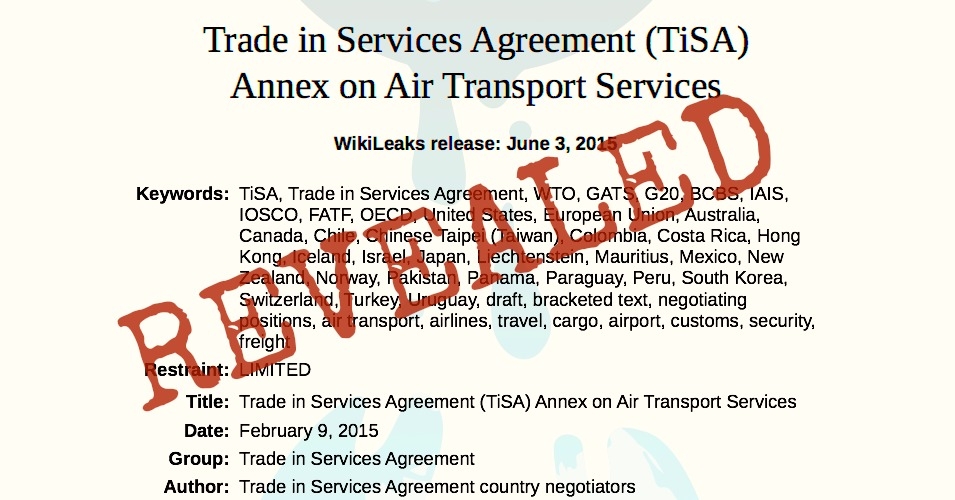
With the veil of secrecy lifted a little more on the strictly secret talks of the Trade in Services Agreement (TISA) after Wikileaks published large chunks of negotiating text, delegations gathered for negotiations of the trade deal this week in Geneva face some noisy opposition.
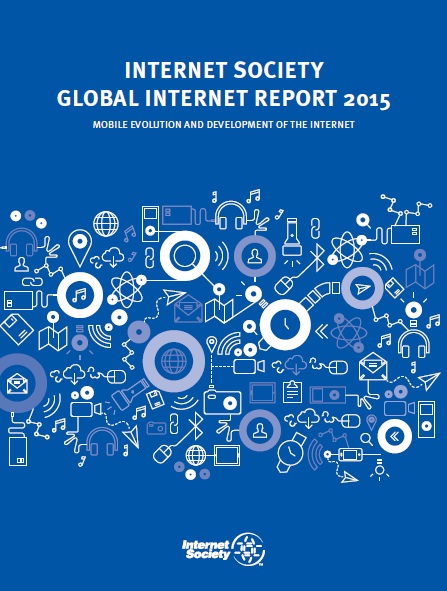
A new report released today shows how mobile technology has fundamentally transformed internet access and use. The report gives forecasts and makes recommendations for policymakers going forward. Among the findings is the rapid rise in dependence on apps, which can raise security, privacy, competition, and cost concerns, as well as issues of availability of locally relevant content online.

Copyright protection advances the public interest, and good public policy must properly consider “the role of intellectual property as a tool for economic emancipation, a catalyst for cultural diversity, and a powerful protector of individual dignity and fundamental human rights,” argues RIAA’s Neil Turkewitz.
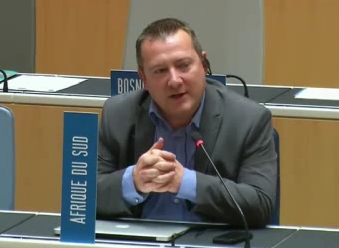
As the broadcasting sector is growing in developing countries, concern over piracy of the signal of their broadcasts is rising, according to delegates from South Africa. Delegates attending last week’s World Intellectual Property Organisation copyright committee meeting sat down with Intellectual Property Watch and argued the importance of a potential WIPO treaty protecting broadcasting organisations’ rights.