Category Copyright Policy

Canada’s Anti-Counterfeiting Chargeback Project: Paying Back Deceived Consumers

A Canadian initiative to fight online counterfeiting and piracy that enables deceived consumers to get their money back is yielding results, a Canadian official said last week. Project Chargeback means to cut the profit margin of counterfeiters on the internet, and supplement legal recourse for right holders.

Hyperlinks Can Infringe Copyright If Commercial, European High Court Says

A hyperlink on a website that links to copyrighted material and does not have the rights holder's consent may be allowable if for non-commercial purposes, the Court of Justice of the European Union said today. But it may infringe copyright if linked for profit and with knowledge of the lack of permission to link it, it said.

How Will Brexit Process Resolve Japan’s Concerns About IP In The UK?

Japan's worries about how intellectual property registered in the EU by companies operating in the United Kingdom will fare after Brexit are potentially valid but depend on how the UK's exit from the EU is handled, according to a UK IP attorney following the issue. One question will be whether, and how, EU trademarks and designs can be re-registered in the UK.

Specialized IP Courts: Recognizing Country-Specific Needs Is Complex

In light of the growing global “innovation market” and the rapid development of technologies, countries have reviewed and modernised their judicial systems to address the increase in intellectual property issues. Notably, the establishment of specialized IP courts has been a prominent feature of judicial mechanisms to resolve IP disputes.

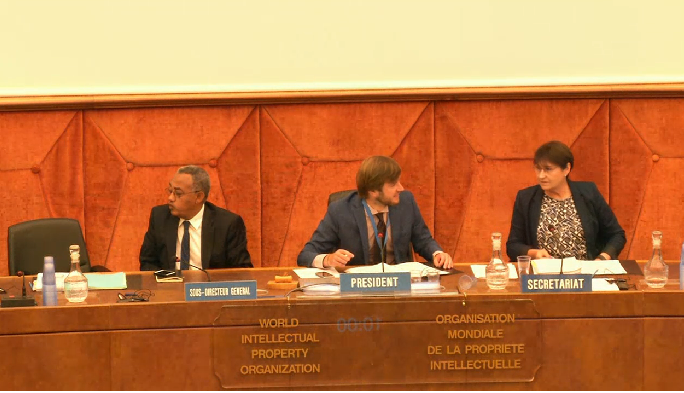
WIPO Enforcement Committee To Discuss National Experiences In 2017

The enforcement of intellectual property rights - how they are enforced and by whom - is left to countries' discretion. Members of the World Intellectual Property Organization committee on enforcement shared experiences this week on how they raise awareness about IP, their IP enforcement policies and regimes, and capacity-building in relation to WIPO training activities. And at the end of the session, delegates decided to pursue those topics of discussion again in 2017.

Rebuttal Letter – WIPO Human Resources Report A “Whitewash”

Ed Flaherty writes: Please be advised that I represent the duly elected members of the World Intellectual Property Organisation's Staff Council. On their behalf, I must respond to the inaccuracies contained in the article entitled: "WIPO Human Resources: All Is Harmony, Secretariat Says" published on the IP-Watch website on 29 August 2016.

The HRMD report from which this article is lifted presents a whitewashed and totally unrealistic picture of the current situation at WIPO.

A Principle Of Balance: Top Official Explains India’s IP Policy

Adopted in May, the first Indian intellectual property policy brought some concerns that the focus on IP rights might dampen India’s willingness to use the IP flexibilities to safeguard national policy space. It was also perceived by some as giving in to pressure from the foreign pharmaceutical industry for India to strengthen patent protection. However, a high level Indian official in an interview this week said the policy caters to Indian development needs and India is aware of its pioneering role in certain sectors like access to medicines.

Rajiv Aggarwal, Joint Secretary at the Indian Department of Industrial Policy & Promotion Ministry of Commerce & Industry sat down with Intellectual Property Watch’s Catherine Saez to describe how India's IP policy came into being, to what aim, what it is expected to change in the Indian IP landscape, and how Indian is standing fast to its principle of balance.

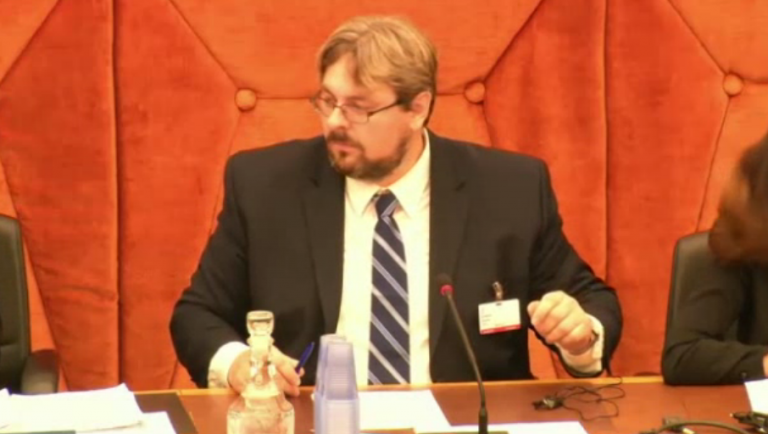
IP Offices Focus On Educating Younger Population About IP Protection

Intellectual property rights awareness campaigns are increasingly targeting the younger population, as early as primary school, according to several country presentations at the World Intellectual Property Organization enforcement committee this week. WIPO is also developing an Education Took Kit for teachers of children aged 5 to 18. However for some countries, this education should encompass a broader view on IP than only enforcing rights.

Blockchain Technology Raises Challenging IP Issues, Say Speakers

Blockchains, such as the well-known bitcoin, are not yet well-defined but are creating a lot of hype, speakers at a 23 August Intellectual Property Owners' Association webinar said. Two things are clear so far, they said: the technology is in its infancy, and there are lots of unresolved questions about what is patentable and how IP laws intersect with the mostly open source software used in the systems.