
Category Inside Views

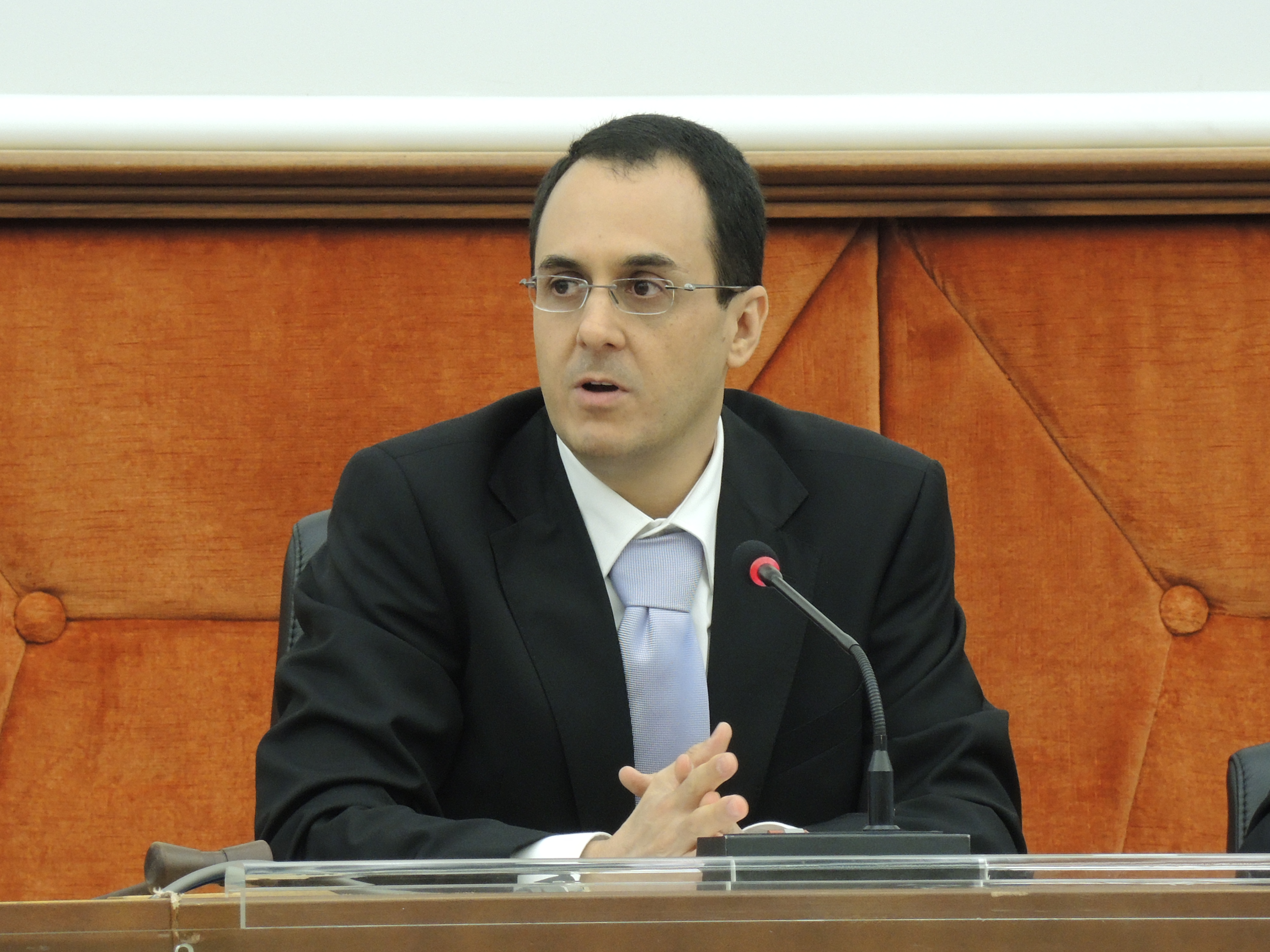
Interview – New CISAC Director Speaks On Expectations, Vision For The Future

The Paris-based International Confederation of Authors and Composers Societies (CISAC) represents 230 collective management organisations in 120 countries, collecting fees on behalf of “creators.” In the past year, CISAC has become active advocating the case of creators at the World Intellectual Property Organization Standing Committee on Copyright and Related Rights (SCCR).

CISAC organised a side event to the annual WIPO General Assembly in September (IPW, WIPO, 29 September 2014). Intellectual Property Watch’s Catherine Saez sat down with new CISAC Director General Gadi Oron after the side event, to ask him about his vision for the organisation.

Strengthening WIPO’s Governance For The Next 50 Years: A Time For Action

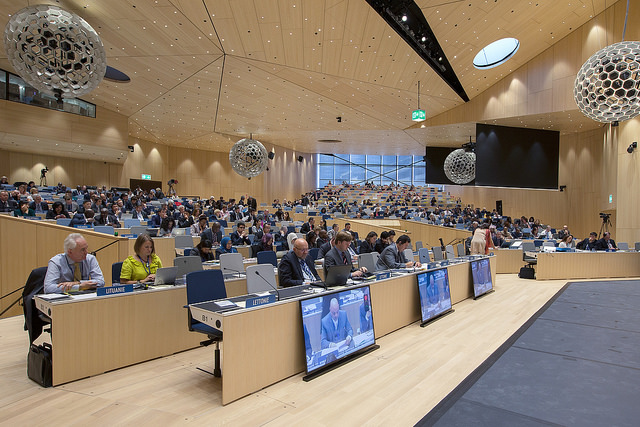
In 2017, the World Intellectual Property Organization (WIPO) will mark its 50th anniversary. In the lead up to that milestone, the next three years provide a vital opportunity for Member States to update and strengthen WIPO’s governance, both to address current problems and to better equip the organisation for addressing challenges that may arise in the next 50 years, writes Carolyn Deere Birkbeck.

Gilead Monopoly Prevails Over Non-Discriminatory Access As Debated Hepatitis C Deal Sets Off

Gilead on 15 September struck voluntary licence deals with seven India-based generic manufacturers to expand access to its hepatitis C innovative drugs in developing countries. With a limited territory covered, this, yet deserving, pact raises doubts about the coherence of Indian counterparts at a time when there are no relevant patents in India, several pre-grant oppositions have been filed and unrestrained competition by compulsory licences could have been pursued, writes Daniele Dionisio.

Interview With KIPO Commissioner Kim Young-min

South Korea is now considered one of the most influential countries in the IP field. Intellectual Property Watch exchanged a set of questions for Kim Young-min, commissioner of the Korean Intellectual Property Office (KIPO) since 2013, speaking about KIPO’s policies for increasing international cooperation, reducing first action pendency, and preventing “bad faith” trademark applicants in Korea from making unfair profits.

The Perfect Package: A Checklist To Avoid Legal Challenges

By William Rava and Jason Howell, Perkins Coie Product packaging is an increasingly important marketing opportunity.  Well-executed product packaging can support and strengthen your brand identity, differentiate your product on the shelf, and convey important, and often required, information to…

The Politicization Of The US Patent System

The Washington Post story, How patent reform’s fraught politics have left USPTO still without a boss (July 30), is a vivid account of how patent reform has divided the US economy, preempting a possible replacement for David Kappos who stepped down 18 months ago. The division is even bigger than portrayed. Universities have lined up en masse to oppose reform, while main street businesses that merely use technology argue for reform. Reminiscent of the partisan divide that has paralyzed US politics, this struggle crosses party lines and extends well beyond the usual inter-industry debates. Framed in terms of combating patent trolls through technical legal fixes, there lurks a broader economic concern – to what extent ordinary retailers, bank, restaurants, local banks, motels, realtors, and travel agents should bear the burden of defending against patents as a cost of doing business, writes Brian Kahin.

WIPO And Caribbean IP, What’s The Point?

Recent months have seen a few interesting intellectual property symposia in the Caribbean, in particular the WIPO–JIPO Regional Conference on IP and creative industries which was held in Jamaica from February 10-12 2014. It is quite interesting that in spite of the intention that it should be regional as indicated in the title of the conference, there seems to have been little participation from the fifteen member countries of Caricom and that most of the sessions focused on Jamaica and its situation, perhaps a natural outcome of the WIPO–JIPO collaboration. Progressive Caribbean intellectuals in the area of intellectual property were also notably absent from the forum, writes Abiola Inniss.

Online Trust: Between Competences And Intentions

Jovan Kubalija writes: Trust (or the lack thereof) is a frequent theme in public debates. It is often seen as a monolithic concept. However, we trust different people for different reasons, and in different ways. Sometimes we trust that people can do something (competences). In other situations our trust focuses on their intentions. This text is about trust in online space. It is inspired by discussions at the WSIS+10 high level dialogue on cybersecurity and trust.

What Questions Did The WSIS+10 High Level Event Answer?

Consultant Richard Hill writes: The WSIS+10 High Level Event (HLE) last week unanimously adopted two documents (a Statement and a Vision), consisting of some 37 pages of text. What can be learned from this event regarding the evolution of the Internet and its governance? Some of what can be learned confirms what was learned from Netmundial. This short note covers only such items (that is, those that overlap Netmundial), and it may not cover all such items. The HLE output contains many items that were not covered by Netmundial, and Netmundial covered some items that were not covered by the HLE (in particular mass surveillance and the transition of the IANA function).