William New

William New

Cambodia First To Join Geneva Act On Geographical Indications. But Where Are The Europeans?

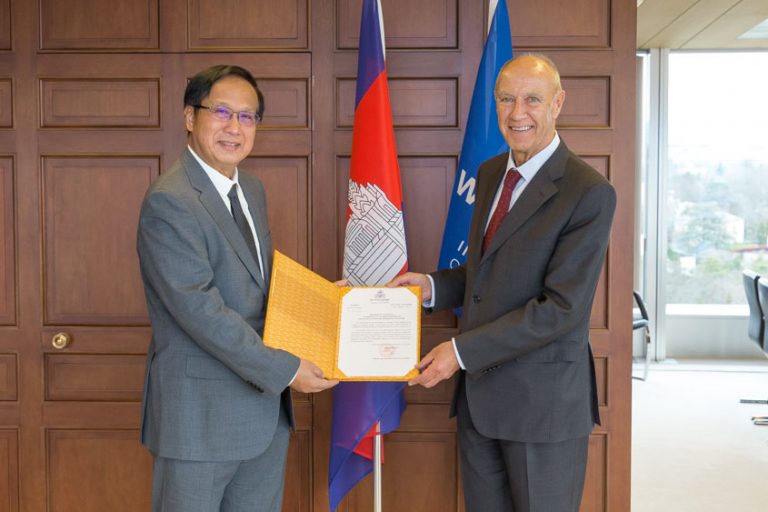
Cambodia has become the first country to join a 2015 agreement at the World Intellectual Property Organization aimed at strengthening protection of geographical indications (GIs). The Asian nation has several GIs it is seeking to protect, such as the Kampot pepper. But it might seem surprising that almost three years later, the group of European countries that fought so hard to conclude the treaty back in 2015 still have not acceded to it.

UAEM Students Launch Campaign To Drop Publicly Funded Patent Claim On Cancer Drug In India

The Universities Allied for Essential Medicines (UAEM) this week launched a campaign to ask the University of California to drop its pursuit of a patent on the prostrate cancer drug Xtandi in India in order to make it affordable for patients. Xtandi sells at "exorbitant" rates in the United States, they said, a seeming violation of the licensing guidelines of the publicly funded University of California system which guarantees an "appropriate" return on taxpayer investments.

Sir John Sulston, Human Genome Project Leader, Remembered For Words On IP And Health R&D

Nobel Prize winner Sir John Sulston passed away on 6 March at the age of 75, and was widely remembered in the press and scientific circles, celebrating his research, his wisdom, and his leadership of the landmark Human Genome Project. Intellectual Property Watch recalls his visionary warning and advice a decade ago about the intellectual property system, investment, and science that is still valuable today.

US Copyright Royalty Board Boosts Songwriters’ Streaming Pay Nearly 50%

Variety reports: The [US] Copyright Royalty Board has ruled to increase songwriter rates for interactive streaming by nearly 50% over the next five years, in a ruling issued early Saturday. Equally important, the CRB simplified and strengthened the manner in which songwriters are paid mechanical royalties, modifying terms in a way that offers a foothold in the free-market.

Introduction Of A Grace Period In Europe

The protection of inventions is a cornerstone to encourage innovation as engine of economic growth. As one of the world‘s leading centres for innovation, the level of scientific and technological performance in Germany is very high, thanks to an excellent research landscape and a good technological and economic basis. But the global innovation competition is intensifying, and new competitors are seeking to enter international markets. However, Germany is falling short of its potential when it comes to leveraging technology to create new products, writes Michael Kahnert.

EU Council’s IP Enforcement Changes: Judicial Systems, Customs, Open Source, WIPO – And An IP Watchlist

The European Council of ministers today adopted a set of conclusions on the enforcement of intellectual property rights in the European Union, aimed at improving protection in the digital era and promoting innovation. This includes a list of suggested actions, including possible changes to national laws and judicial systems, bolstering customs, agreements with industry, encouraging open source, strong representation at the World Intellectual Property Organization, and possibly setting up an IP watch list reminiscent of the one in the United States.

New TPP Still Most Advanced IP Trade Agreement Ever, Think Tank Says

The Comprehensive and Progressive Agreement for Trans-Pacific Partnership (CPTPP) is on track to offer "the most advanced and detailed standards on intellectual property in a trade agreement to date" despite revisions scaling back the IP chapter after the United States dropped out, says the Washington, DC-based Center for Strategic and International Studies (CSIS).

US Generic-Named Food Industries Cry For US Government Help Against ‘Relentlessly Aggressive’ EU

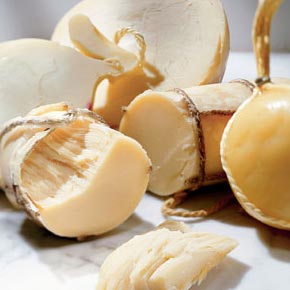
Something that was unimaginable just a few years ago: What if Americans could not buy ordinary bologna, feta or parmesan cheese? Or worse, make them and export them under those names? The industry group in the United States representing a range of products like those today called on the US government to help them defend their products and their jobs against what they called "purposeful," "relentless" and "aggressive" efforts by Europe to promote adoption of geographical indications (products named for places and with particular characteristics) to the detriment of the US common-named goods.