Dugie Standeford

Dugie Standeford

Measure Allowing Federal Courts To Handle Trade Secrets Claims Clears US Congress

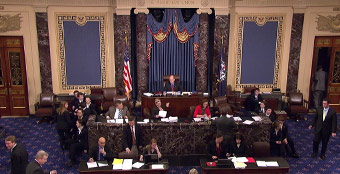
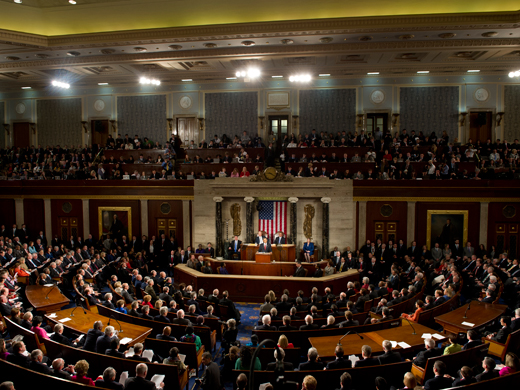
Legislation authorising federal courts to hear cases involving theft of trade secrets passed the US House of Representatives on 27 April and is now headed for an expected signature by President Barack Obama. Final enactment of the “Defend Trade Secrets Act of 2016” (DTSA), along with the 14 April adoption by the European Parliament of the EU Trade Secrets Directive, boosts protections on both sides of the Atlantic but not uniformly, intellectual property lawyers said.


Trade Secrets Directive Clears European Parliament Despite Concerns

Rejecting calls for a vote to be delayed until the European Commission proposes tougher whistle-blower protections, the European Parliament on 14 April approved by 503-131 new rules giving companies redress for theft or misuse of trade secrets. Debate on the trade secrets directive showed sharp divisions among lawmakers, heightened by the recent “Panama Papers” and other leaks, over whether the legislation will help businesses safeguard their innovative ideas or lead to increased corporate secrecy.

IEEE Patent Policy Changes Seek To Put Brakes On Surging Litigation

Intense debate, reignited by a 2012 International Telecommunication Union roundtable on rampant patent litigation and the “innovation-stifling” use of intellectual property, together with the growing lack of standards bodies' patent policies, prompted the IEEE Standards Association (IEEE) last year to revisit parts of its patent policy that had been causing some concerns, Managing Director Konstantinos Karachalios said at a 17 February Oxfirst webinar.

The changes aim to clear up some ambiguities. Perhaps predictably, however, some pushback has arisen among industries affected by the change.

US Copyright Office Recommends No Change To The “Making Available” Right

The “making available right,” affirmed by the 1996 World Intellectual Property Organization “Internet Treaties”, gives authors the prerogative to authorise digital access to their copyrighted works “in such a way that members of the public may access these works from a place and at a time individually chosen by them.” But while United States government officials have routinely held that the Digital Millennium Copyright Act (DMCA) which implements the treaties covers all of the conduct envisioned by the right, courts have been less consistent, the US Copyright Office said in a 23 February congressionally-ordered report that recommended no change to current law.

Internet Policy Task Force Seeks Changes To US Copyright Statutory Damages Law

The United States Copyright Act should be amended in a “very careful” way to change the way statutory damages are awarded to successful copyright owners against infringing individuals and online services, Shira Perlmutter, US Patent and Trademark Office chief policy officer and international affairs director, said today. She and John Morris, National Telecommunications and Information Administration associate administrator and internet policy director, unveiled a white paper by the Department of Commerce Internet Policy Task Force (IPTF) which, while proposing legislative changes to the damages provisions, also said no amendments are needed to the measure's remix and “first sale” clauses.