Dugie Standeford

Dugie Standeford

European Commission Announces Guidance On Copyright Enforcement, SEP Licensing

The European Commission today announced plans to ratchet up the fight against counterfeiting and piracy, and to introduce more clarity in licensing standard-essential patents (SEPs). The first involves guidance on the 2004 EU directive on the enforcement of intellectual property rights (IPRED); the second recommendations for making the relationship between patent owners and technology users more “balanced and efficient.”

EPO: New Employment Rules Roil Staff; Management Responds On Demand For More Productivity

Outgoing European Patent Office President Benoȋt Battistelli has proposed a new “employment framework” that includes fixed-term contracts for patent examiners, reigniting anger among staff members already in a tense relationship with management. There is also concern that Battistelli’s apparent push – which the EPO denies - for more products (defined as prior art searches and proposals for patent grants) is hurting patent quality.

Disparity In Access To Medicines Spurs “Humanitarian” Patent Licensing

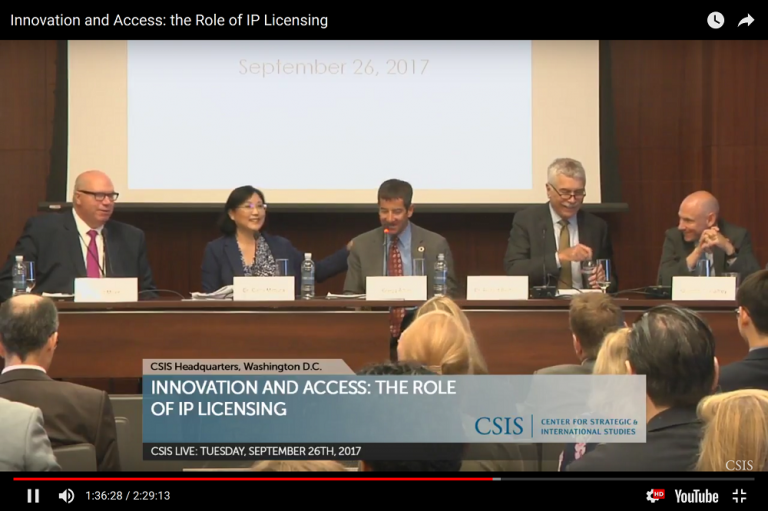
“There are shameful access disparities around the world” to life-saving medicines, Harvard University Global Access in Action project Co-Director Quentin Palfrey said at a 26 September Center for Strategic and International Studies event in Washington, DC. And while some of the challenges to fuller access involve pricing, getting medicines to poorer countries or populations means overcoming the obstacles of insufficient research and development (R&D) incentives, access barriers and polarised politics, he said.

Panel Debates Potential Impact Of Reversal Of US Administration Patent Review

The United States Supreme Court recently agreed to hear arguments in Oil States Energy Services v. Greene’s Energy Group, a case involving a patent on a device used for hydraulic fracturing (fracking). After the patent was granted, Greene’s petitioned for, and was granted, an “inter partes review (IPR)” by the US Patent and Trademark Office’s Patent Trial and Appeal Board (PTAB). After losing at the board, Oil States asked the high court to determine that IPR, which is used to analyse the validity of existing patents, is unconstitutional because it takes away private property rights by denying Art. III jury trials.

UN Assembly Tackles Role Of Technology And Innovation In Sustainable Development

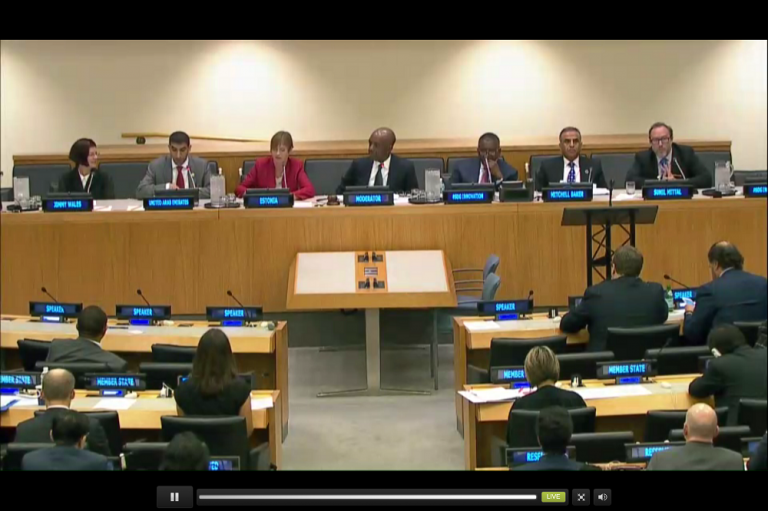
Governments and the private sector must work more closely together in the area of technology and innovation to make the United Nations Sustainable Development Goals (SDGs) a reality by 2030, government and major tech company officials said at today’s UN high-level event in New York. Today’s development problems won’t be solved with yesterday’s solutions but by all stakeholders – governments, civil society, youth, businesses and academia – working together, said General Assembly President Miroslav Lajčák. Everyone must have “fair access to technologies and innovations” and to training, he said.

Companies Prefer Trade Secrets To Patents To Protect Innovation, EUIPO Finds

“Despite their economic importance, and in particular their role in protecting returns from innovation, trade secrets are poorly studied and their relationship with patents is often misinterpreted,” the EU Intellectual Property Office (EUIPO) said in a study published this month. It used a survey of around 200,000 companies in Europe's manufacturing and service industries to determine what factors influenced their choice between patents and trade secrets, as well as their overall use of both mechanisms. The results could help policy-makers, the Office said. It also holds out opportunities for innovative lawyers and intellectual property firms, said one IP management consultant.