
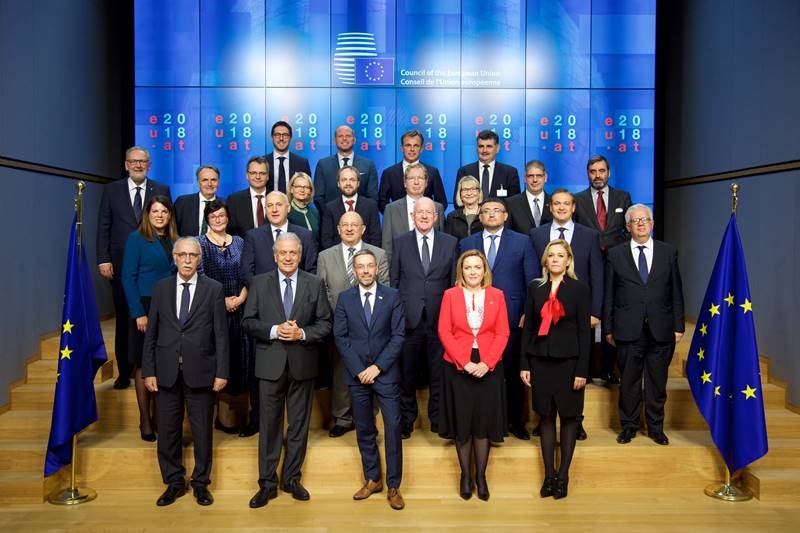
Big platform providers and small hosters alike shall be obliged to censor, according to a draft regulation presented by the European Commission in mid-September and accepted by EU member states at their Council meeting today.
According to the planned regulation on preventing-terrorist-content-online hosters, cloud providers and all sorts of internet platform providers must delete terrorist content upon receiving orders from Europol or relevant member state law enforcement agencies in just one hour.
But they would also have to make their own assessments about the terrorist nature of content upon referrals by the authorities and even take proactive steps for “detecting, identifying, and expeditiously removing or disabling access to terrorist content” (see paragraph 6 of the draft text).
To enhance pro-active measures, upload filters – currently much debated in Europe as part of the copyright reform – are considered a tool. At the same time, the censoring internet providers have to ensure they do not violate other fundamental rights.
Human rights activists in Europe immediately called to arms against the regulation. “The terrorist threat is manipulated to transform the Web into a GAFA [Google, Apple, Facebook, Amazon] Monopoly, to ratify the merger of the State and the Web giants, and thus to sanctify the mass surveillance and automated censorship of our online exchanges,” French group La Quadrature du Net wrote in its analysis.
Patrick Breyer, top candidate for the Pirate Party for the European election campaign, warned against leaving censorship to police bodies, without the need to involve a judge, or even to private bodies.
Not only the activists are concerned about the text and the speed with which the not always speedy Council of member states is pushing for adoption. Critical comments also came from Germany‘s Federal Assembly (upper house of the German parliament), which criticised the undue burdening of smaller providers and potential to drive smaller competitors out of business.
Before the controversial legislation can become effective, the EU parliament has to deliberate and take its position.
Next week, the Parliament meeting in Strasbourg will vote on a report on anti-terror provisions proposed by the Parliament.
And more content regulation discussions are ongoing on regarding “fake news”. Driven by fears for the upcoming Parliament election next year, the EU legislature is also pushing several initiatives to fight fake news. Presenting their action plan yesterday, the Commission described that it will rely on voluntary measures of the big platforms and underlined it did not want to establish censorship.
Image Credits: European Council



[…] are all sorts of problems with this, and as the IP-Watch site notes, this appears to be a recipe for private censorship on the […]
[…] proposed regulation was accepted by the EU member states at a Council meeting earlier this […]
[…] biggest concern is the potential for ‘private censorship’, which implies a restriction to the freedom of expression. If companies will need to review […]