Original news and analysis on international IP policy
Fake Medicines To Be Discussed On Side Of WTO TRIPS Council Next Week
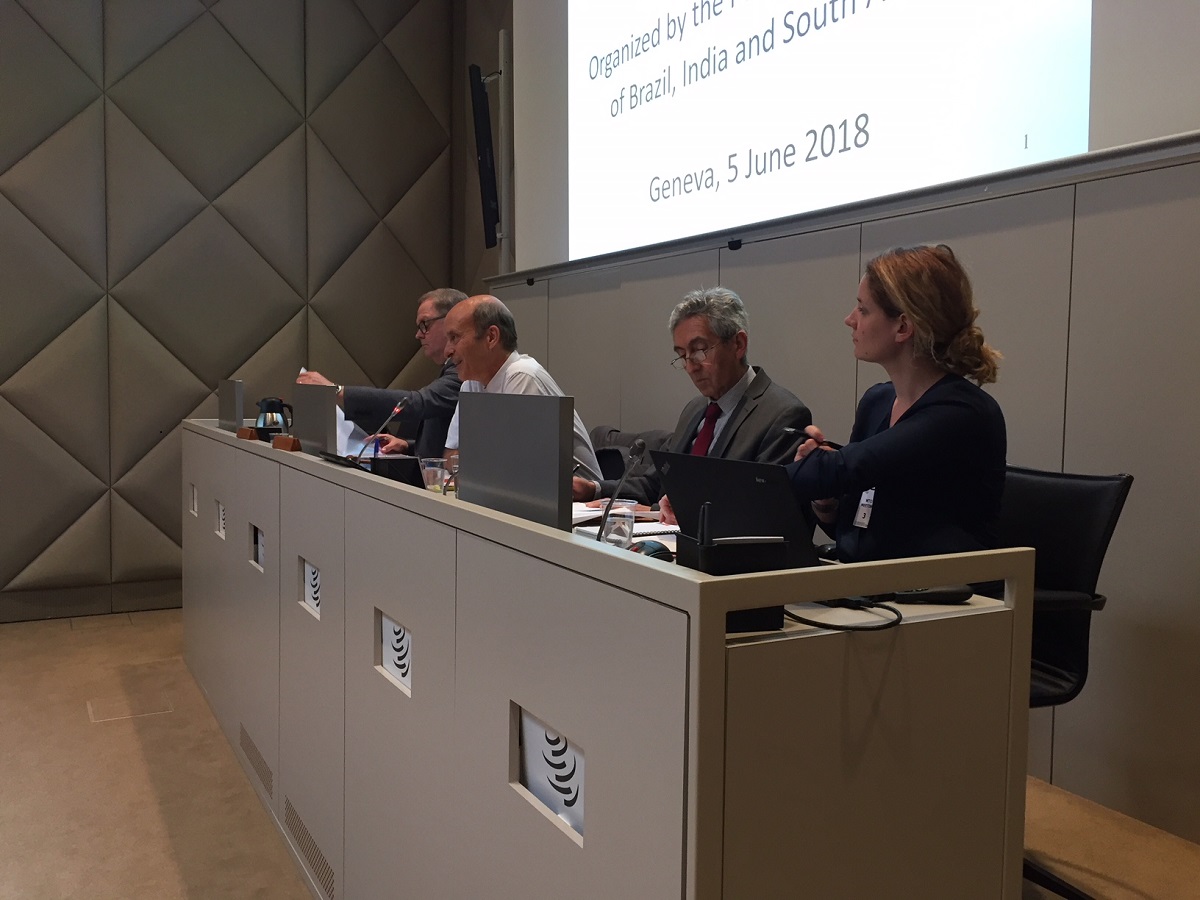
Alongside next week’s World Trade Organization intellectual property committee meeting, Brazil, India, and South Africa are convening a workshop on the neighbouring World Health Organization's approach to substandard and falsified medicines.
Alongside next week’s World Trade Organization intellectual property committee meeting, Brazil, India, and South Africa are convening a workshop on the neighbouring World Health Organization’s approach to substandard and falsified medicines.
The objective of the workshop, according to the organisers, is to brief WTO members on the WHO’s recent decision to replace the term “substandard/spurious/falsely-labelled/falsified/counterfeit medical products” with “substandard and falsified medical products.”
The workshop will take place on 5 June, on the margins of the WTO Council for the Agreement on Trade-Related Aspects of Intellectual Property Rights (TRIPS), taking place on 5-6 June.
The panel is expected to convene three interesting speakers: Michael Deats, group lead for Substandard and Falsified Medical Products at the WHO, Carlos Correa, recently named executive director of the intergovernmental South Centre, and Cyntia Genolet, senior manager, Regulatory and Health Policy, International Federation of Pharmaceutical Manufacturers & Associations (IFPMA) [updated].
Despite the WHO’s change of name, according to Brazil, India, and South Africa, “It would seem that many WTO Members still use the term ‘counterfeit’ medicines when referring to a variety of scenarios that may be covered by the WHO definition of substandard and falsified (SF) medicines.”
The WHO’s approach removes intellectual property from the substandard and falsified medicines concept, they say, as IP is not a competence of the WHO. While “health regulatory tools and IP enforcement tools are clearly different instruments that usually fall within the responsibility of different government agencies and international organizations, both should be seen as complementary,” they said.
The panel is set to explore how different tools can be used to build common ground among key stakeholders with a view to achieving public health objectives.