With no consensus on conducting normative work at the World Intellectual Property Organization on the limitations to copyright for certain actors such as persons with disabilities, educational institutions, and museums, the committee on copyright had agreed on several studies so the issues are better understood. This week, several of those studies were presented to the committee and generated discussion.
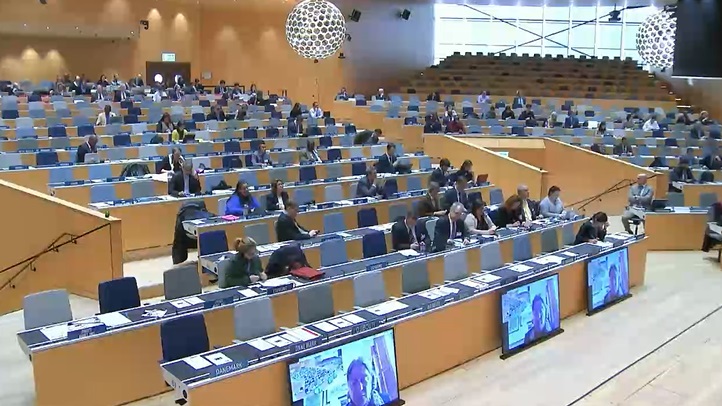
The 35th session of the WIPO Standing Committee on Copyright and Related Rights (SCCR) took place from 13-17 November. Intellectual Property Watch will publish a report on the final outcome of the meeting shortly.
A scoping study [pdf] on access to copyright protected works by persons with disabilities, was presented by authors Blake Reid, assistant clinical professor at the University of Colorado (US), and Caroline Ncube, professor at the University of Cape Town, South Africa.
The study, the authors said, goes beyond the 2013 WIPO-administered Marrakesh Treaty to Facilitate Access to Published Works for Persons Who Are Blind, Visually Impaired or Otherwise Print Disabled, to other kinds of work.
It looks in particular at other mediums such as audiovisual, pictorial, graphical, and sculptural works, Ncube said. It also considers oral and cognitive or intellectual disabilities, and people with multiple disabilities. The study considers technologies such as captioning, audio description, 3D printing, machine learning, and augmented reality.
Reid described 3D-printed tactile books, audio descriptions and captioning generated by automatic speech recognition algorithm, and augmented reality, also underlining the various exclusive rights that might be implicated by those technologies. Some of those technologies might require the circumvention of technological protection measures, he said. Such measures are used to control access to copyrighted works.
The scoping study is based on responses by WIPO member states to a questionnaire, which 24 members have answered so far. Ncube said the qualitative analysis of responses shows that there is a very clear diversity of approaches to accessibility and copyright among the 24 responding states.
The differences come out in three main areas, she said: the categories of disabilities; categories of copyright-protected works for which member states are providing; and in the accessibility technologies that are being provided for by the member states.
Educational Activities
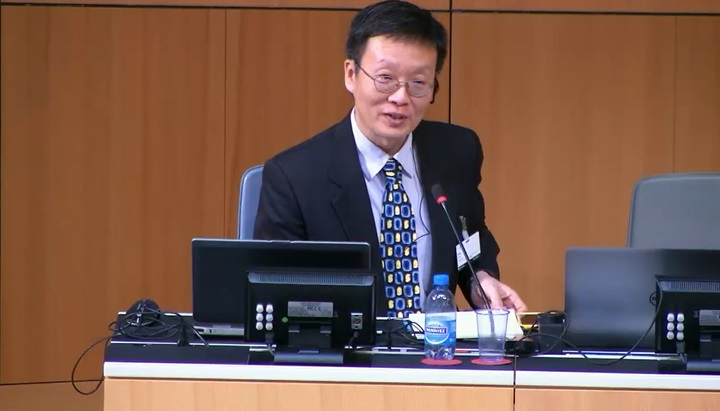
Daniel Seng, a law professor at the National University of Singapore, presented his “Updated study [pdf] and additional analysis of the study on copyright limitations and exceptions for educational activities.” The updated study follows a 2016 study by Seng, which member states decided should be extended to examine additional issues.
The study examines WIPO member states’ legislation as of August 2017 and seeks to understand whether and how member states relied on the existing exceptions and limitations in the Berne Convention for the Protection of Literary and Artistic Works to construct their own limitations and exceptions in their national laws, Seng said.
He looked at different aspects of exceptions and limitations: those which enable the use of adaptations and translations for educational purposes beyond the provisions of the Berne Appendix; those which may limit or restrict the copyright liability of educational institutions; those which limit the scope of contracts that seek to override copyright limitations and exceptions; exceptions and limitations regarding the copying and the digital dissemination; and exceptions and limitations to technical protection measures, and rights management information.
Digital Environment, TPMs
Seng answered a large number of questions from member states and non-governmental organisations, particularly relating to the digital environment,
Iran asked if according to the findings of the study it seems necessary to have an international legal instrument to harmonise national legislation on the needs of educational institutions. Seng answered that the most important harmonising factor for the purposes of his study was Article 10 of the Bern Convention, which in his view “represents the best attempts of the delegates at a particular point in time to try to deal with the pressing need for limitations and exceptions for educational activities.”
On the issue of technical protection measures, Seng said that the approach taken by many member states, in particular non-European, is to allow educational institutions to circumvent or bypass technical protection measures without exposing them to both civil and criminal liability. He however underlined the difficulty in circumventing technical protection for institutions, and said enabling right holders to provide an easier solution to be provided the educational institutions to use the content for educational purposes could be envisaged.
The International Publishers Association representative spoke against the ban on contractual override of technical protection measures, which are viewed by the IPA as “an unfortunate trend in limitation on contractual freedom.”
Seng answered that he understands the issue of piracy of works on the internet, however, he said publishers should try to find mechanisms, such as backdoor mechanisms, to allow educational institutions to have access to works for educational purposes. But he did warn about the computer science community being wary of backdoor mechanisms as they might view it as a security hazard.
According to Seng, the role of the law would only be part of the solution in cross-border issues, adding that the other solution to the problem ought to be the availability of the content that is in the public domain.
Museums: Particular Copyright Issues
A relative newcomer in the SCCR discussions, the issue of specific copyright challenges met by museums led to the decision to conduct research on the subject.
A progress report was presented by consultant Benoît Müller, legal advisor in Brussels, on the initial phase of research on exceptions and limitations for museums. The research aims at gathering facts and information about museum practices and challenges with copyright and related rights, he said, adding that a table is being developed which maps exceptions and limitations applicable to museum’s core missions and activities.
The research is focusing on copyright and related rights protected works, and looks at all types of museums throughout the world, he explained. Museums activities have been organised into three clusters; preservation, access, and exploitation, he said.
Museums share a common core mission of building, preserving, and exhibiting collections, although they come in different kinds, public, private, or semi-private, he said, adding that national solutions to address copyright challenges vary considerably. Close to three-quarters of the WIPO member states do not have specific exceptions for museums, Mueller said, adding that in some countries, individual and collective licensing play an important role.
Contrary to libraries, museum hold original works of art, and often own or manage rights themselves, which make copyright implications different than when dealing with reproduction of works, he said.
On the access question, the research is focusing on users, the primary of which are museums, the public, museum libraries, educational and research purposes. The research also looks at trends such as museums making reproduction of works held in their collection.
Concerning the exploitation of protected works, the study looks at items such as entrance tickets on which for example a museum would want to reproduce a work, and the copyright implications. It also looks at museum catalogues, and other publications.
The research is based on interviews and the review of relevant literature, he said, adding that compiling and studying case law would also shed some light on the subject.
The findings are expected to be reported at the next session of the SCCR.
Image Credits: WIPO