Original news and analysis on international IP policy
Intermediaries Could Be Made Liable In EU Copyright Legislation
Positions on the new draft European Union Copyright Directive lie so far apart in the European Parliament that compromise before an expected October vote seems nearly impossible. Critics of a new special copyright for press publishers - and of a radical change towards holding internet intermediaries liable for what their users upload - were highly alarmed by this week’s developments in Brussels.
Positions on the new draft European Union Copyright Directive lie so far apart in the European Parliament that compromise before an expected October vote seems nearly impossible. Critics of a new special copyright for press publishers – and of a radical change towards holding internet intermediaries liable for what their users upload – were highly alarmed by this week’s developments in Brussels.
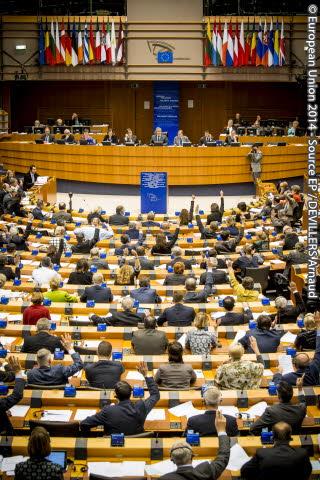
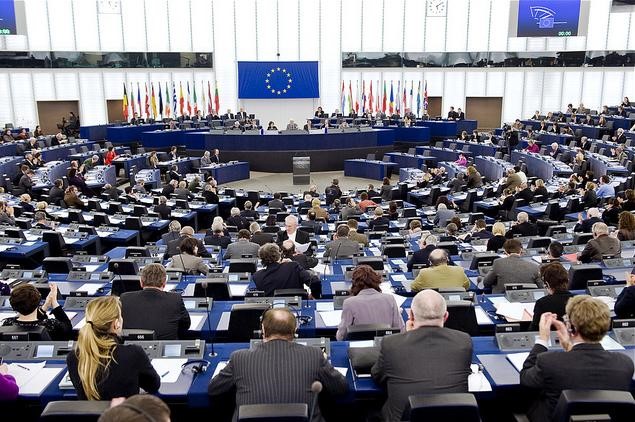
European Parliament, Brussels
Saving copyright on the internet and saving press publishers and “quality journalism against fake news” was the aim of the copyright review, as Axel Voss, lead rapporteur, sees it. Voss told Intellectual Property Watch after today’s (13 July) exchange of views in the Justice Committee (Juri) of the European Parliament in Brussels that he wants to “prevent that copyright gets so many holes that it practically ceases to exist.”
Voss has to forge compromises on nearly a 1,000 amendments until the planned 10 October vote in the Juri Committee.
A European People’s Party (EPP) Member of Parliament, Voss only recently took over the dossier from Maltese MEP Theresa Comodini Cachia who took over a seat in the Maltese Parliament. Since then there has been a turnaround in the position on some of the hot topics in the review, the ancillary copyright (Article 11) and the new licensing and monitoring obligations for intermediaries (Article 13).
Turnaround on Ancillary Copyright and Intermediary Liability
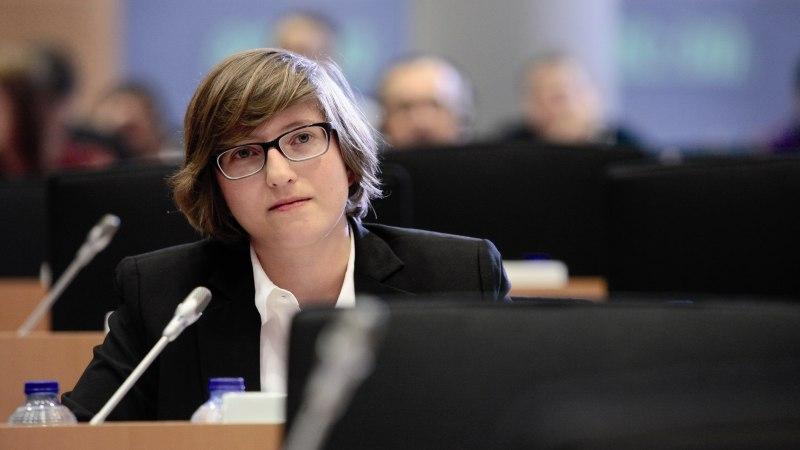
“Comodini Cachia’s draft report, while still being a far cry from a future-oriented copyright policy I would like to see in an effort to reach compromise, came to a quite balanced approach,” said Julia Reda, sole Pirate Party member (and part of the Green Party Group) in the European Parliament. Comodini Cacchia had deleted the ancillary copyright for press publishers and limited the liability provisions of Article 13.
The EPP’s new common position, published 5 July, is that it is “in favour of a reassessment of the liability of service providers with regards to their use of copyright-protected content and of the introduction of rules on the exercise of due diligence and duty of care throughout the creative process.” Therefore, “Platforms which store and give access to copyright-protected content uploaded by their users and therefore compete with licensed online content services should be liable for their use of copyrighted content and therefore obliged to enter into licensing agreements with the right-holders.”
More extreme wording was passed this week by the Committee of Culture on the licensing and monitoring obligation, stating: “Where, in the absence of a request from the rightholder, no licensing agreements are concluded pursuant to the first subparagraph, or where information society service providers that store and/or provide to the public access to significant amounts of copyright-protected works or other subject-matter are eligible for the liability exemption provided for in Article 14 of Directive 2000/31/EC, those providers shall take measures to prevent the availability on their services of works or other subject-matter identified by rightholders through the cooperation with the service providers.”
Information society service providers in the new legislation become liable, contrary to the current E-Commerce Directive Article 14. “We try to differentiate between active and passive service providers,” said Voss. Those who actively promote content offers could be held liable, also under Article 14.
Filter Obligation
The vast scope of such a rule makes Innocenzo Genna, representative of the Italian ISP association at EuroISPA in Brussels, shiver: “This may have a much larger effect than people expect, it will target every cloud provider, so in fact all internet services providers,” he said. “And it is quite disturbing that even legal content will create these consequences.”
“The effects will be immense,” said Genna, and confirms that “concentration of the market would be a result.”
European Digital Rights (EDRi), which follows the copyright review from the user point of view, decried the vote for filtering and monitoring as a sign that the Culture Committee had “decided to abandon all reason and propose measures that contradict existing law on monitoring of online content. They also contradict clear rulings from the highest court in the EU on internet filtering.” The European Court of Justice in several rulings decided constant monitoring and filtering was unconstitutional.
Reda explained that the obligation to filter out content marked copyrighted tramples use that is allowed under copyright law. Legally acquired content could be filtered, and the filters will not be able to distinguish, for example where copyright exceptions apply. EDRi points out that users who already pay levies for private copying will have to pay once more for the licensing.
Finally, Reda warned against monopolizing effects. “A copyright filter like ContentID would be made a de facto standard. Smaller providers would be compelled to buy it – from Google, which the legislation targets,” she warned. Moreover, Content ID was made for music, so a system for print material does not exist so far.
Ancillary Copyright
Google might also be the party least hit by the other controversial paragraph, the one on ancillary copyright (a neighbouring right). “We are in favour of an ancillary copyright,” Voss confirmed today, suggesting the special press publisher copyright will help quality journalism. That it will have this effect is challenged by a lot of people.
Lidia Joanna Geringer de Oedenberg (S&D Party Group) in the debate today pointed to the rather negative effects of an ancillary copyright in Spain. In Spain, Google closed its “Google News site,” Geringer said. “It had a direct negative impact on publishers there. The newspaper revenues fell because voters voted with their feet and ad revenue decreased,” she reported.
In Germany, Google received the sole free licence from large publishers who, after fighting for a national ancillary copyright, were not prepared to lose the traffic sent over from Google News. In the end, a case was brought to a Berlin court over the question of whether it was legal to spare the large company, which was the target of the bill, while smaller competitors have to pay.
“Who won?” asked Geringer. “Monopolies won.”
Support for these critical positions come, Reda pointed out today in the Juri debate, from a big number of IP academics over Europe who warn against the negative side effects and the mere unconstitutionality of some of the proposals.
Closed Shop for Final Steps?
Voss tries to calm the concerns. “We certainly do not want to target smaller providers or start-up companies or innovation,” he told Intellectual Property Watch. “There are a huge variance of business models in the digital world, and if EuroISPA sees problems, I would encourage them to talk to me so that we get a chance to find a solution.” EuroISPA in fact has challenged the provisions of the draft directive with a study published earlier this year.
Asked how to uphold user rights when using a content filtering system that has still to be developed for text, Voss said, “I have no solution for that and have to find out what is technically possible.” The proposal is not to have an “indepth analysis of all content” through the filtering tools, he said.
The new copyright directive is not “aimed to cover everything, but we still need to be able to oblige the larger platforms to pay a fair share.” With regard to the next steps, Voss considers 10 October might be too tight to have to vote.
Pushed back in the calendar, the controversial directive might come under even more pushing for fast track passage, warn the experts at European Digital Rights (EDRi) who are concerned about substantive decisions moving behind closed doors in an early trilogue negotiation. The trilogue is the part of the procedure where European Commission, Parliament and Council of member states strike their deals on legislative files. Given that copyright is an area attracting much lobbying work, the call of Ombudsman Emily O’Reilly to bring more transparency to the trilogue procedures should be heard, argued Joe McNamee, executive director of EDRi.
[…] Intermediaries Could Be Made Liable In EU Copyright Legislation […]
[…] reforma zmierza w z?? stron? (Bezprawnik) 13/07 Social media: the Faustian deal (Euronews) 13/07 Intermediaries Could Be Made Liable In EU Copyright Legislation (Intellectual Property Watch) 14/07 Copyright votes in CULT and ITRE: Filtering, blocking & […]
[…] reforma zmierza w z?? stron? (Bezprawnik) 13/07 Social media: the Faustian deal (Euronews) 13/07 Intermediaries Could Be Made Liable In EU Copyright Legislation (Intellectual Property Watch) 14/07 Copyright votes in CULT and ITRE: Filtering, blocking & […]




[…] Intermediaries Could Be Made Liable In EU Copyright Legislation […]
[…] reforma zmierza w z?? stron? (Bezprawnik) 13/07 Social media: the Faustian deal (Euronews) 13/07 Intermediaries Could Be Made Liable In EU Copyright Legislation (Intellectual Property Watch) 14/07 Copyright votes in CULT and ITRE: Filtering, blocking & […]
[…] reforma zmierza w z?? stron? (Bezprawnik) 13/07 Social media: the Faustian deal (Euronews) 13/07 Intermediaries Could Be Made Liable In EU Copyright Legislation (Intellectual Property Watch) 14/07 Copyright votes in CULT and ITRE: Filtering, blocking & […]