Original news and analysis on international IP policy
Security, Privacy, Trust Remain Challenges For The Internet Of Things
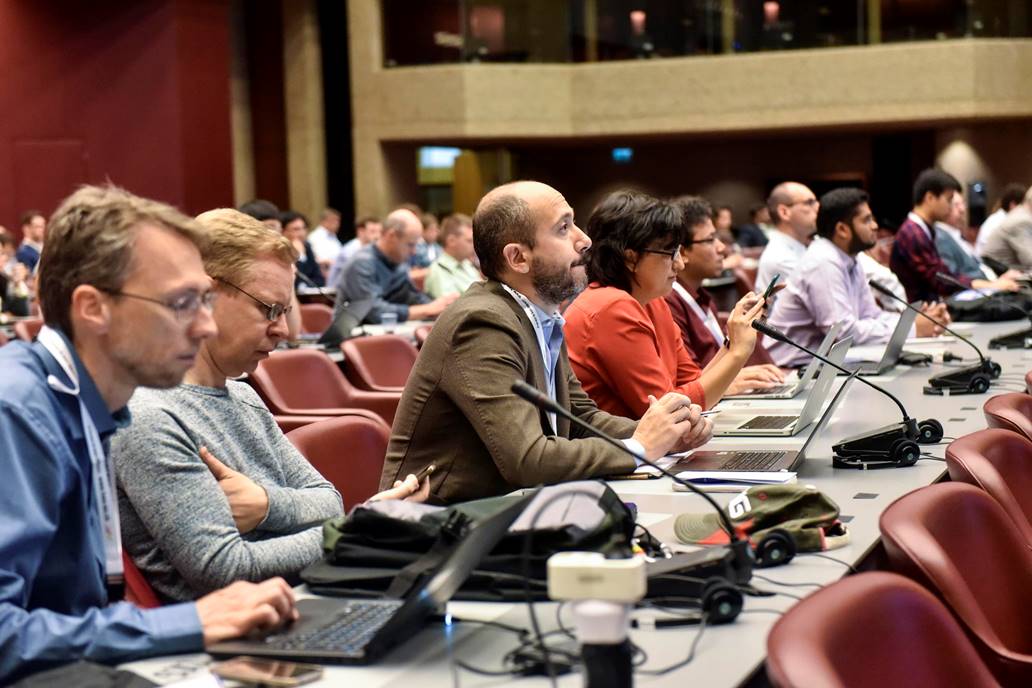
It is “amazing” what can be done via the internet and the Internet of Things is a “game changer,” a speaker said during the Internet of Things Week currently taking place in Geneva. Ninety percent of the data in the world has been created in the last two years. And the speed of data creation is still increasing, another speaker said.
It is “amazing” what can be done via the internet and the Internet of Things is a “game changer,” a speaker said during the Internet of Things Week currently taking place in Geneva. Ninety percent of the data in the world has been created in the last two years. And the speed of data creation is still increasing, another speaker said.
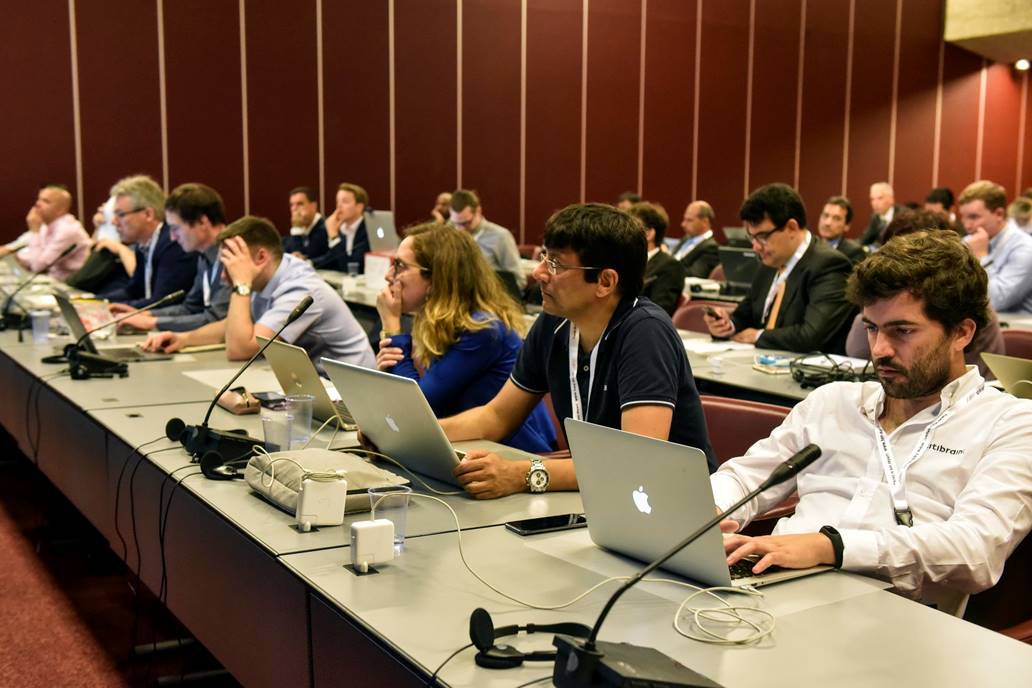
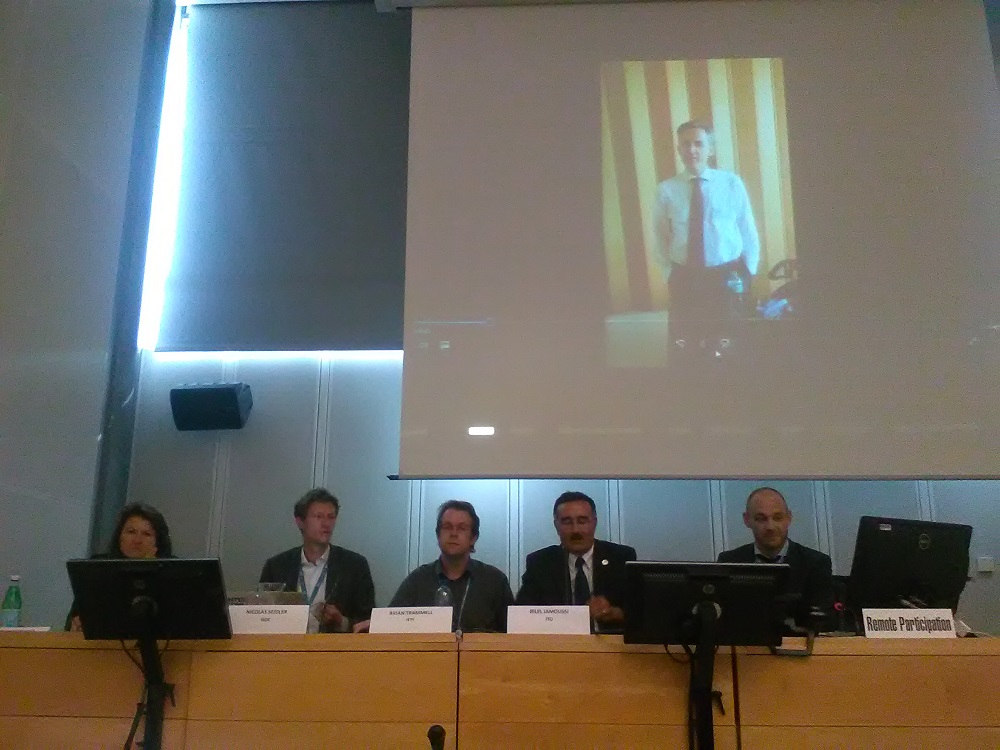
Internet of Things Week 2017 (IoT Week), taking place from 6-9 June, is the “yearly conference of the Internet of Things Forum.” The aim is to promote “international dialogue, knowledge sharing and cooperation for the Internet of Things,” the organisers said. The location is well-chosen as Geneva is “the birth place of the World Wide Web,” according to the organisers.
IoT Week
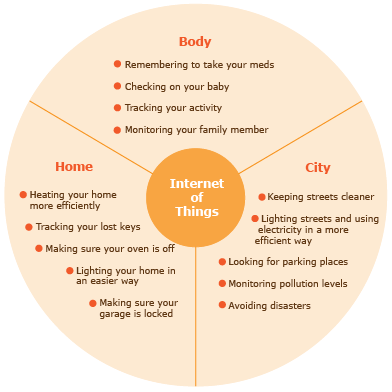
Phillippa Biggs, senior policy analyst of the International Telecommunication Union (ITU), emphasised that there are a lot of different definitions of the Internet of Things. “The Internet of Things is the intelligent connectivity of physical devices driving massive gains in efficiency, business growth and quality of life,” according to Patrick Wetterwald, engineering manager of Cisco.
The goal of the Internet of Things is to “increase efficiency and make our lives better and safer,” said Geoff Mulligan, founder and chair of the LoRa Alliance. The Internet of Things can be used in many industries, such as oil and gas, mining, transportation and defence, Wetterwald said.
An Internet of Things project can only be successful with a business plan, according to Wetterwald. Only 26 percent of Internet of Thing projects are considered to be successful; the paradigms and infrastructure therefore need to be changed, he said.
Things, identifiers and Virtual Entities
One of the problems with the Internet of Things is that the concept of ‘thing’ is not well-defined, a speaker said during the event.
In the centre of the Internet of Things are things, the objects in the area of the interest of the users. A thing can consist of a whole system or different other things, according to Juergen Heiles, co-leader of the IoT Identifier task group in the Alliance for Internet of Things Innovations (AIOTI). The unique identification of the thing is crucial. Things can be any kind of objects, such as software, music files and the climate at a specific location, Heiles said.
Things are represented in the virtual world by virtual entities. Identifiers establish the link between a thing and a virtual entity. Heiles said an identifier is a pattern to uniquely identify a single entity or a class of entities within a specific context.
The prediction is that there will be 50.1 billion connected devices by 2020, according to Mulligan. It remains a big challenge to reach that number, even though the number is low regarding the number of houses and household devices in for instance the United States alone, he said.
Remaining Challenges
There are “probably too many standardisations” in the area of the Internet of Things, Wetterwald said, which leads to fragmentation of the market. The focus should be on interoperability, according to Mulligan.
Ownership of data, privacy, security and trust remain some of the challenging questions of the Internet of Things, several speakers said. It is also critical to understand how devices can be removed from the network, according to Mulligan.
Mulligan emphasised the difference between privacy and security. Security is a technology that enforces privacy policies. Jurgen Heiles said that “data protection can be an issue for all kinds of things in order to protect for instance intellectual property and other sensitive company data.”
Combatting Counterfeiting and ICT Devices
Alexander Ntoko, chief of the Operations and Planning Department of the International Telecommunication Union (ITU), presented how ITU combats counterfeiting for ICT devices. The ITU makes use of 3 distinct authentication methods and 8 unique and global identifiers. The combat against counterfeits involves the generation of a device fingerprint, the verification of the unique identifiers of a device and track and tracing in the supply chain. Interoperability in identification could be a reality with the Internet of Things, according to Ntoko.
The Internet of Things and the Environment
Several speakers illustrated how the Internet of Things may help to achieve the United Nations Sustainable Development Goals 13 (climate change), 14 (life below water) and 15 (life on land), which are related with the environment.
Edwin Hecker
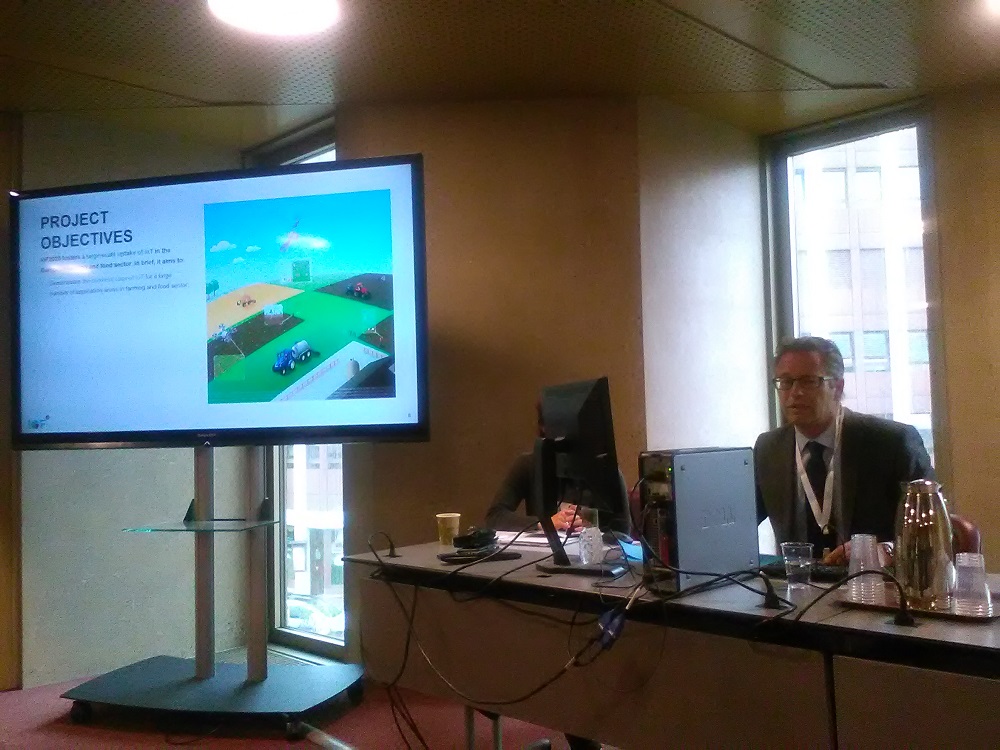
Edwin Hecker, the managing partner of Schuttelaar & Partners, presented Internet of Food & Farm 2020 (IOF 2020) a large-scale pilot program. The project has five different trials: arable, fruits, dairy, vegetables and meats, and there are 19 use cases in Europe. IOF 2020 will pave the way for “a more data-driven and sustainable farming,” according to Hecker, adding, that the Internet of Things will enable “autonomous farm operation and virtual foods chains.”
Data-driven farming has “a lower environmental impact and a higher productivity” than traditional forms of farming. It “reduces costs and leads to a more transparent food value chain,” he said. The Internet of Things allows “a more precise form for farming,” with less waste of water and driverless tractors, Hecker said.
A whole new form of farming lays ahead of us, according to Hecker. Biggs said that the Internet of Things could allow farmers to have more flexible modern lifestyles.
Marimuthu Swami Palaniswami, professor of electrical and electronic engineering at the University of Melbourne, Australia, presented The Great Barrier Reef Ocean Observing System (GBROOS), a continuous real-time monitoring of data in the Great Barrier Reef in Australia with the use of the Internet of Things. The data is collected in order to understand the effect of climate change on the Great Barrier Reef. The Reef has a great touristic and commercial value and is critical for the food sustainability. A part of the reef is, however, already dead due to climate change.
Paolo Ruti, chief of the World Weather Research Division of the World Meteorological Organization (WMO), said that WMO uses the Internet of Things to make sure that information around the world can be shared and used to predict the weather and manage disasters.
Other seminars during the IoT week discuss the relation with the Internet of Things and other Sustainable Development Goals, including health, responsible consumption and production, affordable and clean energy, no poverty and zero hunger.
Trust can only be established by reporting data and not creating it. The key holders to open source and open access need to establish a no bias formula and give to the freedom of information as the intellectual properties already exist and are transparent. Critical thinkers are frustrated by the control issues arising and have been operating with the policy of first do no harm.
We do not except the old established norms that were built for destructive purposes. Innovation has been created by looking for positive ways to use our knowledge and technologies to reverse, or correct the course of damage done. We have created an independent base of issues and will work together to establish and maintain a best practice to be applied.


Trust can only be established by reporting data and not creating it. The key holders to open source and open access need to establish a no bias formula and give to the freedom of information as the intellectual properties already exist and are transparent. Critical thinkers are frustrated by the control issues arising and have been operating with the policy of first do no harm.
We do not except the old established norms that were built for destructive purposes. Innovation has been created by looking for positive ways to use our knowledge and technologies to reverse, or correct the course of damage done. We have created an independent base of issues and will work together to establish and maintain a best practice to be applied.