NAIROBI, Kenya (IP-Watch) – Intellectual property rights related to trade and development will continue to be part of the United Nations Conference on Trade and Development (UNCTAD)’s programme work, according to an agreement on the organisation’s four-year mandate reached at the agency’s 14th session in Nairobi.
The UN agency has been implementing a programme focussing on the development dimension of IP rights, which helps developing countries participate effectively in local and international discussions on the subject. Engaging on research and policy analysis, technical assistance and policy dialogues, the programme’s work aims at ensuring that IP policies are consistent with development objectives.
The mandate represents a renewal of the existing UNCTAD mandate on IP. The work will be carried out with a clear understanding that World Intellectual Property Organization (WIPO) will lead on IP within the United Nations.
“Acknowledging that WIPO has the lead in intellectual property rights issues in the United Nations system, UNCTAD will continue its work on IPR as it relates to trade and development,” said the approved draft document dubbed Maafikiano-Nairobi Consensus in Swahili. [Note: a better scan of the mandate document will be posted here as soon as it is available.]
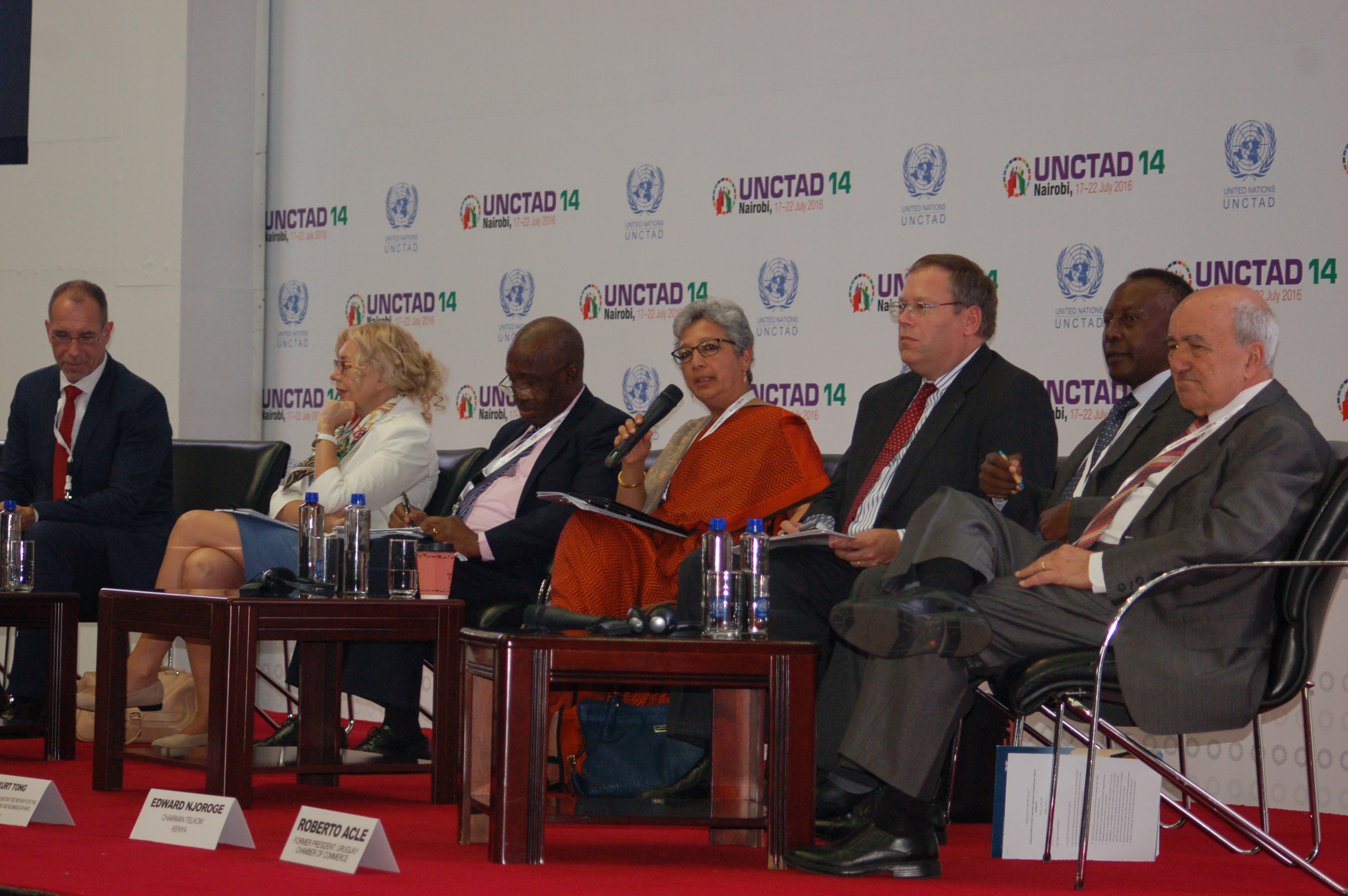
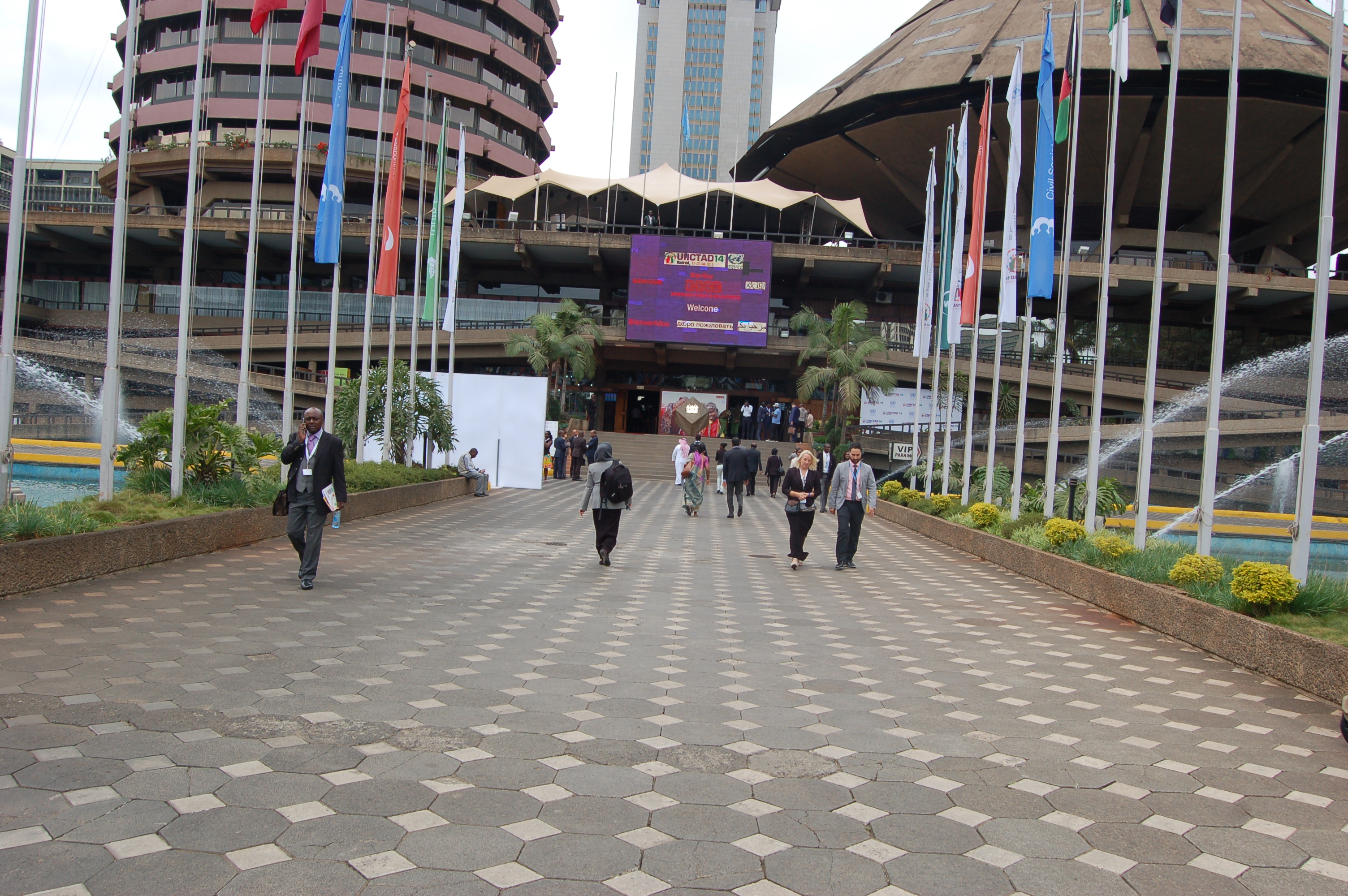
Nearly 7000 delegates had been meeting here from July 17-22 to chart the way forward for UNCTAD in light of current challenges in global economy and finance. The meeting convened at the same venue where the fourth session was held in 1976. Then the newly independent African nations sought a new international system that benefitted all countries. Four decades on a lot has changed and this session has taken place at a watershed moment especially for developed nation, when the global economy is struggling.
On Friday (July 22), UNCTAD’s member states endorsed Nairobi Maafikiano-Nairobi Consensus, part of the two document negotiated at the meeting, which outlines the organisation’s work programme for the next four years. The 29-page document outlines a raft of obligations between UNCTAD and the members.
“We have a true outcome which everyone wanted to achieve. All issues the delegates wanted have been accommodated,” said Amina Mohammed, Kenya’s cabinet secretary in the Ministry of Foreign Affairs and the UNCTAD 14 president.
Earlier, an agreement had been struck on a political declaration named Nairobi Azimio-Nairobi Vision in Swahili, which largely lists guiding principles of UNCTAD’s member states on trade and development issues. In the draft Aziminio-Nairobi, the member nations reaffirmed their commitment to UNCTAD.
“The important role of UNCTAD will be strengthened as the focal point within the United Nations system for the integrated treatment of trade and development and interrelated issues,” says the document.
The documents are seen to renew and strengthen the work of the agency in this period, including the IPR issues.
“I am delighted that our 194 member states have been able to reach this consensus, giving a central to UNCTAD in delivering the sustainable development goals,” said Dr. Mukhisa Kitunyi, UNCTAD’s secretary general in a press release at the end of the meeting.
The Nairobi Maafikiano says among other obligations, UNCTAD should contribute to the implementation of and follow-up to the outcomes of relevant global conferences, including the 2030 Agenda for Sustainable Development, the Addis Ababa Action agenda, the 2015 agreement which laid out the steps the global community would take to fund the Sustainable Development Goals (SDGs), and the Paris Agreement under the UN Framework Convention on Climate Change, among other relevant agreements and outcome.
“With this document, we can get on with business of the cutting edge analysis, building political consensus and providing the necessary technical assistance that will make globalisation and trade work for people in the global south,” said Kitunyi.
Still on IP, the Nairobi Maafikiano notes that “technology diffusion to developing countries could be facilitated by various measures including recognising the importance of adequate, balanced and effective protection of intellectual property rights in both developed and developing countries in line with nationally defined priorities and in full respect of international obligations.”
While Africa has been debating its IP related to innovations around information and communication technology (ICT), the document notes that technology and its financing are key means of achieving the sustainable development goals. However, for the majority of countries, the potential of science, technology and innovation remains unfulfilled.
“Closing technological gaps is both essential for poverty eradication and the key instrument for reducing inequality within and among countries,” it said. “The means of implementation of the Sustainable Development Goals (SDGs) includes the development, transfer, dissemination and diffusion of environmentally sound technologies, on favourable terms including on concessional and preferential terms as mutually agreed.”
Further, it notes that knowledge transfer from diasporas can also make an important contribution.
“FDI and trade can play a key role in disseminating environmentally sound technologies to developing countries and in stimulating technology development,” it says.
African countries are reportedly happy with the outcome, after pushing for more focus on SDGs.
“We are pleased that this outcome will also address the capacities of members in policy analysis on trade, development, debt issues, technology and sustainable development,” African countries said in a statement at the end of the meeting.
An UNCTAD press release from the event is here.
Image Credits: Fredrick Nzwili