
The 1994 World Trade Organization Agreement on Trade-Related Aspects of Intellectual Property Rights (TRIPS) has been a landmark pact in the IP world and beyond. Now on the 20th anniversary of its entry into force, former TRIPS negotiators and other experts have come out with a book recounting the remarkable set of circumstances and compromises that took place to bring this agreement into being.
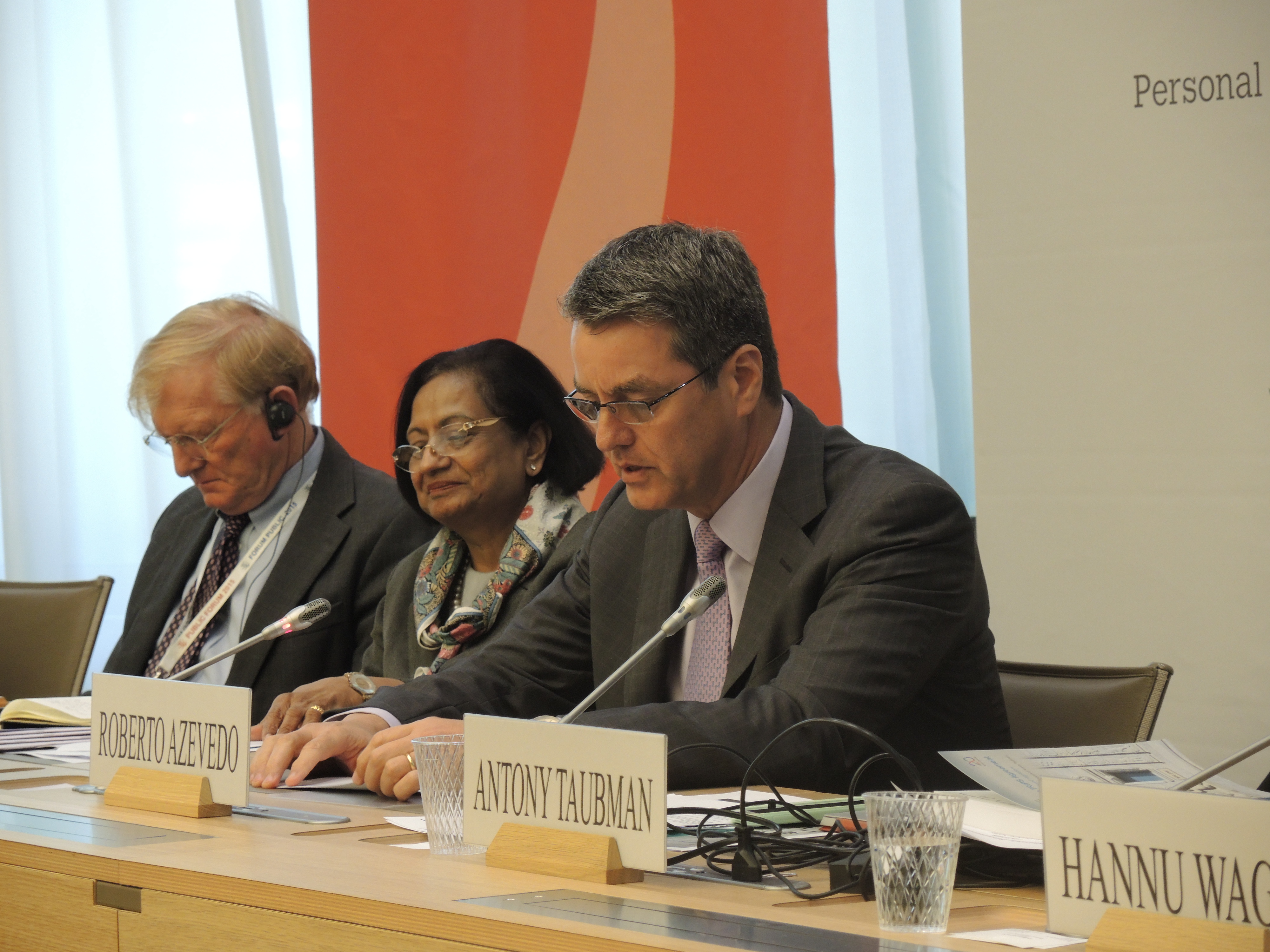
The launch of the book, entitled, “The Making of the TRIPS Agreement: Personal Insights from the Uruguay Round negotiations,” was held on 1 October, in the context of the annual WTO Public Forum. The book was edited by Jayashree Watal and Antony Taubman, both of the WTO IP Division. Watal moderated the panel at the launch.
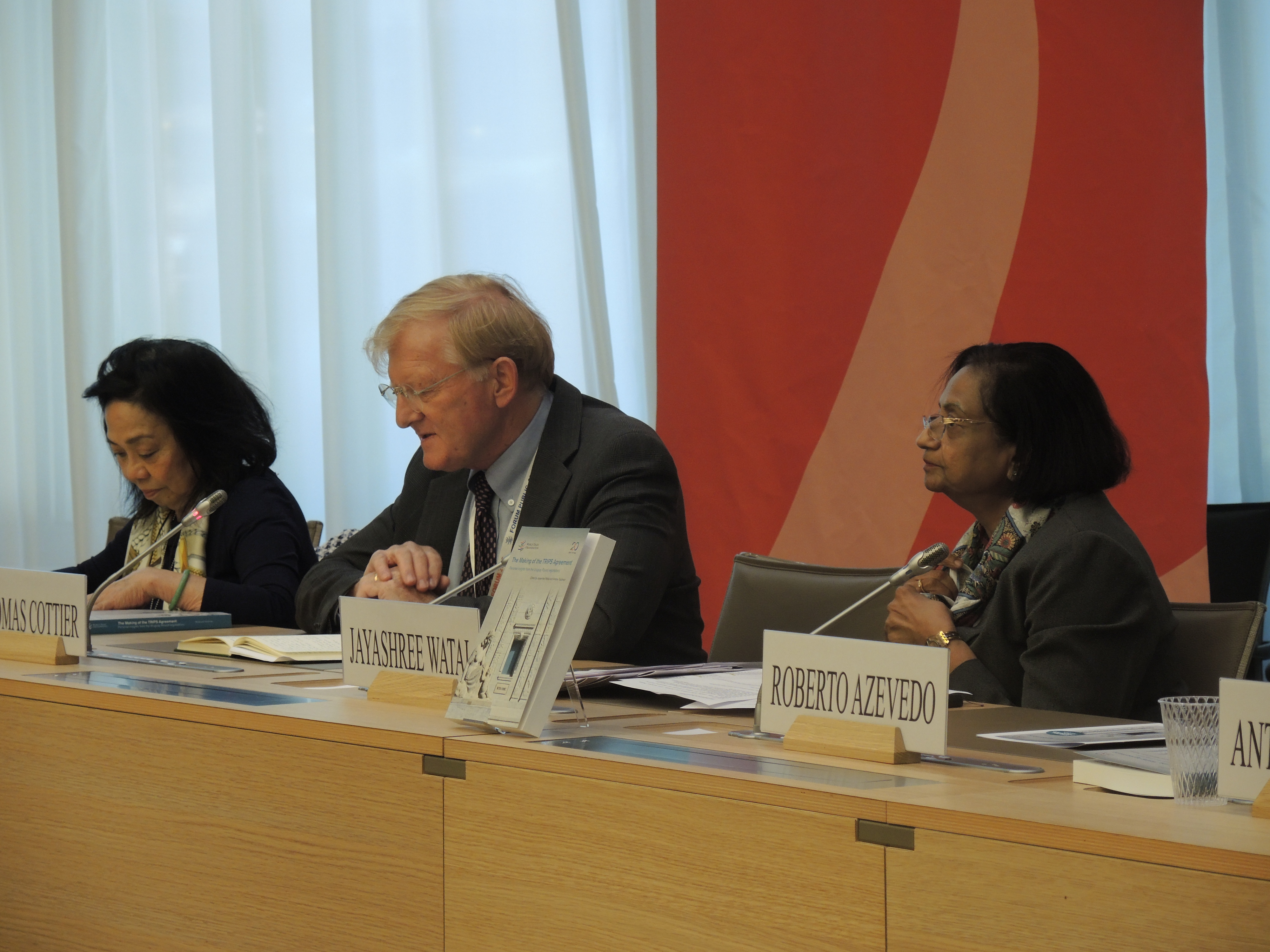
Speaking at the launch, Thomas Cottier, author-contributor and professor of European and International Economic Law at the University of Bern, said the TRIPS might be a victim of its own success. It is based on the principle that it set minimum standards and countries would be free to go beyond that. In today’s light one can question if that was a good decision, he said.
The problem is that there is no ceiling on the level of IP protection, and this ceiling is rising in bilateral agreements. TRIPS lacks the balance towards the increasing rights and also suffers from a lack of discipline, he said.
IP negotiations need a public policy point of view, he said, and not just represent private interests.
Thu Lang Tran Wasescha, author-contributor, IP consultant and part-time counsellor at the Swiss Federal Institute of Intellectual Property, said the underlying principles of IP will always be the same, “it’s just the clothes that will change.” The challenge will be adjusting and adapting.
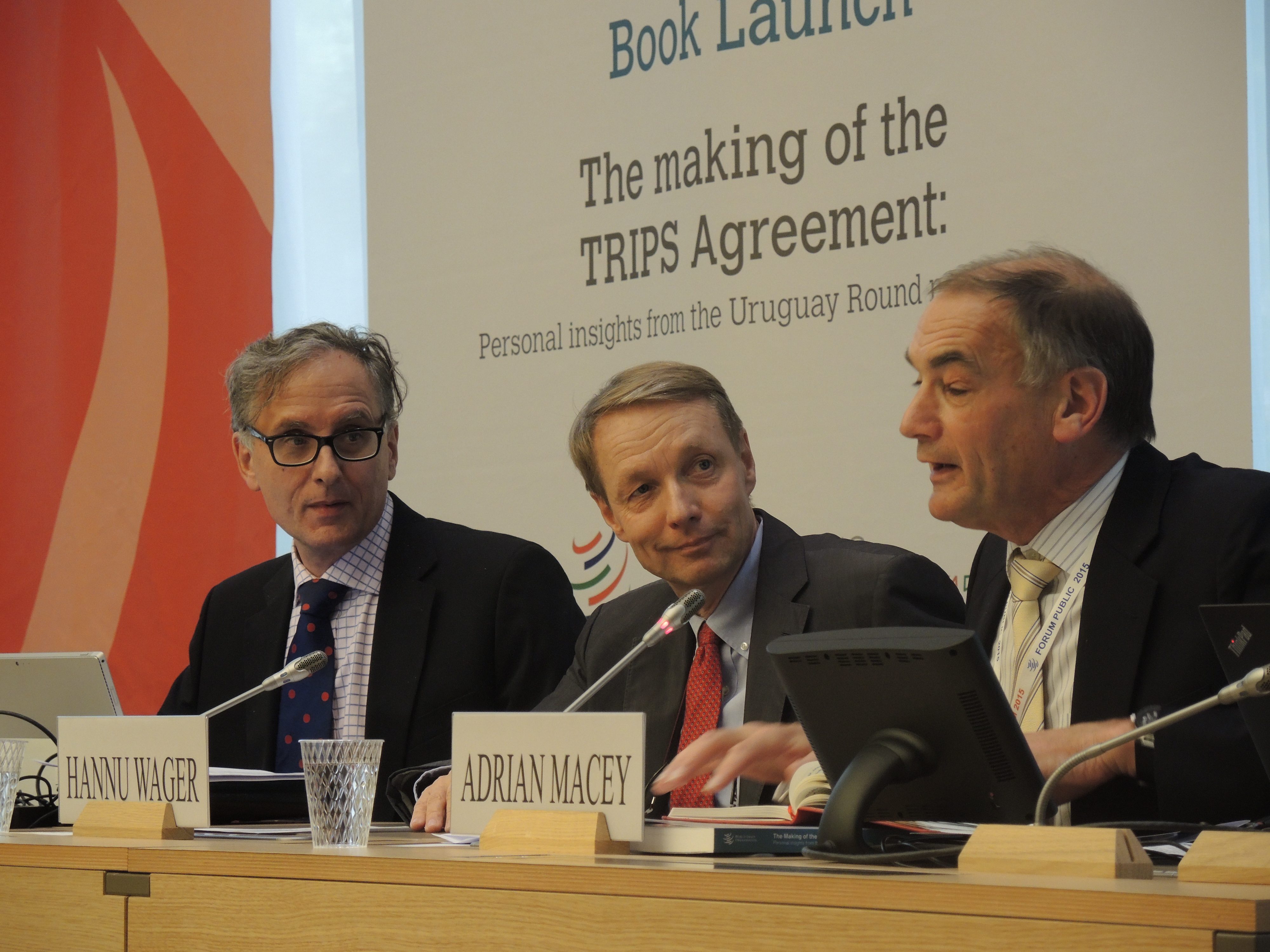
Another speaker, Hannu Wager, author-contributor and counsellor, WTO Intellectual Property Division, also participated in the TRIPS negotiations. His chapter is called Copyright: A Nordic perspective.
Adrian Macey, author-contributor and senior associate, Victoria University of Wellington, New Zealand, said that at the beginning of the TRIPS negotiations, a large proportion of negotiators were non-specialists, and it was a new and unfamiliar domain for the General Agreement on Tariffs and Trade (GATT).
Referring to dispute settlement, he said developing countries were concerned about trade sanctions and enforcing higher IP standards, and cross-retaliation (allowing a country to receive payment for damages via another economic sector than the one of the dispute) was a block in negotiations. However, cross retaliation has been a tool for the weak to use against the strong, as illustrated in cases were cross retaliation was awarded, such as online gambling, cotton and bananas.
Antony Taubman, co-editor, author-contributor and director of the WTO Intellectual Property Division, said the book started as a “thought bubble” in February, at the time a seminar on TRIPS was held. In the TRIPS agreement a section that is often overlooked is the chapter on enforcement, he said. TRIPS is in fact a codification of ideas on equity and balance, he said. It is the first time that those notions had been properly codified at the international level, he said.
The most striking effect of the TRIPS Agreement is the illustration of the catalytic effect of a clear mandate. One lesson from the book, he said is that the role of the secretariat, which is always a very sensitive subject, cannot be taken for granted, and must be earned. The secretariat are “keeper” of the agreement, he noted.
WTO Director General Roberto Azevêdo gave a speech at the book launch, and said, “In this room we have gathered a huge – and probably unrivalled – wealth of knowledge and expertise on intellectual property and the global trading system.”
IP is a topic that attracts a lot of attention. But TRIPS and IP issues are still not very widely understood, he said, and knowledge needs to be spread, and “that’s what the book is all about.”
The book compiles a wide range of perspectives and practicalities of negotiating the TRIPS Agreement, he said.
The world of international trade and IP is very different from when the TRIPS negotiations were launched in 1986. TRIPS has withstood the test of time, he said, as negotiators produced a text that is far-sighted and flexible and that has been able to adapt to evolving circumstances.
The 2001 Doha Declaration on TRIPS and Public Health clearly highlighted the public policy safeguards already in the TRIPS Agreement.
A major revision of the TRIPS was not needed to achieve that kind of outcome, he said. Another specific instrument on compulsory licences for export was adopted. Both decisions show the balanced nature of the text, he said.
TRIPS deeply impacted the laws of countries, in particular of developing economies, said Azevêdo.
The Doha Declaration is a major factor in how TRIPS is perceived, he said. The general view at the time was that the IP system was essentially serving the interests of developed countries. Today we have a different picture, some developing countries are major users of IP. IP is hardly confined to the exclusive use of the developed world, he said, it serves innovation and broader interests.
TRIPS negotiations did not necessarily follow a traditional North-South divide. The book’s authors show how large parts of the TRIPS were developed through resolution of intra-North issues, such as standards for copyrights, geographical indications, patents, and enforcement.
In sum, he said the insights in the book are not only historical, but will serve as an inspiration for future negotiations.
Image Credits: Catherine Saez


[…] SEE ALSO IP-Watch story on the book launch […]
[…] ALSO New book launched at WTO […]