Original news and analysis on international IP policy
No Deal Overall, But TPP Ministers Agreed Some IPR Issues In Hawaii, US Says
While the ministers of the 12 countries negotiating the Trans-Pacific Partnership (TPP) acknowledged they are still far apart on certain issues such as dairy, there were some areas of agreement in this week's negotiation in Hawaii, they said. Some of them appear to have been related to intellectual property rights, with particular mention of geographical indications (GIs).
While the ministers of the 12 countries negotiating the Trans-Pacific Partnership (TPP) acknowledged they are still far apart on certain issues such as dairy, there were some areas of agreement in this week’s negotiation in Hawaii, they said. Some of them appear to have been related to intellectual property rights, with particular mention of geographical indications.
In answer to a question at the closing press conference on what was agreed since the start of the week, United States Trade Representative Michael Froman said an example would be intellectual property rights, specifically geographical indications. He gave no further details.
GIs have been an area of significant debate globally, as Europe and some other regions generally use a different system of protection for such products than countries that tend to use trademarks for this purpose.
Looking at the list of TPP negotiating countries, it shows that many of the countries do not have many GIs and tend to line up on the trademark side, at least in contentious discussions at the World Intellectual Property Organization (IPW, WIPO, 30 July 2015). These include: Australia, Canada, Chile, Japan, and the United States. However, TPP countries that strongly favour a GI system include Mexico and Peru, possibly others.
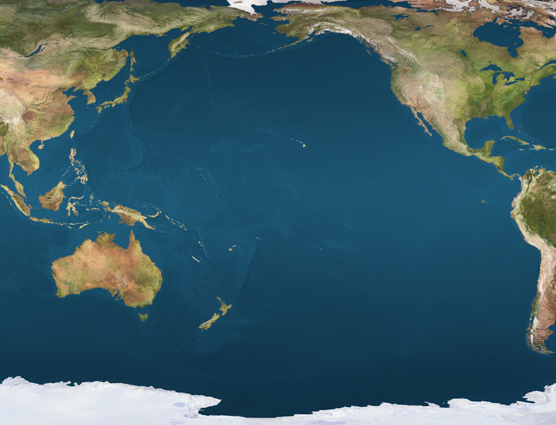
The countries negotiating the TPP include: Australia, Brunei Darussalam, Canada, Chile, Japan, Malaysia, Mexico, New Zealand, Peru, Singapore, United States, and Vietnam.
GIs are names for products with distinctive characteristics from particular regions, such as Brie cheese.
Another possible sticking point from the week related to IP is market exclusivity terms for biologics. This was not mentioned by ministers in the press briefing. A New York Times story reported that the issue was among those that led to no deal this week.
[Update:] Inside US Trade reported on an interview with the Australian trade minister:
“On IP, Australia is pushing back on at least two issues. The first is the length of the data exclusivity period for biologics, with Australian Trade Minister Andrew Robb publicly saying he cannot go beyond five years, falling far short of the U.S. demand for 12.
“The second issue relates to the obligations in the chapter for Internet service providers (ISP) to remove potentially infringing content by their users in order to escape liability for copyright infringement. Australia is seeking a footnote stating that the TPP disciplines on this issue — expected to be more general in nature — would prevail over the more specific ones included in its existing bilateral free trade agreement with the United States.
“In the area of investment, Australia continues to fight for several footnotes or provisions on investor-state dispute settlement (ISDS) that are opposed by other countries. Sources said these objections have prevented TPP countries from concluding the investment chapter, as everything else is basically agreed.” [end update]
A joint statement (below) read out at the closing press conference by USTR Froman said the countries are “more confident than ever that TPP is within reach.”
There were some signs of tension in the press conference, as ministers showed signs of having been pushed on areas of special interest to their economies. The Mexican minister defended its position on automobiles, and the New Zealand minister defended its stand on dairy, remarking that his country started the negotiation and “will not be pushed out of this agreement.”
Ministers agreed to “intensively engage” bilaterally and multilaterally on issues, Froman said, but no next date for a meeting has been set.
US House Ways and Means Committee Ranking Member Sander Levin (D-Michigan) issued a statement from Maui:
“It is wise that the Administration did not decide to get a deal done in the Trans-Pacific Partnership negotiations this week, as many key issues remain outstanding while others remain on the wrong track.” He said critical issues that must be resolved to get support in Congress include “ensuring access to affordable medicines,” and the “need to closely review the still-classified text to assess the extent to which there has been real and sufficient progress on issues such as the environment and investor-state dispute settlement.”
Lahaina, HI – We, the trade ministers of Australia, Brunei Darussalam, Canada, Chile, Japan, Malaysia, Mexico, New Zealand, Peru, Singapore, United States, and Vietnam announce that, after more than a week of productive meetings, we have made significant progress and will continue work on resolving a limited number of remaining issues, paving the way for the conclusion of the Trans-Pacific Partnership negotiations.
Ministers and negotiators leave Hawaii committed to build on the momentum of this meeting by staying in close contact as negotiators continue their intensive engagement to find common ground. Negotiators will also continue to work to formalize the achievements that have been made this week.
In this last stage of negotiations, we are more confident than ever that TPP is within reach and will support jobs and economic growth.
The progress made this week reflects our longstanding commitment to deliver an ambitious, comprehensive and high-standard TPP agreement that will support jobs and economic growth across the Asia Pacific region.
[…] soon and claim that they made “significant progress” in this last round of talks. U.S. Trade Representative (USTR) Michael Froman said “We are more confident than ever that TPP is within reach,” and that […]
[…] soon and claim that they made “significant progress” in this last round of talks. U.S. Trade Representative (USTR) Michael Froman said “We are more confident than ever that TPP is within reach,” […]
[…] objecting to “country-specific outcomes” in the provisions on ISP liability. This is apparently an oblique reference to its desire for a footnote in the text allowing it to opt for the TPP’s relatively more […]
[…] objecting to “country-specific outcomes” in the provisions on ISP liability. This is apparently an oblique reference to its desire for a footnote in the text allowing it to opt for the TPP’s relatively more […]


[…] soon and claim that they made “significant progress” in this last round of talks. U.S. Trade Representative (USTR) Michael Froman said “We are more confident than ever that TPP is within reach,” and that […]
[…] soon and claim that they made “significant progress” in this last round of talks. U.S. Trade Representative (USTR) Michael Froman said “We are more confident than ever that TPP is within reach,” […]
[…] objecting to “country-specific outcomes” in the provisions on ISP liability. This is apparently an oblique reference to its desire for a footnote in the text allowing it to opt for the TPP’s relatively more […]
[…] objecting to “country-specific outcomes” in the provisions on ISP liability. This is apparently an oblique reference to its desire for a footnote in the text allowing it to opt for the TPP’s relatively more […]