
The era of analogue television broadcasting is coming to an end in different parts of the world and is being replaced with digital terrestrial broadcasting. The transaction deadline day widely known as the ‘Digital Switchover Date’ is tomorrow, 17 June.
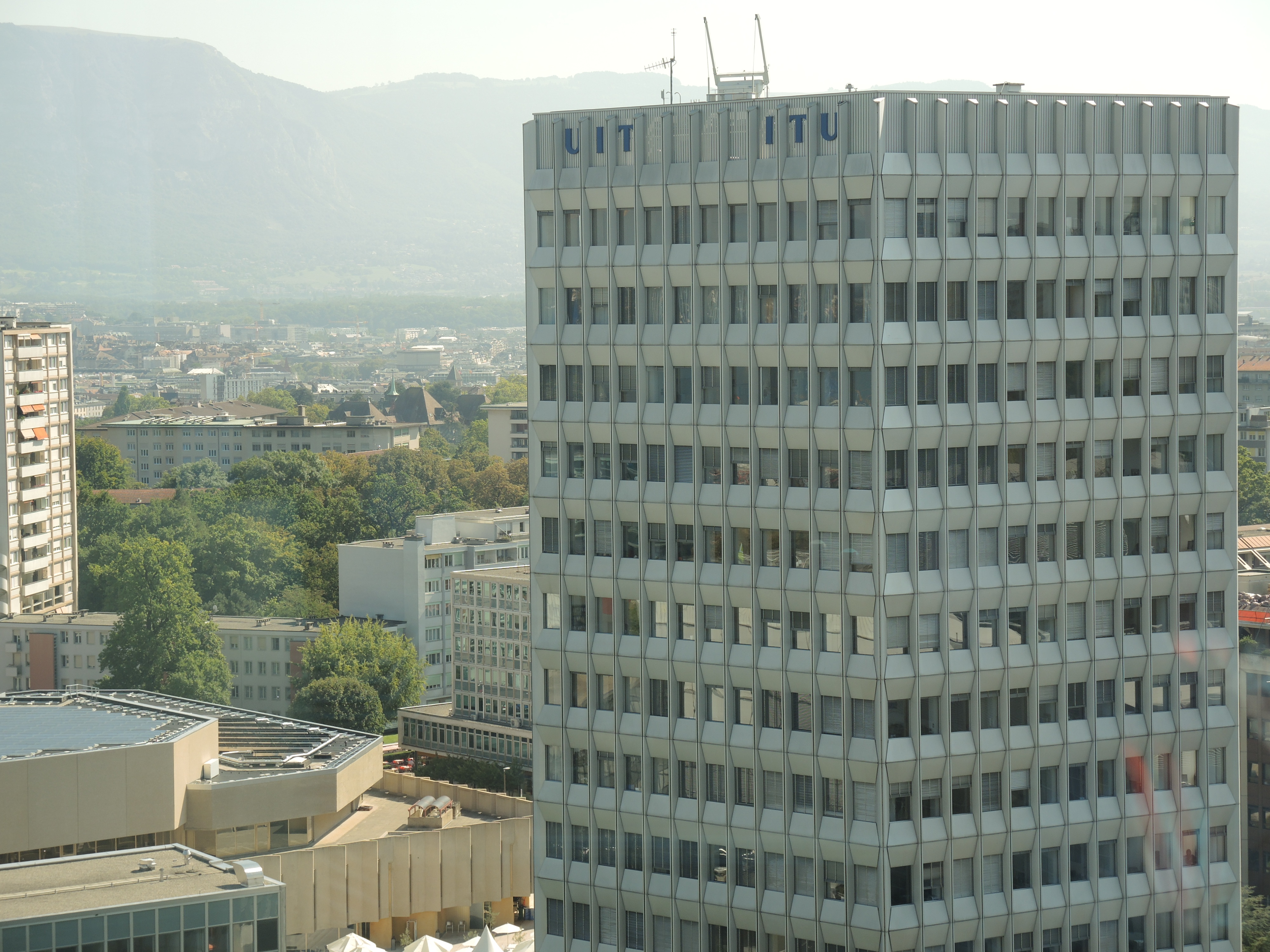
This Digital Switchover Date was agreed during the International Telecommunication Union (ITU) Regional Radiocommunication Conference that took place in Geneva in June 2006. ITU is the United Nations specialised agency for information and communication technologies. [Update: ITU issued a press release on 17 June.]
According to François Rancy, “the conference was mandated to elaborate compatible frequency plans for digital sound and television broadcasting and the relevant procedures in the frequency bands 174-230 MHz and 470-862 MHz. The outcome of this conference was the Regional Agreement, Geneva 2006, (GE06) in replacement of the corresponding regional Agreements for analogue television broadcasting GE89 and ST61.” Rancy is the director of the ITU Radiocommunication Bureau.
GE89 and ST61 are ITU’s frequency assignment plans in force as annexes to regional agreements. ST61 is the plan for television and sound broadcasting in the European broadcasting area, made in Stockholm in 1961.GE89 is the Plan for VHF/UHF television broadcasting in the African Broadcasting Area and neighbouring countries, made in Geneva in 1989.
The set task was to plan for digital television and sound broadcasting. The GE06 Agreement includes the analogue frequency plan intended to be kept for the transition period that begun from 17 June 2006 and ends on 17 June 2015.
“The GE06 Agreement settled the date for the end of the transition for digital television and not for sound radio, which is planned in the VHF frequency band. All administrations which are part of the GE06 Agreement have channel blocks for digital radio,” added Rancy.
According to Rancy, the advantages of digital broadcasting, sometimes called the ‘digital dividends’, are well known and appreciated by all.
These advantages include: the sharper and brighter quality of the image and sound provided by digital television; an increased number of broadcast television channels; more services like teletext, interactive services and support for visually impaired; environmental benefits brought by infrastructure-sharing; and the much more efficient use of spectrum, a limited natural resource.
The other advantage is provision and broadcast of more locally generated content.
“The digital environment facilitates the reproduction of protected material and its dissemination across border,” he explained. “However, at the same time, the digital environment offers significant advantages for broadcasters to upgrade their technology, provide more delivery platforms and to produce and broadcast more local content including new interactive services which can foster creative industries and economic growth.”
The challenge is that as digital migration takes effect, many content developers and free to air broadcasters are at risk of digital infringement of their copyrighted works and other works protected and promoted by intellectual property. Yet IP regulations to guide the resolution of these infringements are loosely scattered in many provisions.
IP Protection in Broadcasting
As an industry, broadcasting relies on copyright laws as it determines broadcasters’ ability to invest in the acquisition, production and dissemination of content. Digital information is protected under copyright, trade mark, and the domain name system.
According to Carole Croella, “the protection of intellectual property rights in the digital environment is based on a combination of updated regulatory frameworks, notably in the area of copyright and related rights that include: WIPO ‘Internet Treaties’ 1996; Beijing Treaty protecting audiovisual performers 2012 – which countries are in the process of ratifying; technological solutions; and new legal models.”
Carole Croella is the Senior Counsellor, Copyright Law Division at the UN World Intellectual Property Organization.
Croella adds that WIPO member states are currently negotiating an international treaty that will update and harmonise the IP protection of broadcasting organisations against misappropriation of their signals by third parties. Protection of broadcasting organisations on the draft agenda of the 29 June to 3 July meeting of the WIPO Standing Committee on Copyright and Related Rights (SCCR).
“While the rights of authors, performers and producers have already been harmonised in the digital environment under other recently adopted treaties, this international legislation is still missing,” explained Croella. “This new instrument would create an enabling framework for broadcasting regulation in the digital age.”
Digital Migration Strategy
Digital migration is taking place around the world and not only in the ITU Region-1 that covers GE06 planning area. The area under GE06 includes Europe, Africa, Middle East and Central Asia.
“The digital migration situation is similar in other regions, with some countries having already achieved the digital switchover in Asia, the Americas, Australia and others are in the process of switching to digital broadcasting,” said Rancy.
Latin America and Asia-Pacific have plans to complete the digital transition between 2015 and 2020.
“The plans of other regions outside the GE06 Planning area have no impact, except in regional border areas where frequency coordination is necessary to plan for a smooth transition,” added Rancy.
According to data on the ITU website, globally 48 member states or administrations have completed the deployment of digital terrestrial television broadcasting stage, 58 administrations are in the ongoing stage and 20 administrations have not started on the process of digital migration, while the status of 71 other administrations is listed as unknown.
Rancy does say that the list will be updated after 17 June.
According to Adam Denton, a senior telecom expert [corrected], in his discussion paper, Intellectual Property Rights in Today’s Digital Economy, presented at an ITU seminar, “the rapid growth of the digital economy, enabled by broadband penetration, and coupled with increases in computing power and storage, creates global markets for content and rights holders. But it also creates a threat that, without adequate controls, piracy will damage the creative industries.”
What direction digital TV can take in future may depend, among other things, on the results of an ITU conference later this year, the World Radiocommunication Conference 2015 (WRC-15), that will be held in Geneva from 2-27 November 2015.

[…] Intellectual Property Watch – As an industry, broadcasting relies on copyright laws as it determines broadcasters’ ability to invest in the acquisition, production and dissemination of content. Digital information is protected under copyright, trade mark, and the domain name system. Click to read more. […]