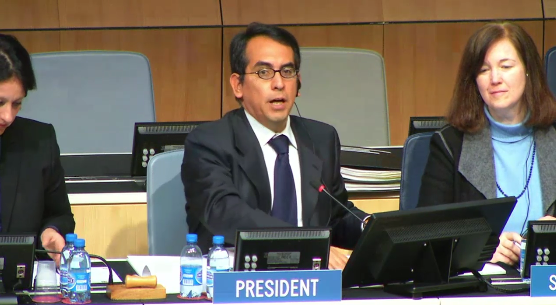
The 29th Session of the Standing Committee on Copyright and Related Rights at the World Intellectual Property Organization is currently underway. On the agenda, inter alia, will be discussions on Limitations and Exceptions to Libraries, Archives and Educational, Teaching and Research Institutions. Against the backdrop of the success with the Marrakesh Treaty, the trajectory looks set for these further exceptions and limitations to succeed.
The African Group Proposal, which provided the premise to these limitations and exceptions, emphasises the role played by educational institutions, libraries and archives in the dissemination, promotion and preservation of the cultural and scientific heritage. The tone in this proposal acknowledges literary and artistic works as cultural goods and highlights the right to education and access to information on the continent as crucial and how copyright laws could be used to address that.
However, the African Union has a Charter on African Cultural Renaissance, which countries to the African Proposal have signed and it too emphasises the importance of creativity and promotion of cultural goods on the continent. Article 22 of this Charter deals with assistance to artistic creation and expression, it espouses an enabling environment in order to foster creativity. Within this context it provides for ratifying conventions that promote artistic creation, tax exemptions for cultural goods and services, as well as appropriate measures to protect intellectual property rights of these cultural goods as a means to achieve this.
This highlights an interesting correlation between the importance of promoting the dissemination of cultural goods and the need to re-incentivise the sector where creators of these goods are based in order for them to produce more works.

This Charter should be read alongside the African Proposal because it upholds the need to incentivise the creators of works and provides possible measures to be implemented. In Article 21 it talks about promoting the establishment of publishing and distribution houses with a particular emphasis on African languages publishing. This is key because if cultural goods such as African indigenous languages are to be successfully promoted and disseminated, the investment in the relevant sectors is crucial.
Therefore, the discussions during this session would need to delicately consider the nature of the limitations and exceptions contemplated by the African Proposal, whilst mindful of the current economic contribution of the arts and culture sectors in light of what the African Charter has to contribute to this discussion.
Kundayi Masanzu is the former director of the Academic and Non-Fiction Authors’ Association of South Africa and currently works as a freelance copyright lawyer.