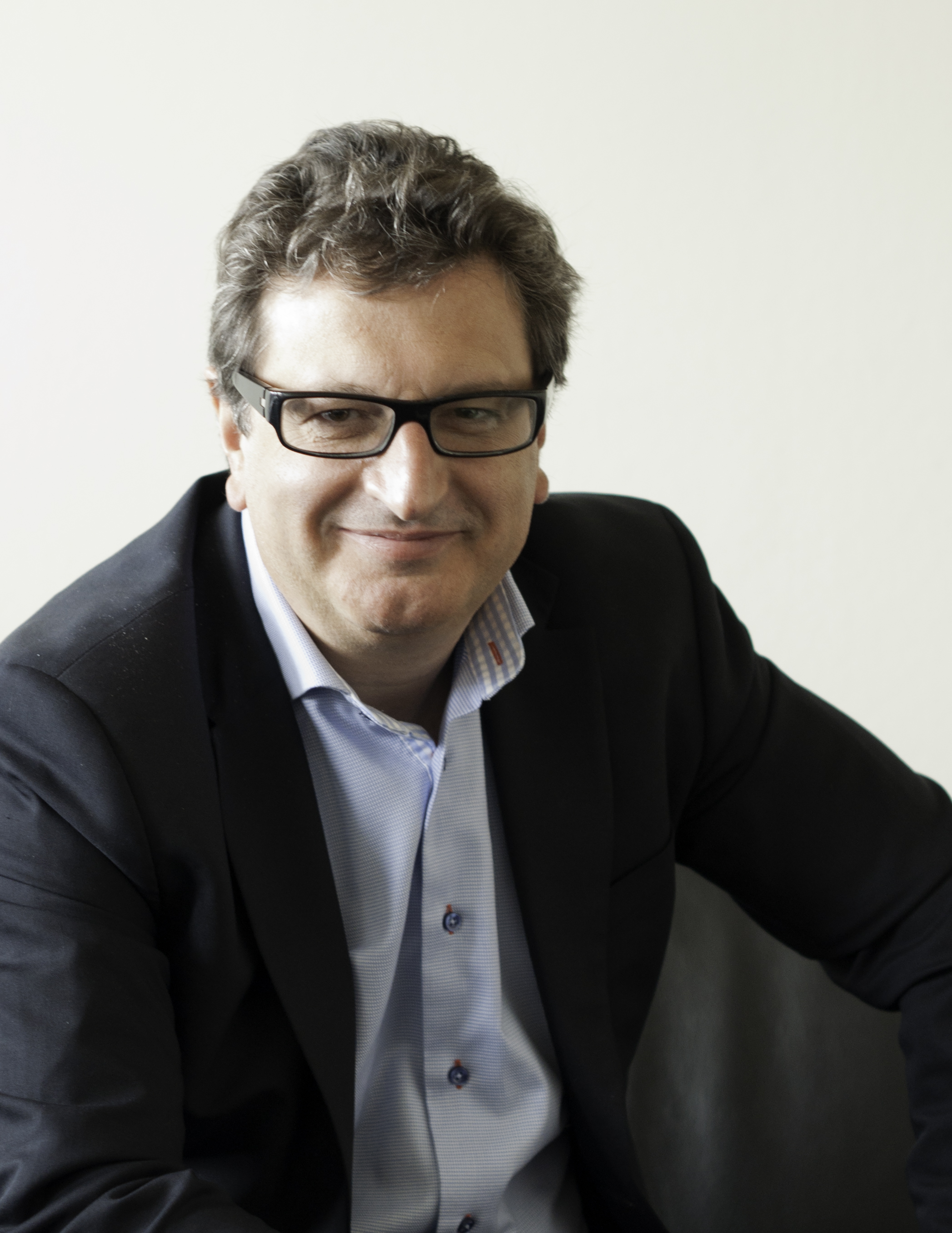
Greg Perry has been executive director of the Geneva-based Medicines Patent Pool (MPP) since January 2013. Under his guidance, MPP shares that it has launched a “series of new licensing agreements and negotiations with key patent holders and generic medicines companies.” Intellectual Property Watch sat down with Perry recently to discuss why the MPP is so important as an alternative business model, the context of the MPP, changes in the global approach to the issue of access, and how the MPP fits within the Geneva context.
Perry is former founding member of the European Generic Medicines Association and the International Generic Pharmaceutical Alliance, which both promote access to generics and biosimilars. In the past, he worked as an advisor on EU policy to companies and NGOs, and a political advisor in the European Parliament. He is also currently member of the Standing Advisory Committee before the European Patent Office and an Honorary Life Fellow of the Organisation for Professionals in Regulatory Affairs in the UK.
More information about the MPP is available on their website.
Intellectual Property Watch (IPW): Can you give us some background to the Medicines Patent Pool?
Greg Perry (GP): A little bit of history is important to understand why the Medicines Patent Pool was established and how it has developed into essentially an innovative alternative business model in the IP and health area. The background is very much related to the post TRIPS era. Before TRIPS, to meet access requirements generic manufacturers were able to produce HIV products while under patent in developed countries. This was complemented with very extensive global funding for HIV treatment. However, after TRIPS new HIV therapies that were being developed, and any new fixed dose combinations that need to be developed, would be under patent. Thus, UNITAID established the Medicines Patent Pool, with the concept of pooling patents of key HIV products in order to maintain access to HIV medicines.
I think one of the most important things about the MPP is that it is helping to change people’s approach to dealing with IP issues. What we have seen is not only a number of voluntary licences in the MPP, but also a proliferation of voluntary licensing agreements. I can remember sitting in a room in Brussels in about the year 2000 or 1999 with representatives of the pharmaceutical industry, when a number of us were proposing voluntary licensing. We were told at the time that voluntary licensing would never fly. And now voluntary licensing has become one of the mainstreams of activity in the industry, particularly in the HIV area. I think it’s been part of and it’s accelerated a new way of thinking within the IP field, and it’s also encouraged voluntary licensing in general.
IPW: Could you explain voluntary licensing?
GP: A voluntary licensing agreement is an agreement between two organisations. In a normal business-to-business sense, the organisations are often an originator company and a generic for example. We call it voluntary in order to distinguish it from compulsory licensing. Compulsory is a very different approach that is initiated by a government, falling within the rights of TRIPS, to fulfil certain public health objectives. In our case, we are talking about sitting down and negotiating and agreeing terms and conditions for licences.
This is where the MPP provides an alternative innovative business model. I should stress that whilst we work with business, our focus or objective is to improve public health. This is the clear distinction between voluntary licences negotiated at the MPP, and a business-to-business licence negotiated between an originator and generic company.
We identify products from the public health perspective. We assess what is the public health need and the IP situation for each product. If it is in the WHO guidelines as a preferred treatment and has a substantial amount of IP, then MPP prioritizes that product. We also look at new medicines that are likely to be the standard of care in the future.
The second thing that is important is that we seek to achieve the highest possible geographical scope of countries that is possible within the licensing agreements. Our licences cover the hardest hit HIV countries where 90%-plus of people living with HIV live, including over 70 middle-income countries. But unfortunately, not all middle-income countries are covered at this point. There are a number of middle-income countries that originator companies would see as emerging markets where non-exclusive licensing agreements are usually not the norm nor the preferred approach. So we are now experimenting with new approaches such as differentiated royalties according to a country’s income and public/private market segmentation. These approaches were used in our recent licence with ViiV to expand the geographical scope of our licences to include more middle-income countries.
The third area is transparency. What is important is that all our licences are made public, they are available on our website. Within our agreements we try to ensure the least number of restrictions as possible. We want, for example, to be able to ensure that our sub-licensees can operate in territories where there are no patents or where there is a compulsory licence so that the effective coverage is even higher than is explicitly stated in the agreement. We want to ensure where we can that there are no restrictions on the use of the product for fixed dose combinations. We promote technology transfer in some of our licences and there are waivers on data exclusivity as well. These are not the normal things you would see in business-to-business agreements.
IPW: What about transparency in negotiations?
GP: We publish the final agreements: the contracts. This is unprecedented in the pharmaceutical field and something that distinguishes the MPP from any other licences that are out there. We also publish on our website the patent holders that are negotiating with us. This too is quite unique in terms of transparency. However, what we cannot publish is the details of the negotiations while they are taking place.
IPW: What is the reason for that?
GP: I don’t think you can conduct any human process publicly like that. You’ve got to build up trust with the other side. I think trust requires us to sit down and go through very detailed objectives. I don’t think anyone should expect that sort of activity to be put in the public domain. But we do regularly consult stakeholders on their needs and what are the kind of terms and conditions they would like to see in MPP licences. This is very important for us.
IPW: In the past you published responses from companies, such as those that didn’t want to enter into negotiations. Why do you not do this anymore?
GP: I guess there are two reasons. The first is that what we want to do is build trust and understanding with those we need to negotiate with. And if a company is not willing to negotiate today, it is our job to convince them to change their minds. Secondly, we have not had other negative responses from the companies. I hope this is an indication that we are going in the right direction and patent holders are showing greater willingness to embrace a new approach to access.
IPW: What is the way for the world, if not MPP, to address the question of the very poor in countries that have per capita incomes that keep them out of the negotiations, such as in China or Brazil?
GP: A lot of these countries have local industry that might strike agreements with originator companies through their own government and often do so already. Another objective is to ensure that the originator company itself has an access programme for those countries. Some of these bigger countries have the diplomatic clout to ensure this. But there is a broader challenge here that goes beyond the MPP. It’s about access to medicines in middle-income countries, where there are real problems of inequality. If you look at the world today, the majority of the world’s poor live in MICs. And access to medicines is a real challenge. That is why we are looking at mechanisms to enable more MICs to benefit from our work. These are the ones I mentioned earlier: public-private market segmentation and differentiated royalties. But they too are not a silver bullet.
IPW: MPP originated from kind of a policy perspective, from the intergovernmental world. How do you fit into the Geneva scene today?
GP: The MPP was really established by requests from governments and through UNITAID, which has its own governance body consisting of a number of governments, as well as civil society organizations and people living with HIV. It is very important that we are very much linked in with the overall public health environment and debate in Geneva. That is why we work so closely with the WHO, which helps us in establishing the priorities. We have licencing arrangements on preferred first line treatment of adults and children, and one of the preferred second-line treatments for adults. We also work closely with the WHO on prequalification. All our generic companies must be able to have prequalification in order to continue with the MPP or FDA approval.
We see the MPP as a public health organisation, not a licencing organisation, advocacy organisation, or an IP organisation. We are clearly not a business, we are a public health organisation. That’s very much how we approach our work and objectives, so being part of the Geneva public health scene is fundamental.
IPW: What lesson can policymakers learn from what you’re doing?
GP: The message is that it is important to establish alternative, innovative models. Geneva is becoming a very interesting place because of the number of new types of models: including the DNDi, GAVI, the Global Fund, MMV. IP doesn’t have to be a hurdle. You can sit down, cooperate voluntarily, and work out a way in which everyone can benefit. I think you’re going to see more of an interest from industry and from policymakers to achieve that.
IPW: Is there anything governments could do, either nationally or multilaterally, that would help the organisation to accomplish its goals?
GP: Over the past year or so we have started working a lot more closely with governments, informing them of our work, relying on their feedback and collecting key information on the needs on the ground and the challenges they are facing. We want to strengthen that collaboration, although we are a small team and it is not easy to do that with all governments. At the multilateral level, there are many discussions in which IP and access to medicines feature prominently. The MPP is often highlighted as one innovative way to seek to address some of the challenges. That is useful. We realize we are not the only way and we see ourselves as one piece of the puzzle.
We also need to ensure that there is continued funding for the purchase of HIV products. That is fundamental, because one of the reasons we were able to deal with HIV was because we had such significant funding, through the Global Fund, PEPFAR, UNITAID and increasingly from national governments. Governments have to work together and increasingly developing country governments will play a greater role in financing research as well as ensuring a greater commitment towards financing and supporting public health infrastructure.
IPW: How do you think the MPP model will work for other diseases?
GP: MPP is still restricted to HIV, though we are looking internally at how this model could possibly operate in other areas. We’ve also had a number of discussions with companies interested in improving their access models. I think there is an understanding that pooling of IP and looking at cooperative measures of IP is actually a step forward.
Patent pooling could be one of the methods, but it has to be done in conjunction with other approaches. One of the key things that worries me is that we’re going to see a drop off in funding for the purchasing of products. Or funding may be limited to some diseases (like HIV) and not others. Yes, you could have a patent pooling in other areas if it’s deemed feasible, but you need to ensure that there are other initiatives and programmes in place as well in order to have success in access. And you may need to adapt the model. For the time being, there is still work to be done in HIV and we are focusing on that.
IPW: Do you think it’s likely to work for some diseases more than others?
GP: Although HIV is in many ways special, I don’t think the model is necessarily disease specific, although it would probably need to be adapted to work in other areas. I think what you’re addressing is an overall problem, which is how do low and middle income countries afford the purchasing and financing of health products, and that is one of the biggest issues in public health. Encouraging generic competition through patent pooling could be one approach. But for it to work there needs to be buy-in from industry and other stakeholders, such as governments and patient groups.
IPW: Can you explain the MPP business model?
GP: The current model is that you have a licence arrangement with an originator on an existing product they’re already developed, or they’re in the process of developing and getting registered. They will sign a licencing agreement with us, which will in itself have the basics of the terms for our sub-licensing agreements with generic companies. Those generic companies can go on the market with a low cost version, WHO-prequalified or FDA approved, in certain markets as stipulated in our licencing arrangement with the originator.
With a number of generic companies competing for these markets, prices will fall and access will increase.
In the second model, we ask several companies to place their IP in the pool, those with a key product or product in the pipeline. We need the IP in order to produce fixed dose combinations. If all companies do not participate in the pool, for example, one or two with a key ARV important in a combination, we cannot develop the combination. This is a very important challenge in paediatrics.
IPW: Why is paediatrics a key priority for you?
GP: In paediatrics, you need to develop certain formulations and fixed dose combinations which are appropriate for children. But the incentives to develop them are limited because the market is relatively small and concentrated in poorer countries. We need to create special formulations because the kids can’t take the same medicines as adults: sprinkles, powders, syrups, and we need the originators of all key components of the fixed dose combination to participate.
IPW: What is the leverage that you have to encourage all participants to get on board?
GP: In the classical situation, countries pay royalties to originator companies. In paediatrics we’re not asking for any royalties. You may be asking, “So what’s in it for companies?” To be honest, at the end of the day when we’re talking about paediatrics, it’s about corporate social responsibility and public health.
I believe that they see this as a public health priority, and they are prepared to work with us to meet the objective of producing better and more palatable ARVs for children.
IPW: Could you explain the relationship of the Patent Pool with the generics industry, especially with you having come from that industry?
GP: We work closely with the generics as they play a key role as manufacturers of ARVs. They are also involved in certain developments, such as in paediatrics. We want multi-source manufacturers in order to keep this model going for generic competition. We select those companies very carefully. We put up an expression of interest, for each product, where they have to inform us of certain criteria: what’s their background in HIV manufacturing, what are their manufacturing capacities, can they guarantee that they will get FDA or prequalification, or have they had it before.
Our business management director and team meet them on a quarterly basis. They try to check where they are in the development of their product, in the registration of their product. As a public health body, we have a responsibility to ensure that our generic side also is playing their part towards ensuring access to quality products. Whilst the negotiation team is tough with the originators, we also want to be tough with the generics. This is not a model or a system to benefit the generic industry, this is to benefit public health. Our partnerships are with originator companies, generic companies, governments, international organisations, and most importantly people living with HIV themselves with whom we consult and discuss regularly.
[Our relationship with the generics industry] was already there. Our head of business development comes from Ranbaxy, so he had already set up a management system. I come from an industry where quality is the most important thing. This is an area we keep a close eye on.
IPW: What is your funding and Board situation?
GP: We are an independent Swiss foundation. We have our own board, management team and expert advisory group, but we report back to UNITAID. UNITAID finances 100% of our activities. And because we are financed 100% by UNITAID we have a clear public health mandate and need to meet certain objectives.
IPW: So how do you explain what the organisation does in the simplest form? What makes it so unique and important?
GP: Every time we talk about what we’re doing, people do actually get genuinely interested. I ask the question myself sometimes. Why are people so interested? Why does it sound so good to even people that are not involved in the area? I think it’s quite simple. I think it is to do with the fact that it is about sharing. I think people like the concept of sharing, collaboration, working in partnership, to deal with international problems.
IPW: What’s at stake if it doesn’t work?
GP: What’s at stake if it doesn’t work? Patients in developing countries will not have access to key HIV medicines. Our recent agreement with ViiV on DTG highlights this starkly. DTG was recently approved by the EMA [European Medicines Agency] and with our agreement, you could see the product in the developing world over the next few years. That is a public health achievement. In the past, it has taken seven to nine years for a new ARV to reach the developing world at affordable prices after its introduction in industrialized markets.
IPW: What attracted you to leave the role that you had for this one?
GP: What attracted me about the Pool, which is also what attracted me about UNITAID, is this is an innovative alternative model. To be part of a new concept that was striving to find middle ground in the IP debate and to forge very constructive way to work with various partners including industry and civil society to achieve positive public health outcomes. I think the ability to bring people to the table, to find partnerships, I found all that very exciting.
IPW: Thank you.
Julia Fraser is an intern at Intellectual Property Watch. She is currently training to be a solicitor and will start work at an international law firm in London in 2015. She has a BSc Honours in Biology from Edinburgh University where she developed an interest in public health related intellectual property issues.
William New contributed to this article.