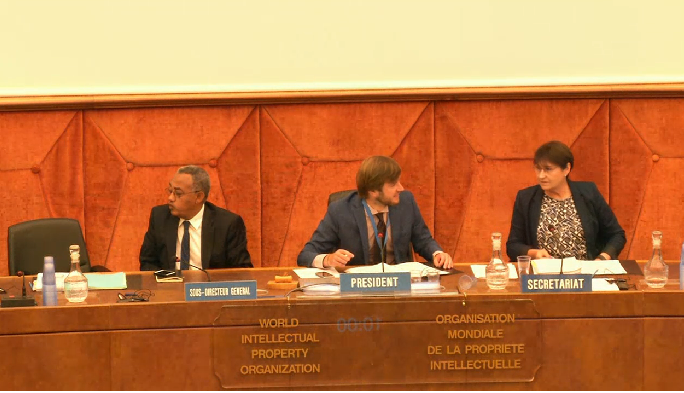
An advisory group of government and industry experts at a World Intellectual Property Organization this week highlighted work in the enforcement of intellectual property rights. But tensions arose over the group’s mandate and whose views may be presented, according to participants.
In a closed meeting from 15-17 May, the WIPO Advisory Committee on Enforcement heard from about 20 mostly government experts, along with the music and trademark industry associations. Some cited successful formulas for protecting IP rights, others simply reported on their own progress in establishing anti-piracy measures.
On the final day, informal consultations were held with meeting Chairman Henry Olsson, a special advisor to the Swedish Ministry of Justice, where an agreement was reached on future issues to be addressed by the group. The consultations involved Argentina, Austria (on behalf of the European Union), Brazil, Canada, China, Lebanon, Mexico, and Switzerland, a source said.
The options for the future, the source said, included either to continue the existing mandate, leave it to the General Assembly to decide and have the committee say nothing, or to agree to a compromise, which is what they chose. The next meeting will generally address the theme of “coordination and cooperation,” participants said.
WIPO Deputy Director General Rita Hayes said the group agreed to look further at topics raised during the week, but there was no decision on which ones. Consultations will be held with the chair, secretariat, and member governments to set a framework for the next meeting, which will take place sometime after the September WIPO General Assembly, likely in 2007.
The chair’s report to the General Assembly states:
“As regards future work, a number of proposals were made and discussed. These proposals included, inter alia, issues concerning continued education and awareness raising; further discussion of some specific issues raised in the course of the discussion under agenda item 7, including border enforcement measures; the methodological evaluation of, and scientifically prepared statistics on, the impact of counterfeiting and piracy; the development dimension in relation to enforcement, including the need to take into account the broader context of society interests and obligations; cost/benefit aspects of enforcement, particularly in developing countries; cost-reduction as an enforcement strategy and its possible impact on foreign direct investment; and the sharing of national experiences on biopiracy.”
“The committee agreed that the theme for the next session of the ACE should be an exchange of views on coordination and cooperation at the international, regional and national levels in the field of enforcement.”
The committee was given a strict two-year mandate for 2006-2007 as an advisory body with no negotiating. Some developing countries were on the lookout for signs that developed country proponents of stronger enforcement measures might try to use the advisory committee to advance policy objectives.
This did not transpire, participants said, and a US official said afterward that the mandate for these two years is not to address policy issues, and said normative issues on enforcement are being debated at the World Trade Organization. There, the European Union has put forward a proposal in the Council on the Agreement on Trade-Related Aspects of Intellectual Property Rights (TRIPS) for tracking members’ compliance with TRIPS.
Presentations Show National Efforts
Nigeria presented on its sometimes dangerous efforts to curb the flow of counterfeit drugs, which requires fighting organised networks. The Nigerian delegate cited China and India as sources of the counterfeits, but the committee meeting chair censured the delegate for “pointing fingers,” sources said.
A Malaysian minister warned, “With the rapid quickening of globalisation, problems of piracy and counterfeiting will worsen to unimaginable dimensions.” He cited technology as the reason.
The Justice Minister of Antigua and Barbuda discussed the situation in the Caribbean, and highlighted concern about the theft of regional music (such as reggae) and of broadcasting signals from the 2007 Cricket World Cup to be held in the region. China, the biggest source of piracy worldwide, presented on its “great progress” in efforts to stem piracy, highlighting the rapid rise in patent and trademark filings, and various programmes on IP protection and public awareness.
An official from the Brazilian National Council Against Piracy detailed anti-piracy efforts in the country, mainly focused on illegal consumer products. But an intervention by another Brazilian official highlighted problems arising from the intellectual property system that make it more difficult for developing countries to fight piracy.
The official said monopolies granted through intellectual property rights can distort markets, which contributes to incentives for piracy. Effective antitrust legislation should accompany other anti-piracy efforts, he said. In addition, new models for innovation should be explored to find ways to reduce costs and increase access to products and services “of social relevance,” such as medicines, food, cultural goods and education, he said. The official also pointed out that most piracy-enabling technologies originate in developed countries.
Brazil also said the intellectual property system must include mechanisms for combating “biopiracy,” the misappropriation of genetic resources, traditional knowledge and folklore. Brazil is among the nations calling for an amendment to the TRIPS agreement to address this concern.
“Combating piracy, however stringent, should not lose sight of the public interest objectives of national policies,” the Brazilian said. “The rights of holders and the public interest must be equally promoted and supported. Flexibilities inherent in IP law should not be encroached upon unduly in the name of enforcement.”
Also during the week, discussion was held on a proposal from the United States for the next meeting that WIPO discuss and analyze the “relationship between the rates of counterfeiting and piracy of intellectual property and technology transfer, foreign direct investment and economic growth.” It called for WIPO assistance in collecting data on piracy rates. The proposal was similar to one put forth by the United States at the February meeting of the Provisional Committee on Proposals to a WIPO Development Agenda. Some developing countries raised concerns with the proposal.
Also presenting were: Australia, Lebanon, Romania, Saudi Arabia, Serbia and Montenegro, South Africa, Spain, Sri Lanka, and Switzerland. Denmark submitted a document on its experience as well.
Consumer Groups Seek Clarification on Participation
A skirmish arose during the meeting over the status of consumer representatives in the enforcement committee. Consumer groups were admitted to the meeting, but did not speak on panels during the week. According to participants, a delegate from the Third World Network questioned the lack of consumer views on the panels, and Brazil and Argentina then requested a stronger representation of consumers and other non-industry stakeholders in the committee.
Lead US delegate Paul Salmon spoke against the inclusion of consumer groups on committee panels as their involvement would fall outside the committee mandate, which is limited to governments and industry.
“It was disappointing to witness the United States question whether the mandate of the existing WIPO Advisory Committee on Enforcement (ACE) should include the voices of consumer groups,” Thiru Balasubramaniam, Geneva representative for the Consumer Project on Technology, said afterward. “In his intervention, the US delegate noted that the ACE mandate only included government consultations with the private sector. Presumably the rules that apply for big pharma, and publishers of music, software and textbooks do not apply to consumer organizations. The Brazilian and Argentinian calls for the inclusion of the voices of all stakeholders on WIPO ACE panels indicated a genuine commitment for transparency in all facets of WIPO’s work program.”
US: Consumer Groups, “Biopiracy” Not in the Mandate?
A US official said in a brief interview afterward that the agreed-upon mandate specifies the inclusion only of government and “private sector” representatives, and that does not include consumer groups. The mandate also does not include issues such as limitation and exceptions, competition (raised by Argentina) or the misappropriation of traditional knowledge and genetic resources, referred to as “biopiracy” in the meeting by concerned governments such as Brazil. Concerns about these issues have been put forward in the proposal from 15 nations for a WIPO Development Agenda. The US official said the term “biopiracy” does not appear in the TRIPS agreement.
Hayes said in a brief interview, “The mandate of the committee is clear.” It is to be an exchange of information, a focus on training and education and work with other international organisations. “This particular meeting dealt with country experiences,” she said, and it included “a wide range of speakers.”
For the committee meeting, WIPO prepared a document listing dozens of activities it has conducted on education and awareness-building related to intellectual property enforcement.