Original news and analysis on international IP policy
Expectations High As End Of Substantive Negotiations Near For Blind Treaty Negotiators
Marrakesh, Morocco - Today is the day for World Intellectual Property Organization negotiators to find consensus on longstanding issues and come up with language that can satisfy all countries’ concerns on a treaty, the first of its kind, that would provide copyright exceptions for visually impaired people to have wider access to books worldwide.
Marrakesh, Morocco – Today is the day for World Intellectual Property Organization negotiators to find consensus on longstanding issues and come up with language that can satisfy all countries’ concerns on a treaty, the first of its kind, that would provide copyright exceptions for visually impaired people to have wider access to books worldwide.
In particular, the treaty aims to address the problem of cross-border exchange of special formal works, which is currently prevented, between certain countries, due to the lack of national legislation establishing exceptions to allow importation or exportation of books. The diplomatic conference convened to agree on the treaty is meeting from 17-28 June.
Delegates working informally are supposed to have settled all remaining issues in order to propose them in the main Committee I, which is then tasked with putting language to the full membership of WIPO. Then the Drafting Committee, which was expected to start working today, can proceed to do the actual writing of the treaty, but is not expected to discuss any substantive issues.
A new draft treaty text was issued on 25 June and is available here [pdf].
A list [pdf] of outstanding and resolved issues was published this morning, after late discussions last night. It shows difficulties stand in Article 4 (former Article C in the original draft treaty text [pdf]) (National Law Limitations and Exceptions on Accessible Format Copies), Article 5 (former Article D) (cross-border exchange of accessible format copies), and Article 6 (former Article E) (Importation of Accessible Format Copies).
In Article 4, the right of translation was discussed this morning. The new consolidated version of the text shows several proposals on the matter. Chile and the United States have proposed language, which is thesubject of option (2) of Article 4 (B), stating that the paragraph on the right of translation neither reduces nor extends the scope of applicability of the limitations and exceptions permitted under the Berne Convention for the Protection of Literary and Artistic Works.
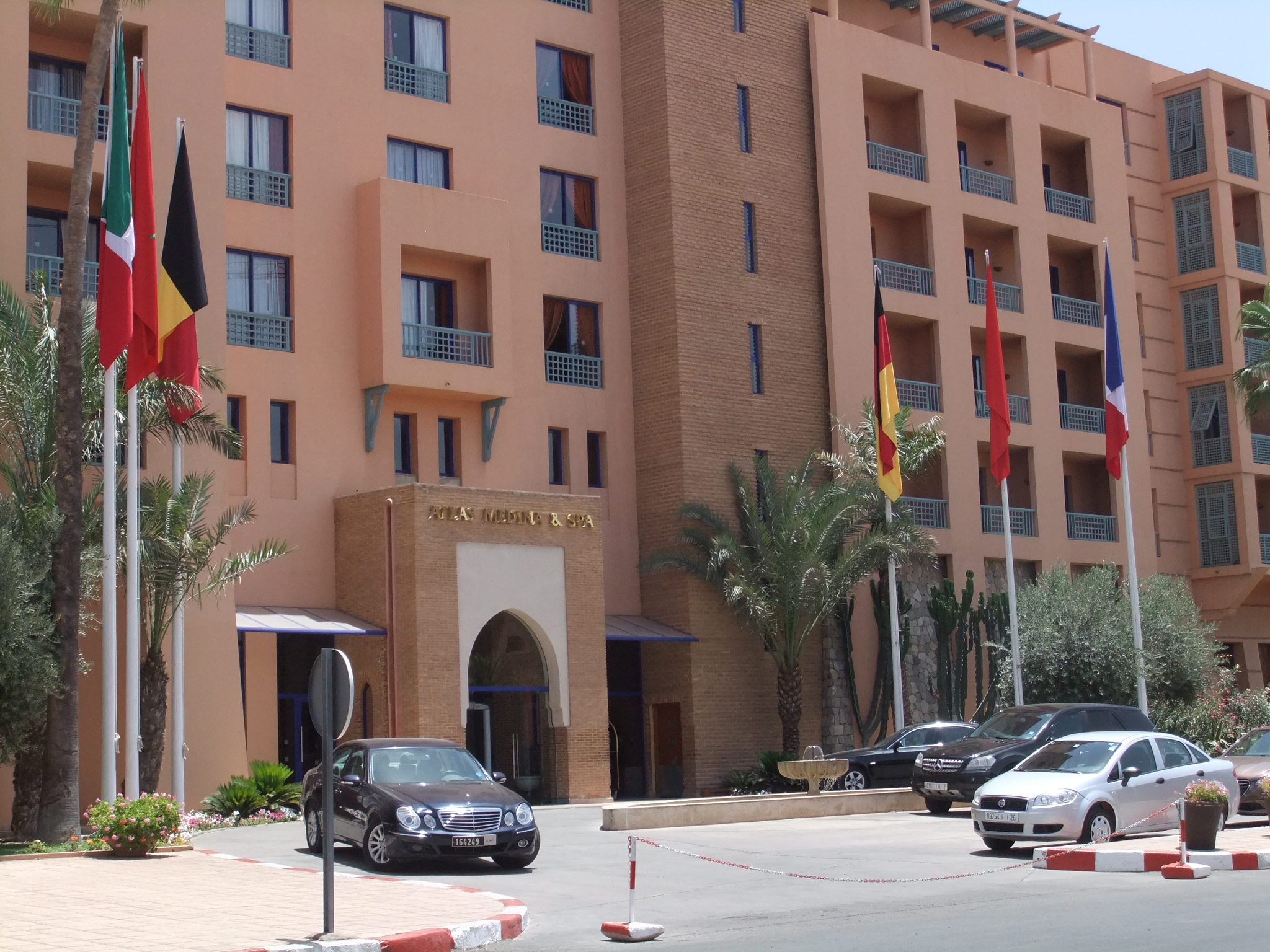
The Medina Atlas Hotel where informal informals are held. (Photo Credit: Catherine Saez, IP-Watch)
Option (3) contains a proposal from the African Group and India, an “agreed statement” from Mexico, and agreed statement language from the United States. The African Group/India proposal refers to general provisions in the treaty on exceptions and limitations (Articles 10, 11 and 12). Mexico’s agreed statement provides that the right of translation refers to the translation made at the request of an authorised entity as long as the work does not already exist in those languages in an accessible format. The agreed statement of the US says that an authorised entity “ordinarily” has no need to translate into a language when a translation in that language can be obtained commercially, on reasonable terms.
According to several sources, the issue of the right of translation is a political issue, to which a solution should be found.
Commercial Availability
Commercial availability appears both in Article 4 and in Article 5. It is still a prickly issue, one with the potential to create problems for facilitators until the last minute, according to sources. A source from the African Group told Intellectual Property Watch that this could prove to be a blocking issue (IPW, WIPO, 25 June 2013).
Several sources from the international publishing industry told Intellectual Property Watch that it is unclear why the right of translation should be included and thus provide an exception to visually impaired people while sighted people do not benefit from the same exception. Also, they said, the right of translation should perhaps be taken under national development policies, in the context, for example, of formerly colonised countries so that they could be helped to translate works in the original language(s) of the countries.
Resolved Issues
The list issued this morning also presented a list of resolved issues, in particular the 10th provision of the preamble referring to the three-step test, an agreed statement on audio books in Article 2 (former Article A). The agreed statement appears in a footnote, and includes audio books. The resolved issues appear to still include an amount of bracketed text, with agreement on some language, such as choosing between “should” and “shall”.
In Article 12 (formerly under the heading ‘Articles’) mention is made of the special needs of least-developed countries and their international rights and obligations.
According to a delegate from Group B (developed countries), progress has been achieved this morning on the right of translation and the issue of commercial availability was also closer to resolution. On both issues, he told Intellectual Property Watch “things are moving forward.”
He said delegates were expecting to come back to Committee I today to present the progress on remaining issues.

 Marrakesh, Morocco – Today is the day for World Intellectual Property Organization negotiators to find consensus on longstanding issues and come up with language that can satisfy all countries’ concerns on a treaty, the first of its kind, that would provide copyright exceptions for visually impaired people to have wider access to books worldwide.