

The generation of ideas, entrepreneurial culture, openness, and agility – by companies, policymakers, and workers – to adapt quickly and embrace change and not resist it, are factors that will have the greatest impact in driving growth and competitiveness in the years ahead in a world increasingly transformed by new, digital technologies, a report by the World Economic Forum said.
“Embracing the Fourth Industrial Revolution has become a defining factor for competitiveness,” said Klaus Schwab, founder and executive chairman of the World Economic Forum, and editor of the Global Competitiveness Report, 2018.
The WEF chief, however, also cautioned: “I foresee a new global divide between countries who understand innovative transformations and those that don’t. Only those economies that recognize the importance of the Fourth Industrial Revolution (4IR) will be able to expand opportunities for their people.”
The 2018 report, which draws on a survey of more than 12,000 business executives in 140 economies ranked through 98 indicators organized into 12 pillars of competitiveness that include innovation, markets, human capital, and the macro-economy, uses a new methodology to fully capture the new dynamics of the global economy in the 4IR.
The report placed the US as the top economy in 2018, followed by Singapore, Germany, Switzerland, and Japan.
Concerning major emerging economies, China was ranked 28th, Russia 43rd, India 58th, South Africa 67th, and Brazil 72nd.
The WEF study highlights that it is no longer possible to rely solely on efficiency and cost-cutting for economic success, and underscores that “innovation, flexibility, and adaptation to change are becoming the key ingredients.”
However, the report goes on to outline that the innovation capability pillar has the lowest performance on average on the global competitiveness index with a median score of just 36, and three-quarters of the nations score 50 or lower, while the top three in the pillar Germany scores 87.5, the US 86.5 and Switzerland, 82.1. (of 100 perfect score).
Germany’s innovation capability, it notes, is driven by a strong performance on patents, research publications, by top-ranked research institutions and last but not least “by a very high degree of buyer sophistication, leading to firms constantly being challenged by their customers to innovate.”
Similarly, for the US another ‘super innovator’, the report notes its business dynamism, “thanks to its vibrant entrepreneurial culture” contributes to the country’s high innovator status.
The report also succinctly points out “Innovation is a complex process. It starts with the generation of ideas some of which lead to inventions, and only a few of which are ever commercialized. Innovations enhance economic productivity only if they reach the desired markets and achieve commercial success.”
An analysis of the data also revealed, it notes, that in many countries the root causes of slow growth and inability to leverage new opportunities offered by technology continue to be the “old developmental issues-institutions, infrastructure, and skills.”
In addition, it says, innovation requires stable conditions-such as sound institutions, extensive ICT adoption, domestic market competition, and a favorable education system, and suggests these factors for governments in low-income economies looking to innovation for employment growth.
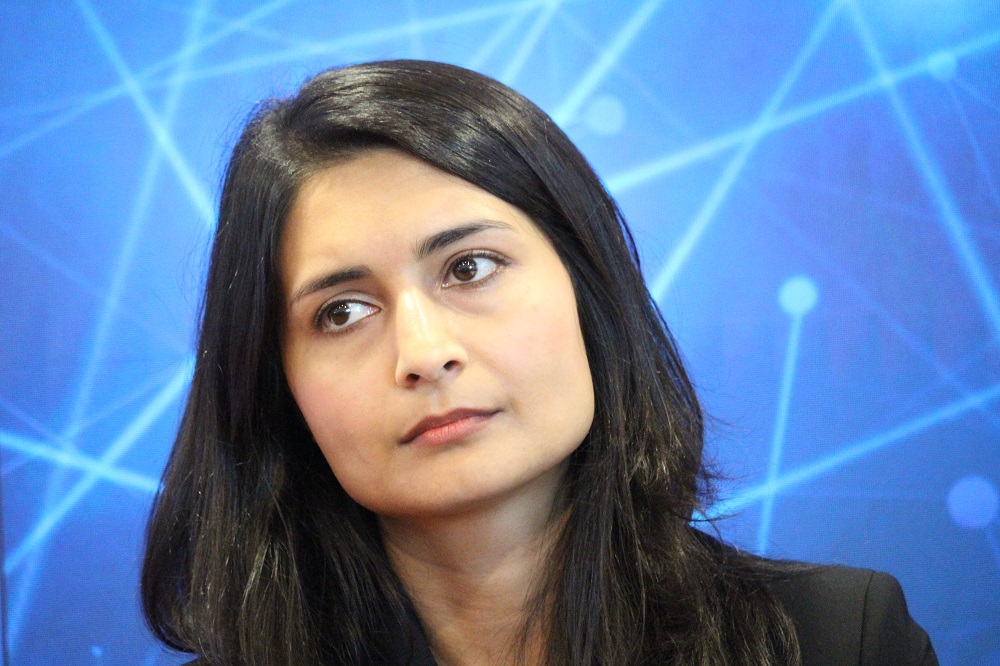
“Competitiveness is neither a competition nor a zero-sum game-all country can become more prosperous. With opportunities for economic leapfrogging, diffusion of innovation of ideas across borders and new forms of value creation, the 4IR can level the playing field for all economies,” said Saadia Zahidi, member of the WEF managing board and head of the WEF’s Centre for the New Economy and Society.
“But technology is not a silver bullet on its own. Countries must invest in people and institutions to deliver the promise of technology,” she added.
WEF also argues that while there is much hype about the potential of information and communications technologies (ICTs), and while they can be enablers of productivity, it would be “misguided to rely on technology to solve all problems, ” and notes “ICTs cannot, for instance, replace transport infrastructure.”
Other key findings by the report were as follows:
*China has become a prominent player in some specific areas of innovation, like artificial intelligence, but still trails leaders like Germany, the US, and Switzerland. In order to catch up, China would need to improve on soft drivers of innovation, such as diversity, collaboration and various aspects of openness
* In the Research and Development sub-pillar, which includes indicators on R&D spending, patents, publications, and research institutions, for 94 of the 140 economies featured in the study, this sub-pillar was the lowest scoring of the five.
* Israel spends the most of any country in the index on R&D (4.3% of GDP) and is where entrepreneurial failure is most accepted and innovative companies grow the fastest
* In Uganda, 28.1% of the population are self-described entrepreneurs, the highest percentage in the world
* To reverse economic integration in an attempt to curb income inequalities would be highly ineffective and counterproductive. Protectionist policies will not address the continuing impacts of factors such as automation and digitization on the structure of economies and distribution outcomes. They will, however, harm the transfer of technologies, the innovation process and economic growth.
Image Credits: John Zarocostas