
NEW YORK — The United Nations General Assembly yesterday adopted a high-level political declaration on noncommunicable diseases like cancer and unhealthy lifestyle. And while it gives an infusion of political energy to the issue, some are concerned it did not go far enough and are urging strong actions to follow.
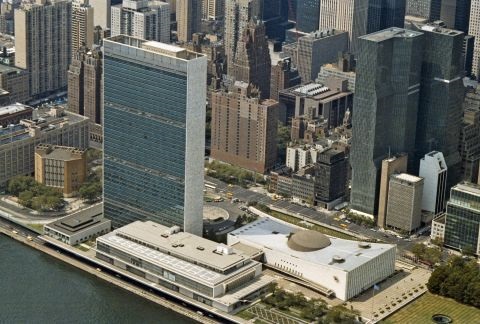
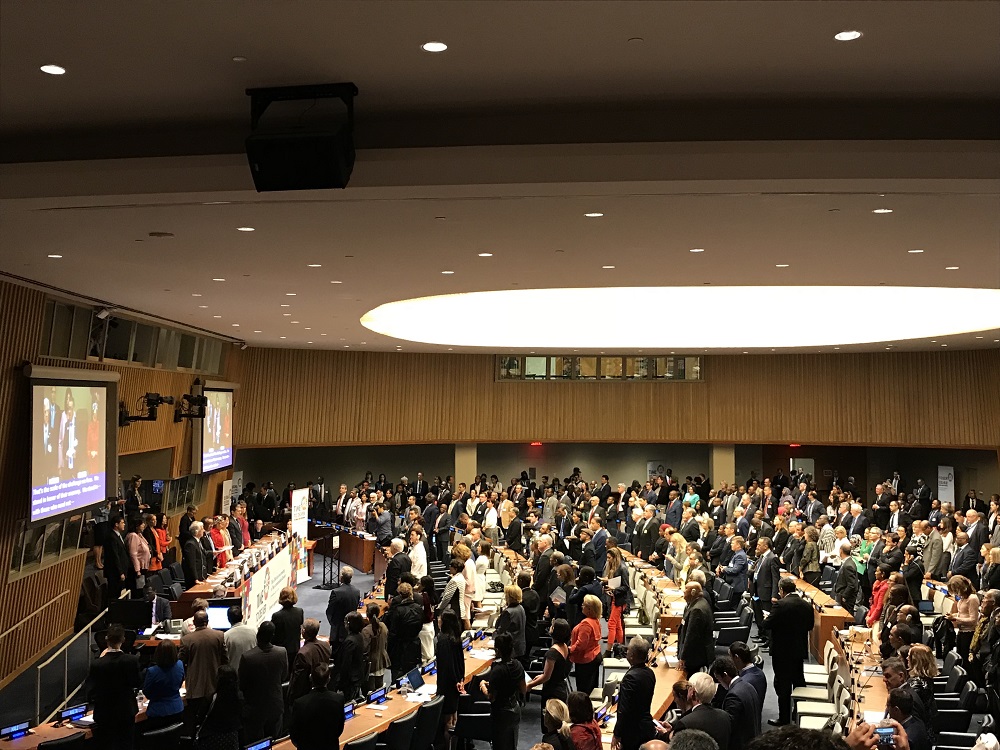
The UN General Assembly met yesterday for the Third High-Level Meeting on Noncommunicable Diseases. The adopted declaration is entitled “Time to Deliver: Accelerating our response to address NCDs for the health and well-being of present and future generations.”
The political declaration includes commitments to reduce NCD mortality by one third by 2030, and to scale-up funding and multi-stakeholder responses to treat and prevent NCDs.
Amina J. Mohammed, deputy secretary-general of the UN, explained in the opening plenary that “NCDs are responsible for 70% of deaths globally,” and that “these include mental health conditions.” The rise of NCDs, she said, can also be linked “with globalization, climate change, and urbanization.”
“With just under 12 years left to meet our targets and deliver on Sustainable Development Goals,” Mohammed said that the world will need bold commitment, innovation, policies and plans for implementation, and collaboration to overcome barriers.
Mohammed urged heads of state and ministers “to seize the moment and ensure that NCDs are embedded in health systems, and to move toward universal health coverage.”
Ambitious Targets, Under-Ambitious Commitments
While the political declaration includes the ambitious Sustainable Development Goal targets on NCDs, including the reduction of NCD mortality by one third by 2030, civil society groups are concerned that the declaration is not ambitious enough (HPW, Noncommunicable Diseases, 20 Sept 2018).
“What is needed is commitments to action – and to resources – to reach the targets already set by global leaders for 2025 and 2030. The political declaration will fall a long way short of getting the world closer to those goals,” Katie Dain, CEO of NCD Alliance, told Intellectual Policy Watch.
She also noted that the NCD declaration does not include any “specific commitment or targets on addressing the global resource gap.”
On the declaration, health advocacy group Knowledge Ecology International said in an 18 September press release that while the declaration does affirm the rights of states to use intellectual property flexibilities to safeguard public health, “there are areas where the declaration is a disappointment,” including no mention that NCD drugs are “prohibitively high,” only a brief mention to the “risks associated with conflicts of interest” in multi-stakeholder partnerships, and a reference to mobilization of resources only “through the lens of voluntary mechanisms.”
“But clearly new approaches to finance biomedical innovation that delink incentives from prices are needed to bring policy coherence to the twin objectives of innovation and access,” according to the release.
During the first multi-stakeholder panel of the high-level meeting, a representative from Kenya further reinforced this claim, stating that in Kenya, NCD “policies and plans are put in place, but the financing is not enough.”
He expressed that “it is concerning to note that we as a global community are off track” on meeting the SDG targets on NCDs. He called on states to “increase financing” to achieve NCD targets, and noted that this will only be possible by “leveraging the financing of non-state actors, including the private sector.”
The Minister of Health of Mongolia in a later plenary session also expressed the need for increased financing, saying that “it’s crucial to increase funding from not only the local government, but also from external donors, in order to be able to achieve SDG targets.”
The Minister of Health and Social Affairs of Micronesia spoke on why smaller economies need this funding. “70 percent of the health budget goes to treating NCDs, and this puts a strain on an already limited budget,” she said.
A representative of Tanzania also spoke on the need for more financing. “Despite our commitment to implement the strategy,” she said, “challenges have been on how to mobilize the resources.”
Bloomberg Keynote: “No Excuse for Inaction”
“Now, for the first time in history, more people are dying from NCDs than communicable diseases, but despite this shift, policies have not shifted in response,” Bloomberg said in his keynote address during the high-level meeting.
He noted that funding has not only been insufficient, but uneven. While two-thirds of NCD deaths occur in developing countries, he said, “only 2 percent of health funding goes to developing countries for NCDs.”
NCDs cost “billions of dollars in health care costs and lost productivity,” he said. “There is no excuse for inaction.”
Bloomberg, who will serve a second 2-year term as WHO global ambassador for NCDs, has done much to address the NCD epidemic, primarily by funding tobacco control measures through his foundation, Bloomberg Philanthropies.
Acknowledging the funding gap, Bloomberg noted that some measures to address NCDs do not cost much, and that they may even generate funds, such as increased taxes on tobacco and sugary beverages, and tobacco plain packaging laws. Bloomberg then applauded India, Bangladesh, Uruguay and Mexico for providing examples of how these policies can be successfully implemented.
“Reducing premature deaths by NCDs really is achievable,” he said. “We need continued commitment to tackle this soon.”
Bloomberg then questioned the seven-year span of time until the next high-level meeting on NCDs in 2025. “Why wait that long,” he said, “this is urgent.”
“Multi-Sectoral Approaches Are Good, but Governments Should Be in the Lead”
A major theme of this year’s high-level meeting was to “promote multi-sectoral partnerships for the prevention and control of non-communicable diseases and the promotion of healthy lifestyles,” as stated in the event programme [pdf].
During the second multi-stakeholder panel on this theme, representatives from government, civil society and industry spoke on the importance of multi-sectoral partnerships in addressing the global NCD epidemic.
A representative of the Netherlands stated that multi-sectoral approaches that include a broad range of stakeholders are nothing new. He noted, however, that involving all stakeholders is not always necessarily a good approach. “The days are gone when the tobacco industry has a seat at the table,” he said.
On addressing NCDs, he clarified that “multi-sectoral approaches are good, but governments should be in the lead.”
A representative from the NCD Alliance agreed, saying that multi-stakeholder partnerships are important, but “it is for governments to determine their own priorities.” She said that “civil society is ready to support, but governments must lead the way.”
Gerda Verburg, coordinator of Scaling-Up Nutrition Movement, agreed on the need to “strengthen national systems,” and further elaborated on the importance of multi-stakeholder collaboration.
“Bigger companies are part of the problem, but we won’t succeed unless we make them part of the solution,” she said, adding that she recognises that this is often difficult for civil society, and that “too often, they stand with their backs to the table where we need a critical dialogue with the private sector.”
A representative from the International Food and Beverage Alliance, a network of leading food and beverage companies, said that they will pledge to do their part, by exploring low and no calorie food and beverage options, along with higher-nutrition options. “We know that more must be done. We must speed up and scale-up change,” he said.
Another representative of Scaling-Up Nutrition Movement referred to NCDs as “the social justice issue of our generation,” and asked to shift the discussion when it comes to “win-win solutions” with the private sector. She said that “we want to shift the balance so that people win first, and industry wins second.”
Image Credits: United Nations



[…] UN High-Level Meeting On Noncommunicable Diseases: A Call To Action […]
[…] a result, we were heavily engaged in the United Nations General Assembly High-Level Meeting on NCDs in September 2018 and we participated very actively in the negotiations over the declaration, which […]
[…] said that such a commitment emerged out of the high-level political declaration on NCDs to reduce NCD mortality by one-third by 2030, which was adopted at the UN General Assembly in […]