

Nobody among members of the World Intellectual Property Organization disputes the importance of the public services provided by libraries and archives. However, positions are different when it comes to providing exceptions to copyright to those entities so they can continue to dispense their services, in particular in the digital age. An updated study presented today in a WIPO committee shows that most countries have exceptions relating to libraries, but termed in very different ways, and are hesitant on how to deal with digital technologies.
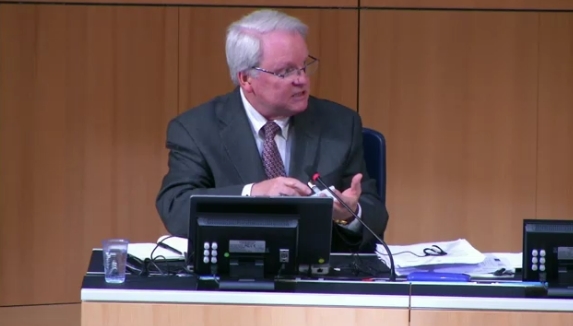
Prof. Kenneth Crews, former director of the copyright advisory office at Columbia University (US) and now an attorney at Gipson, Hoffman & Pancione in Los Angeles, today presented the latest version [pdf] of his original 2008 study, already updated in 2014 and in 2015, during the 35th session of the WIPO Standing Committee on Copyright and Related Rights, taking place from 13-17 November.
According to Crews, since 2015, a number of countries have revised their copyright laws and the exceptions they provide to libraries and archives, which, he said, serves as a reminder that this is a dynamic issue. The study covers all 191 WIPO member states and found that 161 of those have at least one provision in their copyright statutes that explicitly applies to libraries or archives.
Crews describes four types of exception: type 1 with no library exception (28); type 2 with a general library exception (21); type 3 with specific library exceptions; and type 4 providing for anti-circumvention exemptions.
Compared to the last version of the study, fewer countries have no exception, and fewer countries are relying on general exception, Crews said.
Specialised exceptions, which constitute the largest share of countries, include preservation and replacement, private study and research, making available on the premises, document delivery, and copy machines in the library. As example, Crews said 102 member states have an exception for preservation, 98 for replacement, and 105 for private study and research.
Crews described the influence of several models in current copyright laws, such as the British Copyright Act, which provides multiple provisions such as for preservation and research. He also cited the Bangui Agreement, which also provides clear rules for preservation and research, and the 2001 Information Society Directive and the 2012 Orphan Works Directive of the European Union, which he said have influenced some 14 countries outside of the EU.
Disharmony in Legislation, Digital Technologies
Even if the trend is towards more exceptions to copyright in favour of libraries and archives, Crews said there is a high degree of diversity and “disharmony” in the way issues faced by libraries and archives are addressed.
He illustrated this fact with three examples of countries, without naming them, that had either entirely redrafted their legislation, or updated it with very different provisions, with in one case a series of conditions to the exceptions, and restrictions on format of the copy. In another case, the new statutes provided an expanded range of services, scope of work, uses of digital technologies, and additional provisions on data mining, and orphan works.
Concerning digital technologies, Crews said there is a strongly uneven application and deployment of digital technologies. Some countries acknowledge or note the importance of digital technology but many are still relying on “reprographic reproduction” in their legislation, he said, adding, “There is relatively little innovation around the world when it comes to breaking away from that scope.”
It is important to recognise the changing nature of libraries and archives and their role in society, said Crews. He cited the expansion of library services, interlibrary loans, digitalisation for preservation and research, uses of orphan works, and cross-border communications and uses.
Member States Still Divided
Although all member states taking the floor underlined the importance of libraries and archives, views differed as to whether those institutions need international rules establishing common exceptions and limitations to copyright, or whether the current international copyright framework allows for countries to craft adequate legislations according to their legal system and culture.
Group B developed countries and the European Union for example, underlined the lack of consensus for normative work at the SCCR on limitations and exceptions to copyright for libraries and archives. The EU said it favours an approach focusing on which exceptions and limitations can work efficiently within the framework of existing international treaties, supported by an inclusive exchange of experiences and best practices.
The EU said a possible outcome could be guidance regarding the national implementation of international treaties.
The African Group reiterated its wish for a legally binding instrument and asked for starting work on text-based negotiations. However, Malawi said open-ended limitations and exceptions would negatively impact right holders, which are the authors, and advocated for a balanced approach that would benefit authors and the public. Côte d’Ivoire called for a “prudent and realistic approach.”
Brazil underlined the importance of exceptions and limitations at an international level to allow for collaboration between libraries, and Ecuador said it is essential to establish a minimum agreed by all so that there is proper application of exceptions and limitations in countries.
To a question from Chile on whether international harmonisation would be beneficial, Crews said if the scope is very limited, “then perhaps a binding instrument can be arguably most appropriate. If the scope is very broad covering many different issues, services, activities of libraries and other organisations, then it may be more difficult strategically and pragmatically to get to a binding instrument.” So, he said, “we need to think of the dimension not only of the type of instrument, but the scope of subject matter of that instrument.”
Libraries, Archives Want International Instrument
A number of library and archive organisations took the floor underlining the difficulties they are facing, notably in the exchange of information across borders in the digital age, and called for an international solution.
A representative of the Society of American Archivists cited the example of a Chinese student at a Japanese university who contacted an archive for copies of unique documents authored by labour unions in post-World War II Sweden. Existing law identifies them as copyrighted works, he said, added that those items were never created for commercial distribution in the first place.
“Today’s archives, libraries, and museums struggle against sweeping claims of exclusive rights that have little to do with our realities,” he said.
Knowledge Ecology International suggested extending the benefits of the Marrakesh Treaty to Facilitate Access to Published Works for Persons Who Are Blind, Visually Impaired or Otherwise Print Disabled to people with other disabilities. They also suggested drafting model laws, and said an updated searchable database of exception and limitation for libraries, archives and museums would also be extremely useful.
Authors, Publishers Find Existing Framework Fine
The International Publishers Association said the current international legal framework “provides ample flexibility for Member States to enact exceptions and limitations consistent with their own legal traditions.”
For the International Federation of Journalists (IFJ), libraries and archives act as publishers, “making their holdings available offsite, which is positive but it requires appropriate measures to deal with it.”
The International Authors Forum said a balance must be struck to allow authors proper remuneration to be able to continue their work, and added that in no country are authors able to work and create when they are denied remuneration or inadequately paid. The IAF representative added that robust set of provisions exist in most countries, including licensing and public lending right, with sufficient flexibility for countries to work towards library and archives solutions.
Image Credits: WIPO
So how do you ‘extend’ the Marrakesh Treaty? What is the legal mechanism to modify an Article of a Treaty already in effect and ratified by 33 countries? It is quite possible that, in terms of the WTO panel report * that “an exception or limitation should be narrow in quantitative as well as a qualitative sense”, the Treaty might already be challenged.
A reasonable estimate of the potential Marrakesh Treaty Article 3 Beneficiary population, when persons with dyslexia are included, could already approach one billion persons. The WTO Panel report analyzed in detail the potential beneficiary population to the US Copyright Section 110 exception. But any Article 3 estimate in print only refers to the 285 million persons the WHO cites as the Blind and Visually impaired population. And now it is suggested that the beneficiary population should be expanded?
* WT/DS160/R 15 June 2000 UNITED STATES – SECTION 110(5) OF THE US COPYRIGHT ACT Section 6.109
[…] Copyright Exceptions For Libraries Widespread, Study At WIPO Shows, But Disharmony Persists Intellectual Property Watch […]
[…] Copyright exemptions for libraries are common, but not consistent. […]