A Summary Of International CopyCamp 2016
Summary of one of the coolest annual conferences in Europe, provided by Krzysztof Siewicz, Modern Poland Foundation

Original news and analysis on international IP policy
Summary of one of the coolest annual conferences in Europe, provided by Krzysztof Siewicz, Modern Poland Foundation
Sitting between different rights, powers and principles at the intersection of differing legal regimes is the case of Philip Morris v Uruguay. The case, which concerns Uruguayan regulations that impose enlarged graphic health warning requirements on tobacco packaging and reduce the varieties of a tobacco brand that can be sold, has since its decision in July this year by an investor-state arbitration tribunal, has caused much discussion among legal practitioners and academia and attracted broader public attention.
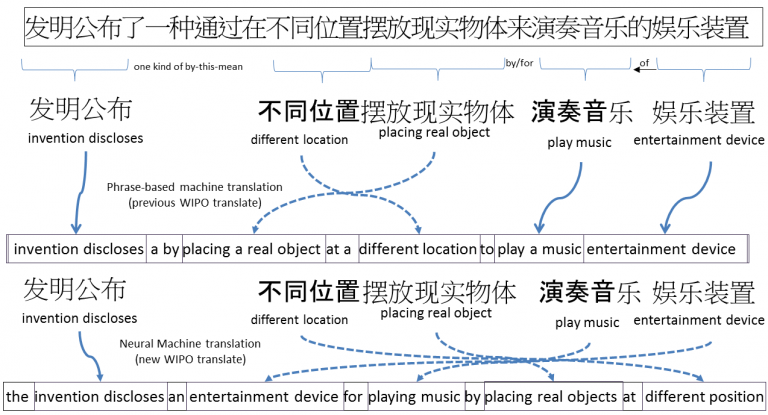
The World Intellectual Property Organization has developed a ground-breaking new “artificial intelligence”-based translation tool for patent documents, according to the organisation.
A recently published study finds that, contrary to a conventional view, the United States Patent and Trademark Office undertakes more rigorous patent examination than the European Patent Office and the Australian Patent Office.
Countries of the world decided in 2015 to launch an ambitious agenda to end poverty, protect the planet, and ensure prosperity for all by 2030. What should be the role of the UN World Intellectual Property Organization in the attainment of the adopted United Nations Sustainable Development Goals? This question, discussed at the WIPO Committee on Development and IP, is dividing countries, as developed countries argue that only a few goals apply to the work of WIPO, and others argue that there should be no ‘cherrypicking’ as all the goals in one way or another do apply to WIPO's work as a UN agency.

The first review of the implementation of the 2007 Development Agenda Recommendations aimed at infusing a development dimension into the World Intellectual Property Organization found that this implementation had been mostly consistent with the expectations of member states, but the review provided a list of suggestions to fill additional gaps. In committee this week, some countries asked that the WIPO secretariat prepare a response on how it plans to implement the recommendations provided by the experts conducting the review, but this is yet to be agreed.
Mark L. Whitaker, a veteran intellectual property trial lawyer and partner in Morrison & Foerster’s Intellectual Property Litigation Practice Group in Washington, DC, has been named president of the American Intellectual Property Law Association (AIPLA).
Mario Ottiglio is stepping down as director of public affairs, communications & global health policy at the International Federation of Pharmaceutical Manufacturers in Geneva. He will be staying in Geneva as the managing director of the new office of the High Lantern Group, a US consulting firm.
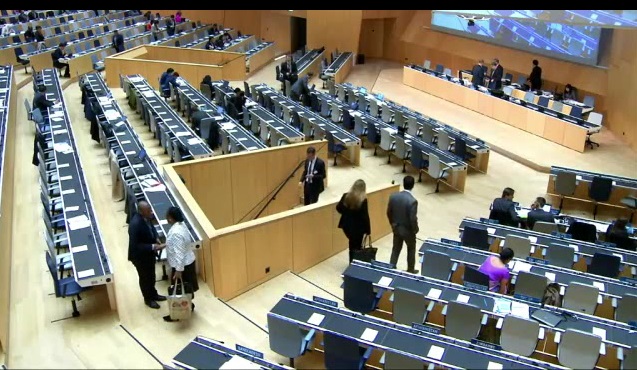
The World Intellectual Property Organization Committee on Development and Intellectual Property (CDIP) is meeting this week with an agenda including the presentation of a first review on how well WIPO implemented its Development Agenda Recommendations from 2008 to 2015. Also on the agenda is a discussion on what United Nations Sustainable Development Goals can be applied to WIPO’s work, and what the role of WIPO is in technology transfer.
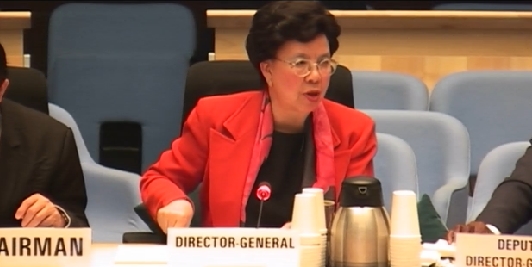
As the head of the World Health Organization warned of funding shortfalls at this week’s financing dialogue, she also proposed to raise assessed country contributions by 10 percent to help mitigate the situation. However, countries had a different take on the suggestion, which is expected to be further considered in the discussions on the budget for 2018/2019, at the Executive Board meeting in January, and at the annual World Health Assembly next May.
For next week's World Trade Organization intellectual property committee meeting, the major developing economies have submitted a request to discuss the recently released report of the United Nations Secretary General's High-Level Panel on Access to Medicines, according to Knowledge Ecology International (KEI). A key element of the UN report was to make it harder for countries deter or discourage other countries from trying to use patent flexibilities built into the WTO Agreement on Trade-Related Aspects of Intellectual Property Rights (TRIPS) - something the major developing economies have been discouraged from doing in the past.
World Health Organization Director General Margaret Chan today warned of serious funding shortfalls for the current biennium endangering the implementation of certain programmes. Areas most in need of financing include non-communicable diseases (such as cancer, diabetes and cardiovascular diseases), food security, and antimicrobial resistance. The high-profile Health Emergencies Programme is also underfunded and Chan proposed to ask countries to raise their assessed contributions at the next World Health Assembly.