

The term “Open” in science is all the rage these days.
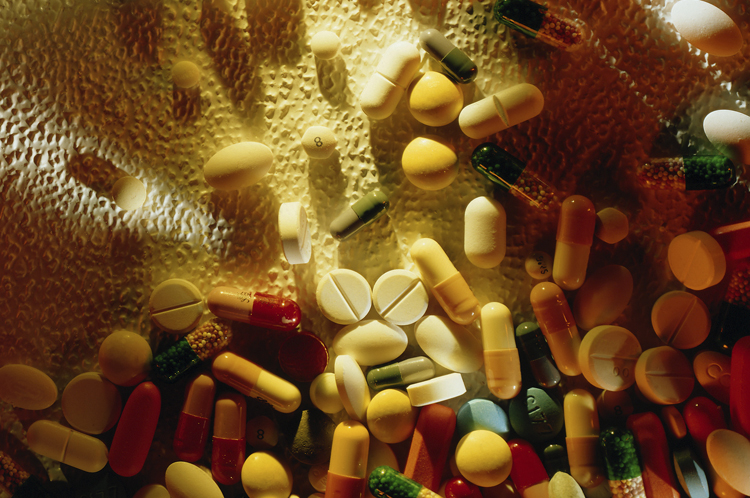 The Medicines for Malaria Venture (MMV) has posted a Malaria Box, containing over 400 compounds that might be effective against malaria to almost 200 research groups in two years. It’s an open science project, because the only stipulation is that information is deposited in the public domain (and therefore cannot be patented).
GlaxoSmithKline (GSK)’s Open Lab project, the Tres Cantos Medicines Development Campus near Madrid, Spain, enables visiting scientists to use GSK’s high-tech facilities to research neglected diseases such as malaria and TB.
Even Bill Gates has tweeted that open-source collaboration between scientists could become a drug discovery catalyst.
Now, one scientist is embarking upon a virtual pharmaceutical company that will develop a paediatric cancer drug in the open.
Aled Edwards is CEO of the Structural Genomics Consortium, an organisation that investigates the structures of proteins in the body, so that small chemicals – called probes – can be designed to fit into them. SGC releases the structures and probes to researchers around the world without patents.
Funded by the Wellcome Trust, Canadian government agencies and eight pharmaceutical companies, the idea is that one of these researchers will optimise a chemical probe that hits the right target within a protein and affects the course of a disease. They could develop it into medicine.
But Edwards is now raising funds to focus on a children’s brain cancer. The idea is that the most promising candidate will eventually be licensed to a pharmaceutical supplier for manufacture, regulatory support and further clinical trials.
“We believe we can have a greater impact on the science of the disease and the medicine if we do it in the open. As soon as we prove in a human that it works,” he said. “Doing it in the open is not an empathy-driven decision, it is a logical one and makes complete business sense. Open will get us to a drug faster than closed.”
Not all open projects are equal, however.
While they all differ from the traditional closed model, where all R&D is done in-house with full patenting, open projects have vastly different approaches to intellectual property. The pharmaceutical industry has embraced one model where companies collaborate with outside or independent researchers on a specific scientific problem. Once solved, however, the solution is usually bound by IP restrictions.
The more radical open source approach, in contrast, has no IP restrictions. It mimics open source IT where open source code is created collaboratively by a disparate group of contributing programmers.
Open source licences differ, but generally specify that programmers must be allowed to modify the source code and that such modified versions of the original program must be distributable under the same licence terms as the original software.
In the drug development world, according to US consultancy Results for Development, true open source drug discovery must obey three rules: there must be open access to data, open collaboration across organisational and geographical boundaries and open rules, that enable or mandate various forms of openness.
Certainly, no one has developed a drug completely using open source principles, although the recently launched Open Source Pharma Foundation (OSPF) plans to do just that.
Most projects – even those calling themselves open source – only apply to the very early stages of drug development before they are tested in humans (some believe they shouldn’t really be called open for that reason).
Take a very promising anti-cancer molecule called JQ1. An entire community helped develop JQ1 to check whether it might be effective against cancer (including SGC). It was. JQ1 was published and posted to researchers around the world without patenting.
At the time it was hailed – by some – as open source cancer drug development. JQ1 actually ended up stimulating feverish commercial research within the pharmaceutical industry, where plenty of patents abound.
That there are not more open projects is probably because the culture of patenting is so hard to break, say open source proponents.
Even developments in neglected diseases, such as Ebola, are being patented, said Christine Årdal of the Norwegian Institute of Public Health.
“So few people are actually performing research and development on these diseases that really a patent doesn’t matter because there is no market,” she says. “Yet universities, rather than talking about the cost/benefit of patenting, seem to highly promote patenting if the R&D is at all patentable.”
Patenting appears to be even more likely further into the drug development cycle because there’s more chance it will become a valuable drug.
Even those who want more open drug development concede that clinical trials are extremely expensive and some form of exclusivity may be the only way to entice investors. It might reassure them that no one else will copy the drug so they’ll make their money back, especially on potentially lucrative molecules, such as cancer drugs.
Certainly, sticking doggedly to an open source model might be ridiculous if it prevented investors from funding a drug altogether.
“It might be that you have to do something that offers limited patent rights to corporations,” said Steve Maurer, of the University of California Berkeley, who founded one of the first open source drug discovery projects in the nineties. “If somebody says that’s not open source and I would die before I would let that happen, then this is a species of religion.”
For his part, SGC’s Aled Edwards says sharing research even further than preliminary preclinical stages may also be a pragmatic open model that could be attempted by many other companies in future.
Today many potential drugs – and often the companies that make them – fail earlier on in the development process.
Companies could begin to work more collaboratively on developing a molecule together even on human clinical trials. Only when they have proven that molecules hit the target – and definitely affect the course of a disease inside the human body – then they can resort to intellectual property provisions and begin to compete.
“At that point they can make the best medicine based on the fact that they know that at target it works,” he said. “Right now [companies] compete to make a molecule for a drug for a target that they don’t even know if it works,” he said.
A new system, said Edwards, could advance ten times as many targets. “Ultimately,” he said, “probably in 10 years you will see a world where most of the drug discovery is done in the open.”
[…] http://www.ip-watch.org/2016/10/12/paediatric-cancer-drug-being-developed-entirely-in-the-open/ […]
[…] Paediatric Cancer Drug Being Developed Entirely In The Open […]