

It has been five months since Choi Donggyou assumed the role of KIPO Commissioner. During the 55th WIPO General Assemblies in Geneva this week, he took time to sit down with Intellectual Property Watch and in a mutually prepared Q&A gave his perspective on a wide array of issues, including the IP policies and projects he plans to focus on throughout his term, his intentions for maintaining close collaborative ties with WIPO, and his thoughts on last May’s IP5 Heads of Office meeting in Suzhou, China.
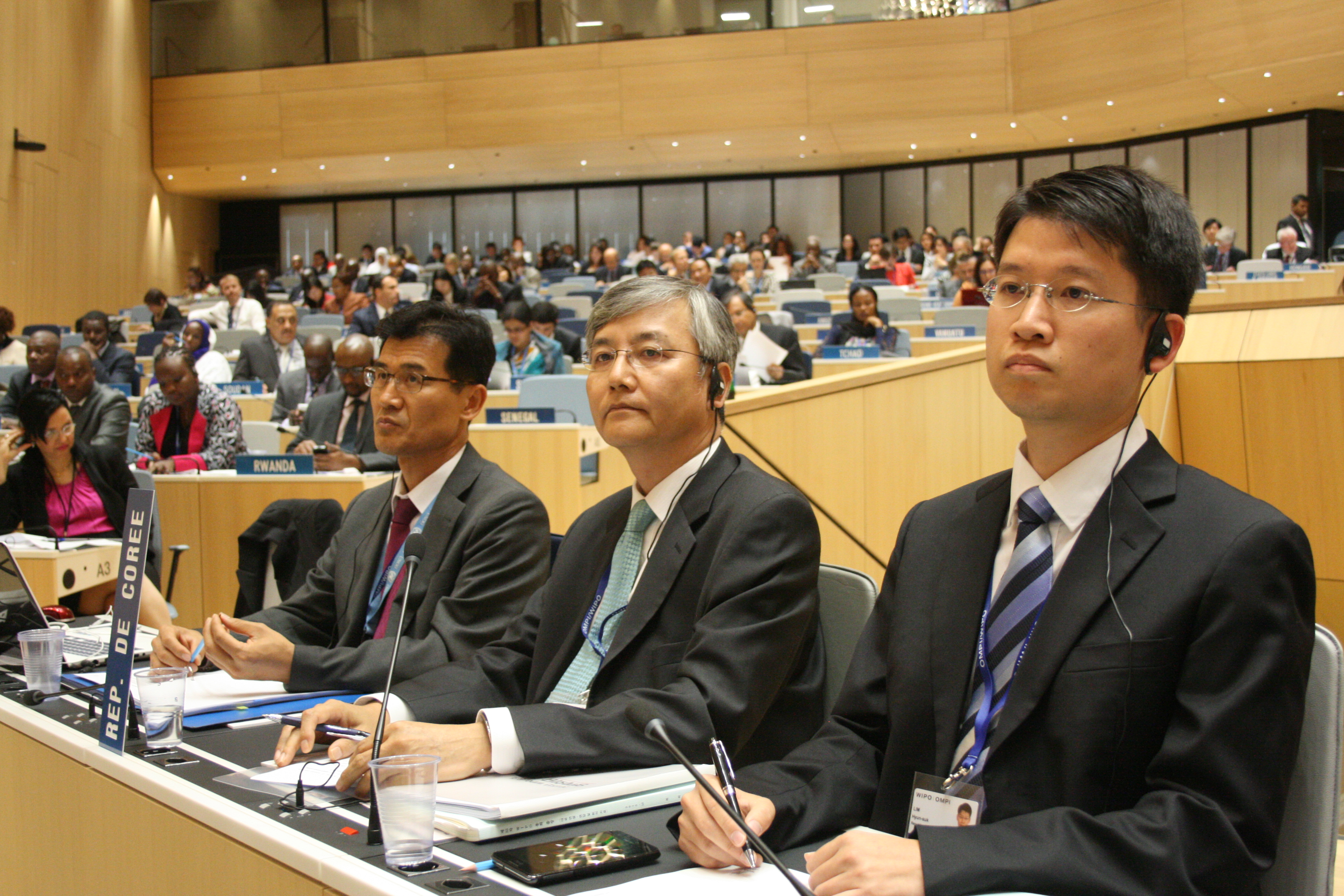
| 1. As this is your first interview with an international media outlet since taking over as KIPO’s commissioner, allow me to congratulate you on your new appointment. Could you tell us a little about your background and your new position? What sort of policies and projects do you plan to focus on throughout your term? |
In 1987, I first began working for the Korean Intellectual Property Office (KIPO) as a deputy director. Seven years later, I left to pursue a career at the Ministry of Foreign Affairs and Trade. So, returning once again to KIPO after being away for 20 years was quite a homecoming for me.
Even when working at the consulate general or performing my duties as an ambassador, my 7 years of experience at KIPO always led people to seek my advice on issues pertaining to intellectual property (IP). As a result, IP and KIPO have never been far from my thoughts.
It is a heavy responsibility to assume the position of KIPO commissioner at a time when IP has become so essential for effective business management, both at home and abroad.
To ensure the creation of stable, high-quality patents, I will work to improve the system for patent examination and trials. I will also see to it that KIPO is able to offer the same level of IP protection found in advanced countries.
In addition, I will work to enhance the global IP system by actively participating in international discussions pertaining to IP.
Last but not least, I will endeavor to ensure that KIPO remains a forward-thinking organization full of innovative ideas.
| 2. You are currently here in Geneva to take part in the WIPO General Assembly. Could you share some other ways in which you intend to collaborate closely with WIPO during your term as commissioner? |
In 2014, Korea filed 13,151 PCT applications – the fifth most of any country worldwide. And, since PCT service fees account for about 76% of WIPO’s income, Korea has obviously become a very important contributor playing a significant role in WIPO’s operations.
Korea and WIPO jointly hold appropriate technology (AT) competitions, invite examiners from less developed countries (LDCs) to Korea for specialized training, and work together in developing IP education programs. Over the past eleven years, Korea has also contributed a total of 9.6 billion KRW (8.1 million USD) to the Korea Funds-in-Trust (FIT) at WIPO in support of these kinds of projects.
The Korea FIT’s achievements in the realm of AT have been a particular success. In fact, disseminating AT to LDCs has now been deemed as one of the best ways for providing them with quick, effective support. As a result, KIPO is working to expand its AT-related projects as we move forward into the future.
On January 1, 2016, KIPO also plans to launch WIPO CASE, thereby granting foreign and domestic applicants access to KIPO’s real-time “patent examination progress information data.”
KIPO is striving to increase its work efficiency and assist applicants in applying for international patents by dispatching to WIPO some of its formality examiners responsible for Madrid (trademarks) applications and Hague (designs) applications. These examiners can help verify the accuracy of WIPO’s examinations and give suggestions for making improvements. I hope that more and more members of our staff will soon get the chance to work at WIPO.
| 3. Throughout this Assembly, you have been scheduled to participate in bilateral discussions with the leaders of several different countries. What have been some results of previous major bilateral discussions? What are KIPO’s plans for further strengthening its international partnerships? |
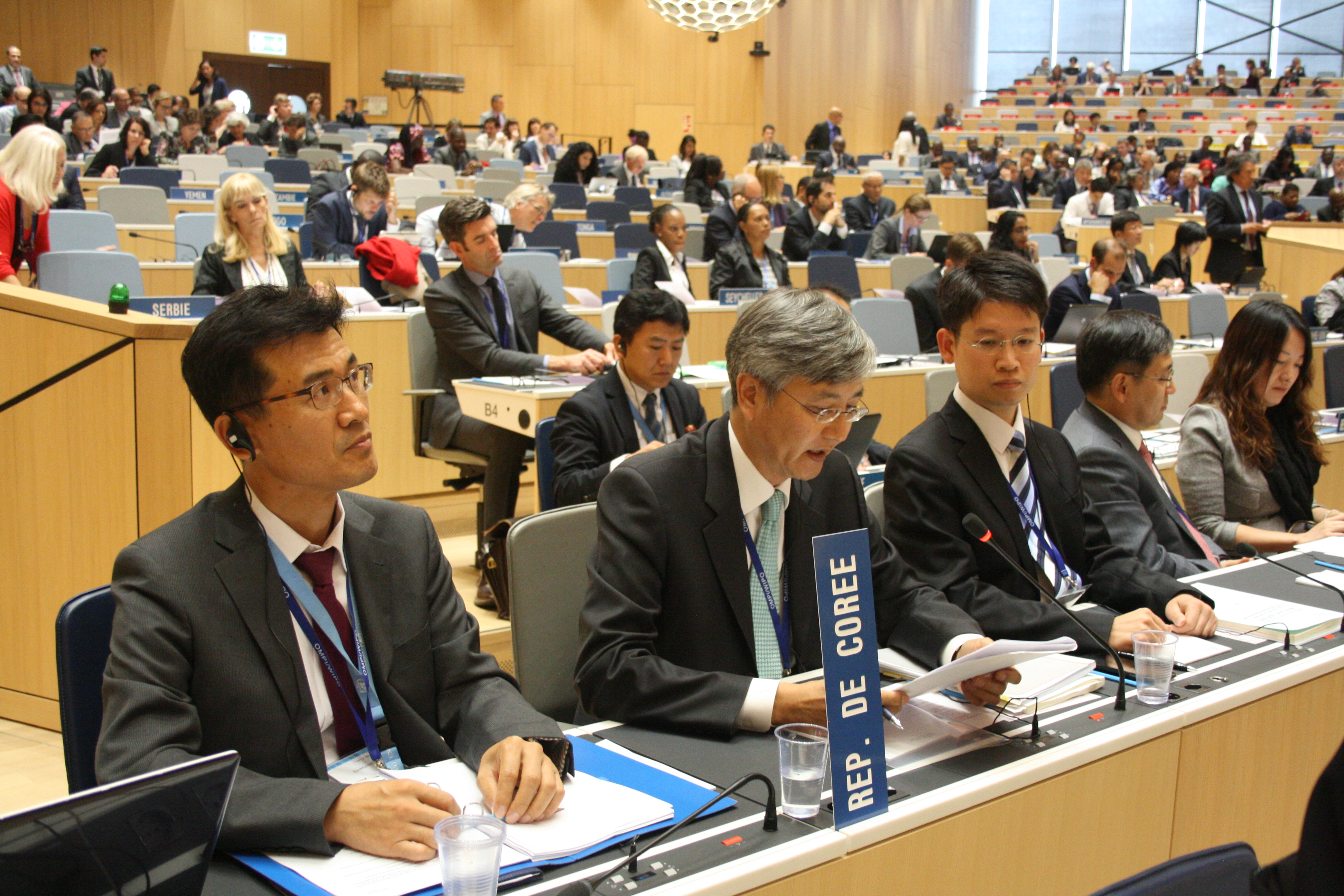
One of KIPO’s primary concerns is to expand work sharing among the various intellectual property offices [IPOs].
KIPO has participated in several such work-sharing programs, including the PCT, PPH, etc. We even proposed a new work sharing program called the “Collaborative Search Program (CSP),” which was piloted in collaboration with the US in September 2015.
KIPO will continue to expand its work sharing programs as a way of improving examination quality and reducing examiner workloads.
Another way that KIPO promotes bilateral cooperation is by embarking on projects to introduce and share our innovative infrastructure with other foreign IPOs abroad.
For example, KIPO signed a Memorandum of Understanding (MOU) with the government of the UAE – which currently lacks an IPO – and, since June 2014, we have been providing them with our patent examination services.
KIPO also entered into an agreement with the government of Sweden to launch, sometime this year, the “Asia Patent Information Search Service” so that European users can more conveniently search and retrieve patent documents from the IPOs in Korea, China and Japan.
KIPO is committed to further developing the global IP by offering up its own patent examination infrastructure as an example that foreign IPOs will want to follow.
| 4. You also took part in the IP5 Heads of Office meeting last May. Why was this meeting significant, and what were the outcomes that resulted from it? |
The IP5 was founded in 2007 to reduce examination backlogs caused by the sudden surge in patent application submissions. Even though the IP5 was initially intended to foster cooperation among examiners, it has expanded the scope of its activities to ensure enhanced convenience and efficiency throughout the entire global IP system.
At the IP5 Heads of Office meeting held in Suzhou, China, in May 2014, the “IP5 Joint Statement” was adopted, resulting in some long-awaited progress in harmonizing the various patent systems of different IPOs.
The “IP5 Joint Statement” is a blueprint for future cooperation among the IP5, as it clearly expresses the IP5’s dedication to improving global IP services.
It will serve as a launching point for the IP5 to better communicate with users in order to provide enhanced services that accurately reflect consumer demands.
Furthermore, the IP5 performs joint research on tasks selected via industry feedback. This has resulted in some meaningful outcomes, including the adoption of relevant research reports.
For consumers, these tasks are extremely urgent and have far-reaching implications. KIPO will continue its efforts to produce practical, beneficial results in enhancing applicant convenience.
| 5. KIPO supports both developing and less developed countries via its “IP Sharing Project.” Please explain this project’s use of appropriate technology as a method for providing economic assistance. |
Through our International IP Sharing Project, IP information is utilized in order to develop region-specific AT that enhances the quality of life for people living in LDCs.
For example, KIPO developed and provided simplified water purifiers for Cambodia (2011), bamboo housing technology for Nepal (2012), an aroma oil extractor for Philippines (2013), etc.
KIPO also supports branding projects that help LDCs profit fairly from specialized goods sold on the global market.
We even conduct projects to help develop IP automation systems for LDCs. In this regard, KIPO’s IP automation system serves as an effective example for them to emulate. KIPO, along with other Official Development Assistance (ODA)-related organizations, encourages and assists these countries in developing their own systems based on the KIPO model.
So far, KIPO has developed a patent information system for Mongolia (2011) and the Republic of Azerbaijan (2013), and it just wrapped up its patent information system improvement project for the African Regional Intellectual Property Organization (ARIPO).
| 6. Non-practicing entities (NPEs) bear a great deal of responsibility for recent increases in IP-related conflicts, and Korean firms have occasionally fallen prey to them, as well. Can you tell us more about this problem and the steps KIPO is taking to help resolve it? |
As Korean firms continue to advance into foreign markets, patent disputes between Korean firms and NPEs have been on the rise: 57 in 2010; 159 in 2012 and; 244 in 2014.
In all actuality, even more NPE-related lawsuits are thought to have occurred, once you take into consideration the fact that such lawsuits sometimes remain undisclosed by Korean firms.
NPEs serve a beneficial purpose by promoting technological development and licensing; however, they can also restrict business production and sales.
That is why we need to adopt a comprehensive approach for promoting the positive side of NPEs while minimizing the negative.
KIPO provides information on NPE-related trends in order to assist Korean firms in effectively responding to overseas IP disputes involving NPEs.
KIPO also strives to establish customized IP-based R&D strategies and to promote small-but-innovative enterprises in order to enhance the IP capacities of Korean businesses.
In addition, KIPO fosters private Korean NPEs through the provision of funding and the boosting of domestic IP-related companies. The result is that Korean businesses become more capable of defending themselves against lawsuits filed by foreign NPEs.
| 7. Why is it that the Korean IP service market appears relatively stagnant these days, and what measures are being implemented to give it a boost? |
Due to recent global increases in patent applications and patent disputes, the IP service industry plays a key role in advanced countries.
However, in Korea, the IP service market has not been invigorated due to a lack of awareness among businesses and insufficient capacities of IP service providers.
It is estimated that, as of 2013, Korea’s IP service market was a mere 640 billion KRW (606.4 million USD) industry supporting about 16,500 employees.
KIPO enforces a variety of policies, such as tax concessions, to ensure that Korea’s IP service industry remains competitive and to invigorate Korean IP service markets.
In addition, KIPO nurtures IP service professionals through its implementation of employee training courses, certification systems, etc., as well as by supporting their advancement into global markets through participation in overseas industrial exhibitions, etc.
Furthermore, this year KIPO has worked to stimulate the IP service market by investing 35 billion KRW (29.6 million USD) into it.
| 8. In Korea, more and more companies are using IP as collateral for acquiring large bank loans. Please tell us your view on the concept of “IP valuation,” and give us some idea of your plans for further extending this program in the near future. |
KIPO is expanding investment and financing opportunities through the valuation of IP owned by SMEs and venture businesses.
In 2014, KIPO was able to provide 165.8 billion KRW (150.7 million USD) in loans for 303 businesses by bearing the cost of IP valuation fees. KIPO plans to further expand the scope of IP financing by providing 200 billion KRW (169.3 million USD) for 400 businesses and by releasing IP loan instruments via commercial banks.
This year, KIPO intends to enhance Korea’s IP financing system in order to further ensure its sustainability. We are also preparing measures to reduce banks’ risk by utilizing funds for retrieving IP loans.
In April 2015, KIPO increased the reliability and quality of IP valuations by allowing customers to select from various fee and scheduling options.
We even fostered the introduction of IP valuation agencies into the private sector, thereby injecting some much-needed market competition into the system.
| 9. Over the last decade, KIPO has done much to increase the quality of its patents. What are some of the steps that have been taken? Is KIPO planning to implement any new policies that will enhance patent quality? |
To best serve our customers, we must provide them with high-quality, reliable patents. That is why, to meet the recent rise in application submissions, KIPO increased the number of examiners on its staff in order to ensure that each application is given due attention. We also redesigned our work procedure to allow for face-to-face interaction between KIPO staff members and the employees of companies responsible for prior art searches.
Furthermore, KIPO is utilizing the Collaborative Search Program (CSP), among other such programs, as a way of raising its patent examination quality to match international standards.
KIPO is in the process of adopting the opposition procedure[1] and the Ex-Officio Reexamination System[2] to reinforce substandard patents during the early stages of examination.
In order to proactively fix examination errors, KIPO switched to double-checking select examinations before, rather than after, they have been completed.
[1] Opposition procedure: a procedure in which, during the early stages of examination, examiners can re-examine and revoke weak patents if similar prior art is discovered
[2] Ex-Officio Reexamination System: a system in which examiners can cancel decisions to grant a patent and re-examine flawed applications before registration
Image Credits: KIPO